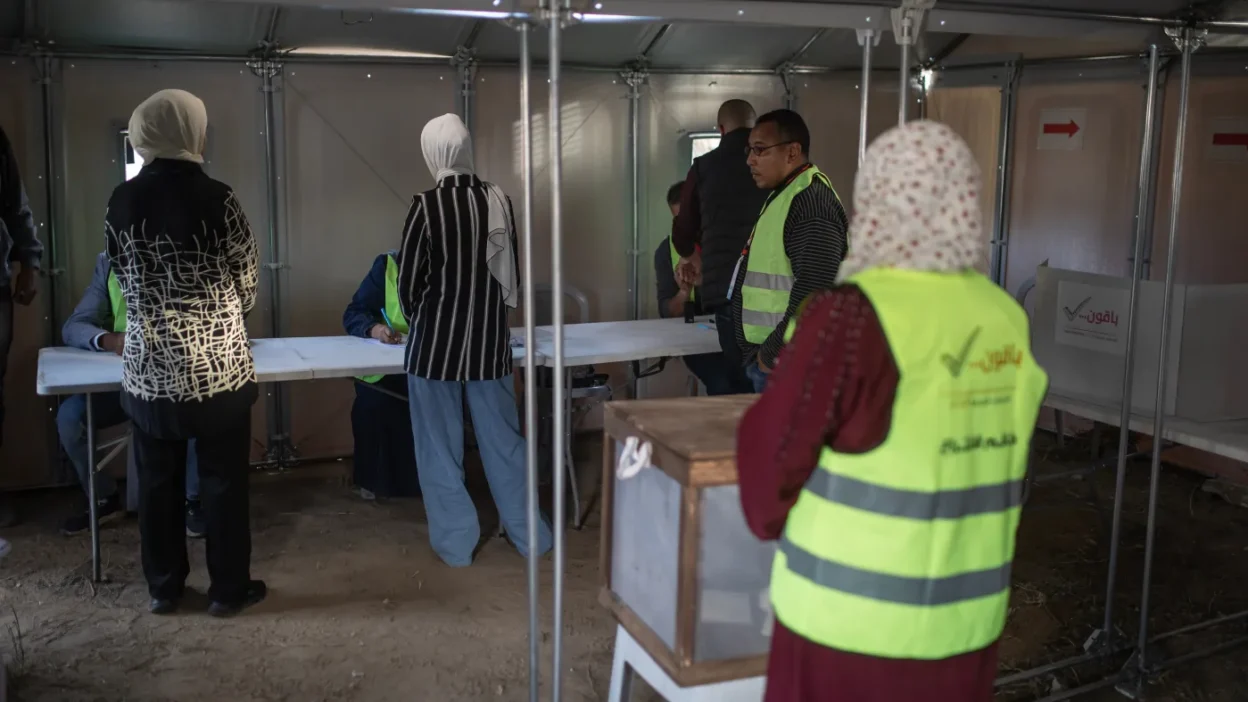
Palestinians voted in local elections Saturday for the first time in 21 years, encompassing the West Bank and parts of the Gaza Strip, as the Palestinian Authority seeks to bolster its claims to power.
Historical Vote Amidst Ongoing Challenges
Palestinians cast their ballots on Saturday in local elections, a landmark event marking the first such vote in 21 years across the West Bank and portions of the Gaza Strip. The Palestinian Authority hopes these elections will strengthen its claims to authority over territories lost to Hamas in 2007.
Ceasefire and Limited Progress
Since the October ceasefire between Hamas and Israel in the Gaza Strip, U.S.-mediated talks have yielded limited progress toward an agreement involving international oversight of the region, according to Reuters.
International Support and Israeli Opposition
European and Arab governments generally support the return of the Palestinian Authority to the Gaza Strip and the establishment of an independent Palestinian state encompassing the Strip, East Jerusalem, and the West Bank, where the Authority exercises limited self-rule under Israeli occupation. Israel opposes the creation of a Palestinian state, with Finance Minister Bezalel Smotrich vowing to “continue to thwart this idea,” and facilitates the takeover of land in the West Bank by Jewish settlers, Reuters reported.
Potential for Broader Reforms
Western diplomats, as cited by Reuters, suggest these local elections could pave the way for the first general elections in roughly two decades and accelerate reforms within the Palestinian Authority, aiming to increase transparency and accountability.
Voting in the Shadow of Conflict
These elections are the first in Palestinian territories since the outbreak of the war in the Gaza Strip in October 2023, following the Hamas attack on Israel. The last Palestinian local elections were held in the West Bank in 2022.
Limited Voting Access in Gaza
In the Gaza Strip, voting was restricted to residents eligible to vote in the Dair al-Balah region in the central part of the territory, totaling over 70,000 individuals. Over one million people were eligible to participate in the elections overall.
Logistical Constraints and Political Divisions
Over half of the Gaza Strip is controlled by Israel, with the remaining portion under Hamas control. Due to power supply limitations, voting in the Gaza Strip took place from 7:00 AM to 5:00 PM local time (6:00 AM to 4:00 PM CET), two hours shorter than in the West Bank.
Some Palestinian factions boycotted the elections in protest against the Palestinian Authority’s requirement that candidates support the Oslo Accords, including recognition of the state of Israel.
Hamas’s Role and Anticipated Results
While Hamas, which has governed the Gaza Strip since 2007, did not formally nominate candidates, one list in Dair al-Balah is widely perceived by residents and analysts as being affiliated with the organization. Analysts believe the performance of candidates linked to Hamas could gauge its current popularity. Most candidates, including those in the West Bank, are running on the Fatah list, the main political movement of the Palestinian Authority, or as independents.
Hamas has stated it will respect the election results. Prior to the vote, Palestinian sources informed Reuters that civil police officers from the group would be deployed to protect polling stations in the Gaza Strip.
Election results are expected Saturday evening or Sunday.