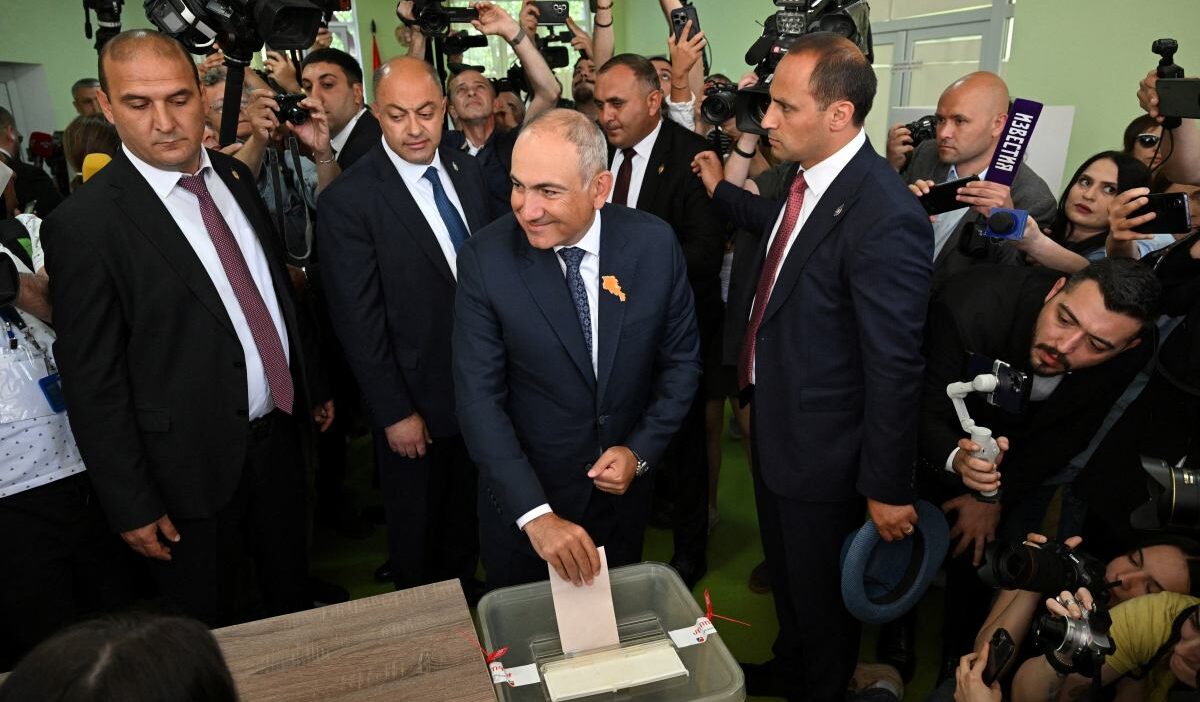
Following the official release of election results, incumbent Prime Minister Nikol Pashinyan has secured a mandate to form a new government, signaling a decisive shift toward the West and away from Moscow.
A Mandate for Change
“This is a historic victory,” Pashinyan declared at his party headquarters. The secured majority allows him to form an independent government. He emphasized that the Armenian public has chosen the state, independence, future, and peace over traditional alliances.
Having held the premiership since 2018, Pashinyan is now set to become the longest-serving head of government in the country’s history. During his campaign, he characterized his main competitors—three pro-Russian parties—as a “three-headed party of war” and a criminal-oligarchic group that must be eradicated from Armenian politics.
Contested Results and Opposing Visions
The election represented a clash between two distinct visions for Armenia’s future. While Pashinyan seeks to normalize relations with Azerbaijan and reduce dependence on Russia, the opposition parties—Strong Armenia, the Armenia Bloc, and Prosperous Armenia—advocate for closer ties with Moscow and criticize the Prime Minister’s concessions regarding Nagorno-Karabakh.
Samvel Karapetian, an Armenian-Russian oligarch and leader of the Strong Armenia coalition, refused to concede. His party finished second with 23.29 percent of the vote, followed by the Armenia Bloc with 9.94 percent, and Prosperous Armenia with 4 percent. Voter turnout reached nearly 59 percent.
Political Polarization and Pre-Election Tensions
The campaign took place in a highly tense atmosphere characterized by widespread reports of Russian disinformation campaigns targeting Pashinyan. Authorities arrested dozens of individuals, including opposition members, on suspicion of electoral offenses. Opponents have labeled these actions as political repression.
Karapetian, who is currently under house arrest due to charges of incitement to overthrow the government and financial crimes, denounced the arrests as a disgrace, noting that 75 members of his party and 700 people in total were detained during the election period.
Official Response to Irregularities
Addressing allegations of election interference, Pashinyan denied that the government restricted freedom of expression. He stated that law enforcement agencies merely responded to reports of illegal activities, such as vote-buying, which he alleged were employed by the opposition.