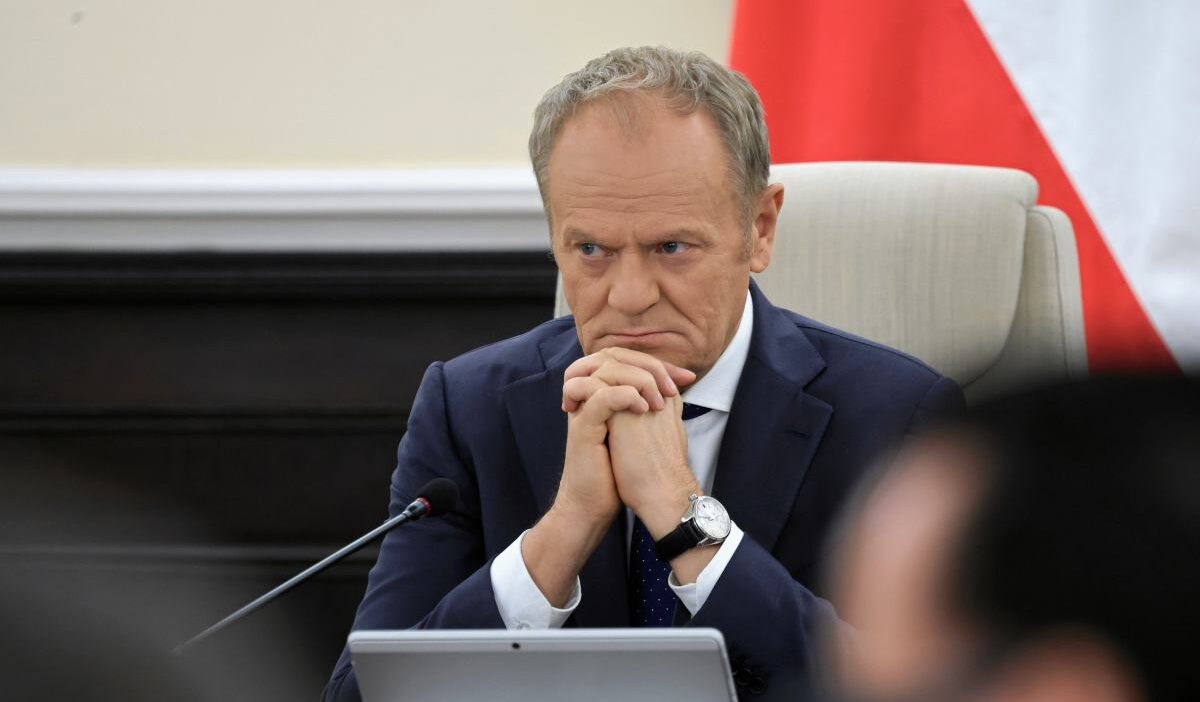
A new association founded by former Prime Minister Morawiecki is causing friction within PiS, while a political scientist warns early elections would be risky for Donald Tusk.
Morawiecki’s Association Creates Rift Within PiS
Recent political discussions have centered on the association RozwójPlus, founded by former Prime Minister Mateusz Morawiecki. Approximately 40 PiS MPs and MEPs have joined the organization.
PiS leader Jarosław Kaczyński warned that individuals involved in the association would be excluded from party lists, stating the goal is to prevent a parasitic entity from forming using the party’s resources.
Morawiecki Denies Intent to Leave PiS
Mateusz Morawiecki insists he does not intend to leave PiS, characterizing the association as a means to encourage collaboration with those unwilling to engage in party activities.
PiS Faces Weak Polling Numbers
PiS is grappling with both potential internal division and declining poll numbers. A recent CBOS poll shows 18% support for Kaczyński’s party.
The Civic Coalition leads with 32%, followed by Konfederacja (13%) and the Korona Polska Confederation of Grzegorz Braun (8.7%). The New Left (5.8%) and Razem (4.9%) are also near the electoral threshold.
Political Analyst: Braun Difficult for PiS to Contain
According to political scientist Dr. Maciej Onasz, it would be difficult for PiS to suppress the influence of Grzegorz Braun. He dismissed the idea that the association and party division were pre-planned by PiS leadership as “total nonsense.”
Risks for Both Morawiecki and PiS
A split from PiS would be a high-risk move for Morawiecki, but not necessarily fatal for PiS, though it would be a significant blow. Launching a new political venture now is premature, requiring a balance between building structures, gaining recognition, and capitalizing on novelty.
Challenges for a New Political Force
The potential new formation would consist of a former long-term prime minister and elements of the former ruling party, making it difficult to present itself as truly new. The primary target electorate would likely be moderate PiS voters who have drifted away, but this group must be substantial to be worthwhile.
Kaczyński’s Strategy Questioned
Kaczyński’s strategy of excluding those involved with the association is seen as a misstep, potentially alienating voters PiS needs to regain power. A shift in strategy towards appealing to centrist voters is possible but would be challenging.
Braun’s Influence and the Issue of Antisemitism
Grzegorz Braun’s strength is a concern, fueled in part by antisemitism, which Konfederacja is also increasingly embracing. PiS cannot afford to engage in such rhetoric due to its need to maintain good relations with the United States.
Braun’s Impact on the Right Wing
Braun has drawn support from PiS’s “hardcore” electorate, making it harder for PiS to regain power. The liberal side is strategically strengthening Braun to weaken PiS and further divide the right wing.
Potential Coalition Scenarios
A coalition between PiS and Konfederacja is less likely than a potential agreement between the Civic Coalition and Konfederacja. Donald Tusk could more easily compel Polska 2050, PSL, and the New Left to run on the Civic Coalition’s lists.
Risks of a Unified List for Tusk
While a unified list could consolidate support, it doesn’t guarantee more mandates and requires careful analysis to determine if it’s beneficial for each party.
Historical Precedent: 2007 Elections
PiS experienced a setback in 2007 after calling for early elections, prematurely celebrating a victory that did not materialize.
Internal Conflicts and External Opportunities for PiS
PiS is currently focused on internal conflicts, hindering its ability to capitalize on potential counter-attacks against the Civic Coalition, such as issues related to healthcare and allegations against senators.
Personal Interests and Parliamentary Seats
The decision to hold early elections involves 460 personal interests, as each MP seeks to secure their parliamentary seat. PiS risks losing 40-50 seats in the next parliament.
Party Positions and Electoral Prospects
The Left is relatively secure, while PSL and Polska 2050 face challenges in exceeding the electoral threshold independently.
Challenges for Smaller Parties
The weakness of smaller parties stems from their inability to differentiate themselves from the Civic Coalition, which dominates the political landscape and limits their ability to pursue their own agendas.
Limited Success in Coalition Government
Smaller parties within the current coalition have faced obstacles in achieving their goals, often resulting in watered-down compromises. For example, initiatives related to labor inspection and widow’s pensions were significantly weakened.
Unpredictability of Political Outcomes
Predicting future political developments is inherently difficult, as access to complete information is limited and unforeseen events can significantly impact outcomes.
Constitutional Order Under Attack
Over the past eight years, there has been a deliberate and conscious effort to alter the constitutional order of the state without formally amending the constitution, according to Professor Mirosław Wyrzykowski.