





President Nawrocki Appoints Four New Supreme Court Judges Amid Minister Żurek’s Deepening Crisis Warning
President Karol Nawrocki has appointed four new Supreme Court judges, drawing sharp criticism from Justice Minister Waldemar Żurek, who warned the decision deepens the ongoing judicial crisis....
President Karol Nawrocki has appointed four new Supreme Court judges, drawing sharp criticism from Justice Minister Waldemar Żurek, who warned the decision deepens the ongoing judicial crisis.
Table Of Content
Appointments Announced by the Chancellery
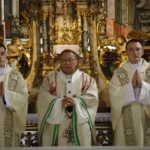
Last week, Head of the Chancellery of the President Zbigniew Bogucki announced that on July 28 the President would hand over appointments to four new Supreme Court judges. The President’s Chancellery reported on X on Tuesday that President Karol Nawrocki presented the instruments of office to the newly appointed Supreme Court judges, who then took their oaths of office before him.
The newly appointed individuals to the position of Supreme Court judge are Paweł Bucoń, Paweł Chmielnicki, Andrzej Michałowicz, and Tomasz Szczurowski.
Justice Minister Criticizes the Appointments
Justice Minister Waldemar Żurek commented on the matter on Monday, writing on X that Bogucki had announced the appointment of four new neo-judges to the Supreme Court. According to the head of the Ministry of Justice, the goal of this decision is clearly to deepen the crisis.
The Minister of Justice publicly questioned who will pay for the compensation burdens on the State Treasury awarded by the ECtHR to citizens due to the participation of improperly appointed Supreme Court judges in their cases, asking whether the Chancellery of the President will cover it from its own budget or if the head of state will take it upon themselves.
Division Between Old and New Judges
Since the reforms introduced by the PiS government in 2017—which changed the method of electing judicial members of the National Council of the Judiciary and introduced a new Supreme Court act—an informal division has existed within the Supreme Court between old judges appointed before 2018 and new judges appointed after 2017.
The 2017 change was the reason for accusations of politicization of the National Council of the Judiciary by the then opposition and current governing authorities, who questioned the status of judges appointed with the participation of a council formed in this manner. European court rulings from the CJEU and ECtHR have also pointed to flaws in the judge selection procedure involving the current National Council of the Judiciary in recent years.
Conflicting Supreme Court Resolutions
This dispute has manifested itself in jurisprudence, including within the Supreme Court itself. As early as January 2020, a resolution of three Supreme Court chambers involving judges appointed before 2018 was adopted, stating that improper court composition occurs when a person selected as a judge by the National Council of the Judiciary in the composition established in 2018 is present on the panel.
In September of last year, a Labor Chamber resolution adopted by a panel of seven judges appointed before 2018 concluded that a ruling by the Supreme Court’s Chamber of Control Extraordinary and Public Affairs involving judges appointed from 2018 is non-existent and void. In response to that Labor Chamber resolution, a December 2025 resolution of two Supreme Court chambers, composed mainly of judges appointed after 2017, ruled that no court or public authority may consider a Supreme Court ruling void or ignore its effects, even when citing EU law.