





Trump Threatens to Declare Strait of Hormuz U.S. Territory Amid Iran Standoff
U.S. President Donald Trump announced plans to potentially declare the Strait of Hormuz U.S. territory, aiming to control a vital global energy transit route amid escalating tensions with Iran. Trump...
U.S. President Donald Trump announced plans to potentially declare the Strait of Hormuz U.S. territory, aiming to control a vital global energy transit route amid escalating tensions with Iran.
Table Of Content
Trump Threatens U.S. Territory Status for the Strait of Hormuz
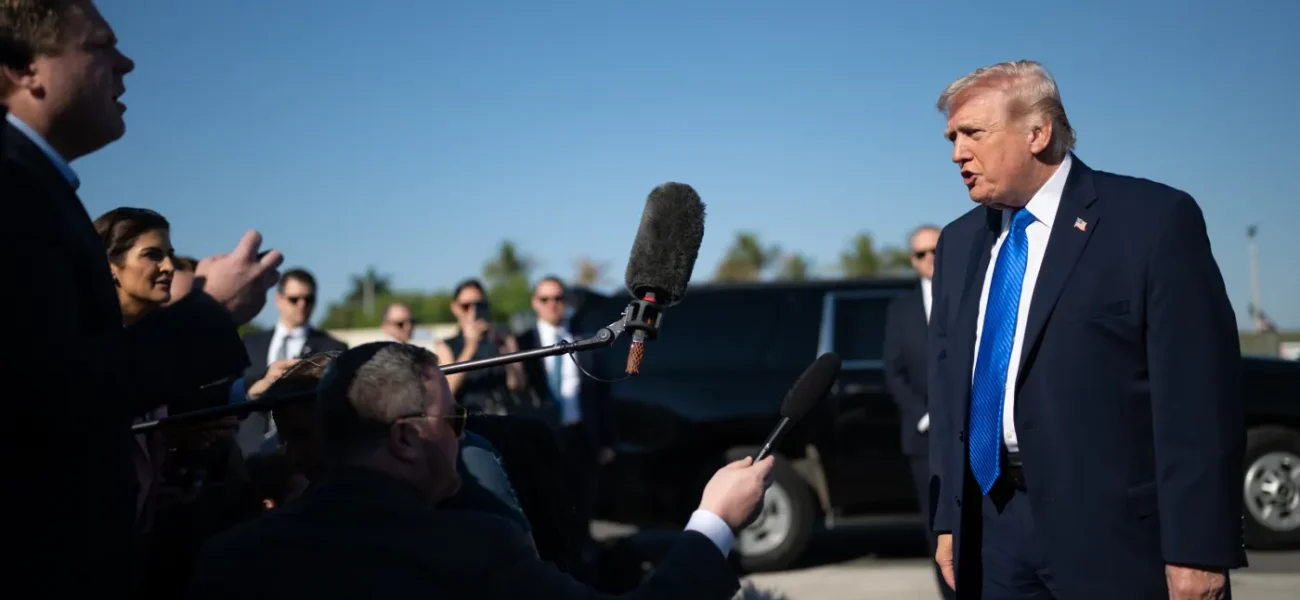
U.S. President Donald Trump announced during a speech in New York that he may declare the Strait of Hormuz United States territory. This declaration came amid a sharp escalation of the dispute with Iran, restrictions on vessel traffic, and preparations by Washington for further economic strikes against Tehran.
The announcement is unprecedented, but the declaration itself does not alter the legal status of the strait. Lying between Iran and Oman, the body of water connects the Persian Gulf to the Gulf of Oman and the Arabian Sea, while international law provides special rules regarding passage through straits used for international navigation.
Controlling the Strategic Energy Route
Donald Trump previously argued that U.S. forces control traffic in the Strait of Hormuz and intend to maintain this advantage. Reuters reported that the U.S. president spoke again of “total control” by the United States over the route, serving as a direct challenge to Tehran’s position.
The actual situation remains complex, as the United States uses naval forces to blockade Iranian ports while Tehran maintains navigation restrictions. Both countries exert influence over maritime traffic, yet neither party automatically achieves internationally recognized sovereignty over the entire body of water.
Traffic Plummets Amid Tensions
According to Kpler data cited by Reuters, the strait was crossed by approximately 130 to 140 ships daily before the current conflict began. In recent days, traffic has dropped to just a few or a dozen vessels daily.
The scale of the paralysis was highlighted when only two ships crossed the strait on Friday with no crude oil transport recorded. Risks are further amplified by attacks on commercial vessels, such as the targeting of two Abu Dhabi National Oil Company ships.
Iran’s Conditions and Regional Talks
Tehran rejects Washington’s claims of taking full control over the strait, conditioning the normalization of maritime traffic on the end of military actions, the lifting of sanctions, and access to frozen assets. Parallel talks between Iran and Oman explore future traffic management models, while an Iranian Basij representative reiterated that the strait remains under Iran’s control.
The importance of the Strait of Hormuz extends far beyond the U.S.-Iran conflict as a critical node in global energy infrastructure. The U.S. Energy Information Administration reported that 20.9 million barrels of oil and petroleum products flowed daily through the strait in the first half of 2025.
Economic Pressure and Legal Status
Donald Trump’s announcement coincided with preparations for further economic pressure on Tehran, with U.S. Treasury Secretary Scott Bessent stating new measures will be presented next week. Washington aims to combine sanctions and naval blockades to restrict Iran’s oil exports, currency acquisition, and state funding.
From a legal perspective, recognizing the Strait of Hormuz as U.S. territory lacks recognized international effects under the United Nations Convention on the Law of the Sea. Although the U.S. is not a party to the convention, it treats many navigational freedom rules as customary law, meaning military control does not equate to territorial acquisition.