






Planting trees near property boundaries: What do the regulations say?
While general regulations do not specify a minimum distance for planting trees near property lines, property owners must still prevent their trees from interfering with neighboring land. Rules on...
While general regulations do not specify a minimum distance for planting trees near property lines, property owners must still prevent their trees from interfering with neighboring land.
Table Of Content
Rules on planting trees near boundaries
A private property owner can plant a tree near the border of a neighboring property. General regulations do not indicate a minimum distance that must be maintained from the fence. Despite appearances, this does not mean complete freedom.
In the case of private plots, there is no single nationwide regulation specifying that a tree must be planted, for example, 2, 3, or 5 meters from the property boundary. Therefore, simply placing a seedling very close to the fence does not automatically mean a violation of the law.
Future growth and potential problems
A problem may arise later. A small tree after a dozen or so years may have a spreading crown and an extensive root system. In practice, not only the current size of the plant matters, but above all its target height and width.
Depending on the size and species of the tree, a practical spacing is usually indicated from about 1 to even 6 meters. However, these are not statutory distances mandatory for every private property owner.
Neighboring rights and civil law
A tree can stand on your property and still violate a neighbor’s rights. The lack of a statutory distance table does not mean that a property owner can use it without considering the situation of people living nearby.
The provisions of the Civil Code concerning so-called immissions are relevant here. If the manner of using one’s own property disturbs the use of neighboring properties beyond an average measure, the owner of the neighboring property may demand an appropriate reaction.
Branches and roots crossing the boundary
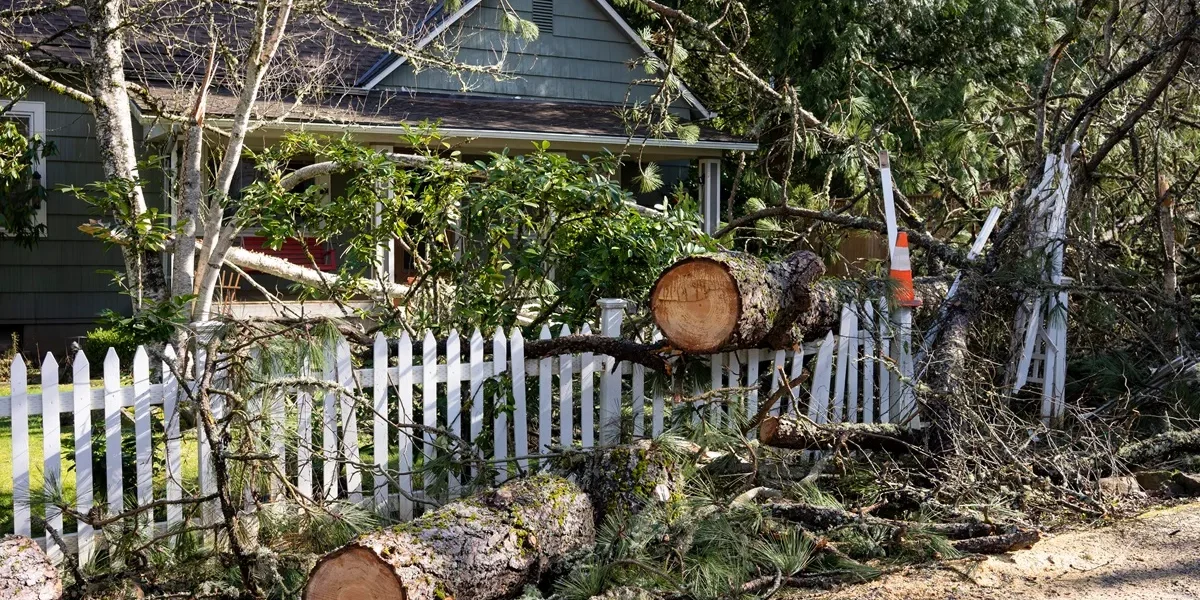
The Civil Code also regulates the situation where a plant crosses the property line. If tree branches hang over neighboring land, the owner of that land can set an appropriate deadline for their removal. After its ineffective expiry, they can cut them and keep them for themselves.
The property owner can also cut and keep roots crossing from a neighboring property. This is one of the reasons why planting large trees directly against the fence can lead to disputes after years, even though no statutory distance limit was broken at the time of planting.
Forest trees, conifers, and fruit trees
Special caution is required for species that reach large sizes. The extensive crown can extend far beyond the property boundary, while the root system can eventually approach the fence, pavement, or buildings.
Conifers and fruit trees also require considering the mature size of the plant. Separate practical distances apply to spruces, pines, thuyas, as well as apple, cherry, and walnut trees.
In the case of fruit trees, Article 148 of the Civil Code is also relevant. Fruit that has fallen from a tree or shrub onto neighboring land constitutes the yields of that land, unless the neighboring land is intended for public use.
Local regulations and allotment gardens
Before starting plantings, it is worth checking the regulations concerning the specific property. Local conditions and regulations relating to the development of a given area may matter.
Different rules also apply in family allotment gardens, where planting distances from the plot boundary are determined by allotment regulations and may depend on the type and species of the plant.
How to avoid problems
The most important thing is to take into account the dimensions that the plant will reach in a dozen or so years. The key rule is simple: on private property, regulations do not designate a single minimum number of meters from the fence, but the method of planting and subsequent maintenance of the tree cannot lead to impermissible interference with the neighbor’s property.