



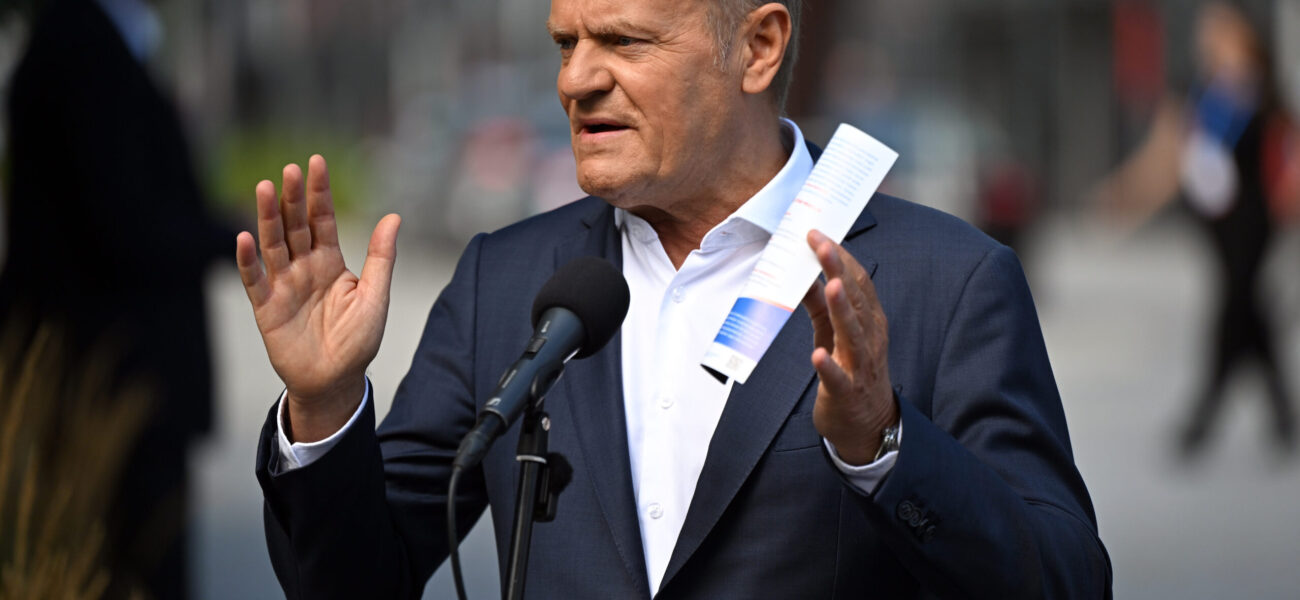
Donald Tusk’s Krakow Campaign Stop: Metro Plans and Tourism Taxes Overshadow the Candidate
Prime Minister Donald Tusk’s recent visit to Krakow to support mayoral candidate Monika Piątkowska shifted national media attention to the city, sparking debates over federal metro funding and local...
Prime Minister Donald Tusk’s recent visit to Krakow to support mayoral candidate Monika Piątkowska shifted national media attention to the city, sparking debates over federal metro funding and local tourism taxes.
Table Of Content
The Prime Minister’s Visit and Local Elections
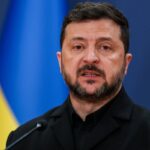
The presidential campaign in Krakow is in full swing, with candidates straining to capture voter attention. In recent days, candidates could say and do whatever they pleased because their efforts could not compete with a visit from the Prime Minister coming to support “his candidate.” Such a visit by a national politician naturally commands the attention of the national media, but the real question is what actually came of it.
As noted, the Prime Minister arrived, joined a group supporting Monika Piątkowska, and added his own backing. The Prime Minister also raised a few interesting points, specifically regarding the metro and the tourist tax. The statements made by the Prime Minister on both matters carry both positive and negative implications.
The “Metro Polska” Project: Funding Realities and Challenges
An undeniable positive regarding the metro is that Donald Tusk elevated the issue of building a subway in Krakow to a national level. One must doubt whether this stems from a deep affection for the city of Krak, serving instead as a pretext to announce the “Metro Polska” project—a funding program for metro construction in Polish cities. The government intends to chip in for all willing municipalities, with a pool of 10 billion euros available.
This is a negative because less than roughly 45 billion PLN is insufficient to build a sensible metro line across multiple interested cities. While it is pleasant that the Prime Minister holds the highest regard for Krakow’s preparations for the metro investment, it is hard to shake the impression that he is simultaneously cooling enthusiasm. He outlines the difficulties inherent in metro construction and then asks the candidate whether Krakow, as a congested city, is ready for those challenges.
The overall scene prompts critical thought primarily due to financial reasons. The label “Metro Polska,” while working-title friendly, does not conceal a massive sack of money for every single investment. This means the financial burden of construction will rest largely on local government, a fact worth remembering when realistically planning a metro in Krakow. At this point, a polite greeting is certainly in order for those who previously predicted the first shovel would break ground on Krakow’s investment in 2028—yes, such individuals did exist.
The Tourist Tax Debate: Local Wins Versus Regional Support
The second issue concerns the tourist tax, the absence of which in Poland represents an extreme failure on the part of a supposedly rational legislator and local governments. Summer is here, meaning many of us travel to warmer parts of Europe and pay a quite substantial tourist tax that economically strengthens local governments and businesses in the places we visit. For a long time, such a fee was not even discussed in Poland.
Currently, a popular notion is the simple slogan from the President of the Republic—an admirer of the defenders of Monte Cassino—who threw out a catchy line during last year’s campaign rejecting any further taxes, implying a guaranteed veto. Meanwhile, such a fee would present an opportunity for all regions of Poland, primarily the most tourist-heavy areas, though excellent hotels now exist in small towns as well. Consequently, the topic of a tourist tax has resurfaced.
Initial proposals suggested that 80% of such a tax would go to the municipality where it was collected, while 20% would go to the Polish Tourist Organization to promote and support tourism domestically and internationally. According to the proposal put forward in Krakow by Prime Minister Tusk, 100% of any potential fee would flow directly to the local government, which in this case means Krakow.
While this sounds like a plus, one must not forget that every municipality belongs to a voivodeship featuring various regional and local tourist organizations. Handing 100% to the local government supports the giants—thankfully including Krakow—while mid-sized and smaller locations will not significantly alter their standing, an outcome likely achieved if a portion of the funds were redistributed by tourist organizations to support less popular areas.
Krakow would not be impoverished by this arrangement; funds would still exist to inform tourists about the existence of Krzeszowice or Dobczyce, encouraging visits to those towns while tourists inevitably stopped in Krakow anyway and left their money there. Yet the proposed idea differs, though campaign rhetoric often shifts realities.
Indeed, the campaign itself remains the focal point. Donald Tusk arrived to support Monika Piątkowska’s campaign and raised interesting points, yet several PR side effects may emerge. The first was obvious and minor: those convinced of “Tusk’s fault” have permanently fused the Prime Minister’s name with the candidate and will never vote for her.
The second effect is the one Donald Tusk invariably generates—a phenomenon others desire yet cannot replicate—which is concentrating absolute attention on himself. Tusk did it again, showcasing an undeniable political phenomenon, though it is hard to shake the feeling that the candidate herself somehow got lost in the process, despite the entire exercise supposedly aiming to promote her.
Jakub Olech, political scientist, academic lecturer, adopted Krakow resident, and close observer and distant participant in the life of the city and region.