






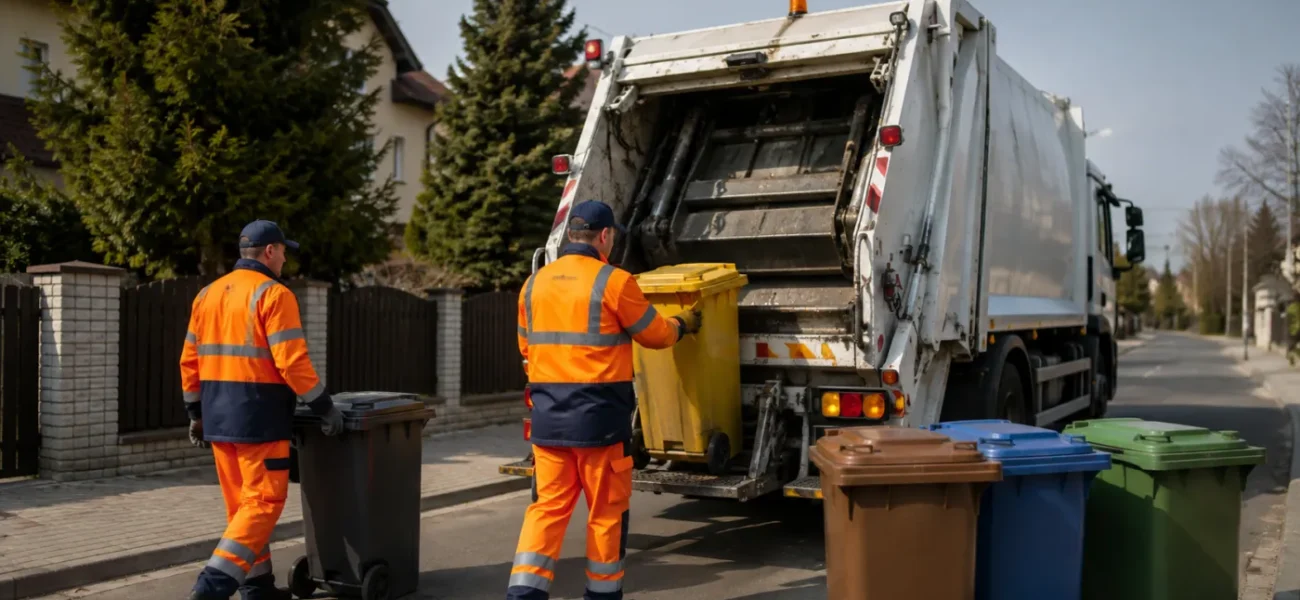
Not Sorting Waste? Municipalities Charge Up to PLN 170 Per Person
Starting in September, failing to sort municipal waste can lead to significantly higher garbage collection bills across Poland, with increased rates reaching up to PLN 176 per resident depending on...
Starting in September, failing to sort municipal waste can lead to significantly higher garbage collection bills across Poland, with increased rates reaching up to PLN 176 per resident depending on the municipality.
Table Of Content
Higher Fees for Failure to Sort Waste
From September, some residents will pay more for municipal waste collection, and failure to comply with selective collection rules may mean a much higher bill. In one municipality, the increased fee will amount to PLN 100 per month per person. Similar solutions are already in operation in many parts of Poland, and in some places the rates are even higher, reaching PLN 152, 160, or even 176 per resident.
The obligation to selectively collect municipal waste applies to property owners nationwide. However, municipalities do not establish a single nationwide amount for violating these rules. The Act on Maintaining Cleanliness and Order in Municipalities gives municipal councils the power to determine an increased rate ranging from double to quadruple the basic waste management fee.
In practice, this means very large differences between municipalities. If the standard rate is PLN 40 per resident, the increased rate can range from PLN 80 to 160. If the basic fee reaches PLN 44, its quadrupling is already PLN 176 per month per person. Therefore, it is not true that a single “penalty for not sorting garbage” applies throughout Poland. The specific amount depends on the local council resolution.
The mechanism functions as a financial sanction for failing to fulfill the selective collection obligation. The Ombudsman has previously drawn attention to problems related to the construction of such fees, including limited possibilities for taking into account the circumstances of a specific violation. The issue of increased fees has also been the subject of proceedings before the Constitutional Tribunal.
New Rates in Józefów Starting September
One of the municipalities changing its rates is Józefów in Otwock County. The Józefów City Council adopted resolution No. 276/IX/2026 on July 17, 2026. From September 1, 2026, the basic fee for municipal waste collected selectively will rise there to PLN 45 per month per resident.
According to the iotwock.info portal, this is the first increase since July 1, 2020. The previous rate was PLN 36.38, meaning a single person’s monthly bill will increase by PLN 8.62. A four-person household will pay PLN 180 per month, which is PLN 34.48 more than under the current rate.
Much more serious consequences are provided for failing to fulfill the obligation of selective waste collection. The increased rate has been set at PLN 100 per month per person. In a household inhabited by four people, this would mean PLN 400 for the month covered by the increased fee.
At the same time, the basic rate in Józefów remains clearly below the statutory maximum. From April 1, 2026, the maximum monthly fee determined by the number of residents method is PLN 70 per person. Józefów’s PLN 45 therefore corresponds to about 64 percent of the current cap.
Rising Costs of the Waste Management System
The change in Józefów is related to the costs of operating the local system. The calculation assumed 20,600 residents, the volume of waste collected in 2025, expenses related to the Selective Municipal Waste Collection Point (PSZOK) and administrative handling, as well as the results of the procedure regarding waste collection and management from September 2026 to August 2028.
The scale of the problem is particularly visible in the case of bio-waste. According to data cited by iotwock.info, in the first half of 2026 alone, 1,489 tons of green waste were collected from Józefów. For comparison, the mass of mixed waste amounted to 1,697 tons in that period. The difference between these two categories was only 208 tons.
The municipality maintained a relief for owners of single-family homes who compost bio-waste in a home composter. It amounts to PLN 1.50 per month for each resident of the property. Composting is intended not only to lower the individual bill, but also to limit the amount of grass, leaves, and other bio-waste entering the municipal system.
New Waste Collection Schedule from September
The fee increase will not be the only change effective from September. Waste collection in Józefów will be handled by PreZero, and along with the new service period, the schedule will change.
Bulky waste and used electrical and electronic equipment are to be collected twice a year. A new element will also be the collection of textiles directly from in front of properties, also twice a year. This is a solution supplementing the possibility of handing over such waste to the PSZOK. Residents will need to check the dates assigned to specific addresses.
Increased Fees for Lack of Sorting in Other Municipalities
Józefów’s PLN 100 is not among the highest rates applied by local governments. In 2026, one can find both municipalities in the country choosing the minimum permitted multiple of the basic fee and local governments utilizing the maximum fourfold multiplier.
In the municipality of Chodzież, from July 1, 2026, the basic monthly fee is PLN 43 per resident. For failing to comply with the sorting obligation, the municipality provided for PLN 86, which is exactly double the basic rate.
A different model applies in the municipality of Tymbark. Since the beginning of 2026, the standard fee there has been PLN 27 per month per person, while in the case of a lack of sorting, a rate of PLN 81 is charged. This is three times the basic bill.
Even higher consequences are provided in the municipality of Mucharz in the Lesser Poland Voivodeship. A resident pays PLN 40 per month there in 2026, but in the case of improper sorting, the increased fee is PLN 160 per person, which is four times the basic rate.
A similar solution was adopted in Nowy Tomyśl. From April 1, 2026, the basic fee is PLN 38 per month per person, while the increased rate was set at PLN 152. The city council resolution explicitly indicates that this is four times the basic fee.
An even greater amount is provided in Otwock, neighboring Józefów. The basic rate in 2026 is PLN 44 per resident there, and for failing to fulfill the obligation of selective waste collection, PLN 176 is provided, which is four times as much.
These examples show that PLN 100 per month is neither the nationwide maximum nor a uniform rate for lack of sorting. The difference between individual municipalities can exceed PLN 100 per person per month, because municipal councils choose the amount of the increased fee within the limits provided by the act.
PLN 70 Maximum Basic Waste Fee in 2026
The amount of the basic fee determined by the number of residents also cannot grow arbitrarily. The act links the maximum rate to the average monthly disposable income per capita overall. In the case of the method based on the number of residents, the limit corresponds to 2 percent of that income.
After the Central Statistical Office published data for 2025, starting April 1, 2026, the maximum rate is PLN 70 per month per resident. However, this restriction applies to the basic rate. The increased fee for lack of sorting is determined according to a separate mechanism and can range from two to four times the rate adopted by a given municipality.