



Polish Deputy FM Warns Ukraine over National Pantheon and Historical Figures
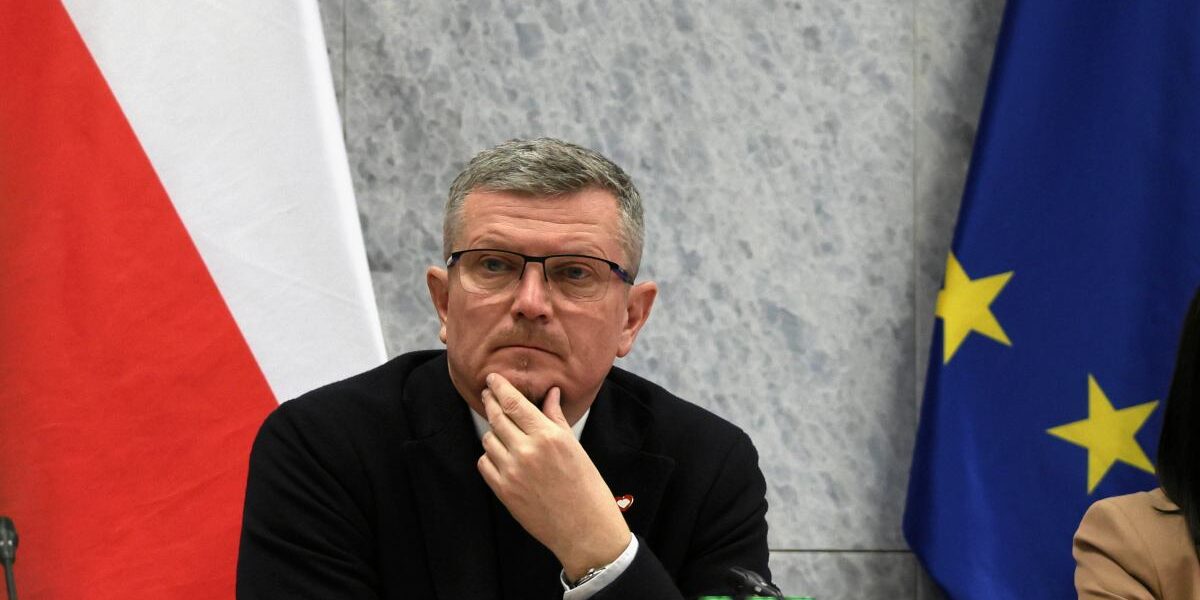
Polish Deputy Foreign Minister Marcin Bosacki stated that honoring figures responsible for mass crimes against Poles in Ukraine’s new National Pantheon would significantly harm bilateral...
Polish Deputy Foreign Minister Marcin Bosacki stated that honoring figures responsible for mass crimes against Poles in Ukraine’s new National Pantheon would significantly harm bilateral relations and European integration.
Table Of Content
Zelensky Signs National Pantheon Law
On Sunday, it was reported that Ukrainian President Volodymyr Zelensky signed a law creating the National Pantheon, with the document published on the website of the Verkhovna Rada. This initiative raises concerns in Poland that individuals responsible for crimes against Poles may be commemorated.
During the annual Veterans Forum in Kyiv on Saturday, August 23, the Ukrainian president reiterated that figures who inspire Ukrainians to be strong through their fight for independence will be commemorated in the Pantheon. He repeated that the Ukrainian Pantheon will certainly be established and only Ukrainians will decide who is considered a hero.
Deputy FM Bosacki on Relations and Potential Figures
Deputy Foreign Minister Marcin Bosacki discussed these issues in an interview with TVP Info on Sunday, noting that every nation has the right to choose its heroes. However, he assessed that if individuals responsible for mass civilian crimes, such as Stepan Bandera or Roman Shukhevych, appear in the Pantheon, it would significantly worsen Ukraine’s relations with Poland and Europe.
Bosacki mentioned that almost no EU diplomatic representatives attended the funeral of Organization of Ukrainian Nationalists head Yevhen Konovalets a few days prior, describing it as a Polish diplomatic action. Konovalets was buried on Tuesday, August 18, in Kyiv after his remains were exhumed in the Netherlands.
Integration Challenges and Historical Context
The deputy foreign minister stated that if Ukraine honors those who murdered Poles, Czechs, Jews, Roma, and Ukrainians as creators of the UPA during its worst period from 1943 to 1944, Ukraine will face a huge problem integrating with Europe.
Jędrzej Słodkowski wrote on Wyborcza.pl about asking young people in Kyiv regarding Volhynia, noting comments about grandparents fighting and living in a necrophilic world.
Statutory Framework of the National Pantheon
The Pantheon law provides for honoring individuals who served as heads of state or equivalent positions in Kyivan Rus, the Kingdom of Rus, the Ukrainian Cossack State, the Ukrainian People’s Republic, the Western Ukrainian People’s Republic, the Ukrainian State, and Carpathian Ukraine.
The document also allows the honoring of Ukrainian presidents, excluding those impeached by the constitution, as well as commanders-in-chief and equivalent positions in the armed forces of the Ukrainian People’s Republic, the Galician Army, the Carpathian Sich, and the Ukrainian Insurgent Army (UPA).
UPA Controversy and Strategic Cooperation
The UPA remains one of the most disputed topics in Polish-Ukrainian relations. Bosacki admitted that disagreements lie with certain parts of the Ukrainian authorities following their decision to name an elite unit after UPA heroes.
Simultaneously, the deputy minister assured that Poland and Ukraine’s strategic interests remain closely aligned in supporting Ukraine to defeat aggressive Russia. Bosacki emphasized that Ukraine’s victory in the war is in Poland’s national interest and cooperation is proceeding smoothly.