






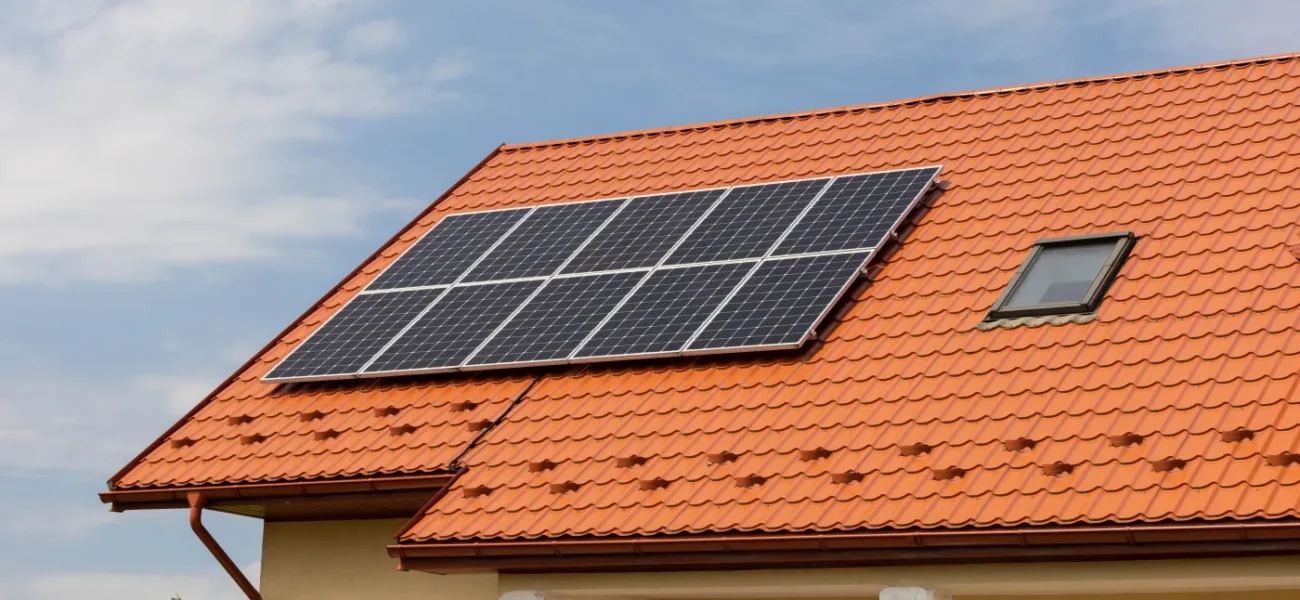
Property Tax on Solar Panels Depends on Specific Rules and Structural Elements
Following last year’s property tax reform, taxpayers face complex interpretations regarding photovoltaic installations, as the tax authority targets specific structural components rather than...
Following last year’s property tax reform, taxpayers face complex interpretations regarding photovoltaic installations, as the tax authority targets specific structural components rather than entire systems.
Table Of Content
The Constitutional Tribunal Forced Regulatory Changes
Changes to the property tax did not happen by chance and were the result of a Constitutional Tribunal judgment that challenged previous solutions. The Tribunal had previously pointed out inconsistent regulations and imprecise definitions, leaving taxpayers and local governments to deal with rules that allowed for various interpretations.
Further amendments and exceptions only made the system increasingly complex instead of solving the problem. Ultimately, the legislator decided on a broader reform, one of whose most important elements was organizing basic concepts, primarily the definitions of a “building” and a “structure.”
New concepts were added to the act, the dictionary was expanded, and the catalog of objects subject to taxation was more precisely defined. The assumption was simple: fewer disputes, less arbitrariness, and greater certainty for taxpayers, meaning it should have been clearer in theory, though not all problems disappeared in practice.
Photovoltaics at the Center of Tax Confusion
Photovoltaic installations are a prime example of this ongoing confusion. New regulations directly referred to this type of object, classifying a photovoltaic power plant in the category of structures, which might lead one to conclude at first glance that a photovoltaic installation requires paying property tax.
However, the matter is not that simple, as explaining the issue involves determining which part of the installation is covered by the tax and who actually bears the tax obligation. This is especially significant since solar panels are now widespread among both entrepreneurs and single-family homeowners.
Not Everything in an Installation Is Subject to Tax
The definition of a structure contained in the local taxes and fees act is crucial, stating that structures include wind power plants, nuclear power plants, photovoltaic power plants, biogas plants, agricultural biogas plants, energy storage facilities, boilers, industrial furnaces, cableways, ski lifts, and ski jumps, in the part not being a building—exclusively in the scope of their construction parts.
This final part of the provision is paramount, as the legislator clearly indicated that only construction parts of the listed objects are subject to taxation. Consequently, simply owning photovoltaic panels does not automatically trigger the obligation to pay tax on the entire device.
In practice, elements created in connection with construction works matter, such as foundations, support structures, or other permanent infrastructure elements associated with the installation. Technical devices themselves, including photovoltaic panels and installation accessories, are not the same as construction parts, meaning the tax authority does not automatically target everything mounted within the installation.
Reform Aimed to End Disputes but Details Still Matter
The goal of the reform was clear: to end years of disputes regarding what constitutes a building or structure and which elements should be taxed, thereby limiting discretion and helping taxpayers predict obligations. Nevertheless, photovoltaics demonstrates that mere regulatory change is not always sufficient.
While the legislator specified rules, questions remain that depend on the character of the specific object and its execution method. Because installations differ—whether mounted on a roof, on the ground, or utilized by an enterprise—technical details determine which elements count as construction parts.
Prudence Remains Necessary Despite the Reform
Although the property tax reform streamlined many regulations, doubts have not entirely vanished. The case of photovoltaic installations proves that even a seemingly simple construction requires a meticulous analysis of the regulations.
Taxpayers should neither assume that owning a photovoltaic installation mandates taxing its entire value nor presume that panels are completely irrelevant to property taxes. Ultimately, the deciding factor is which specific components of an installation can be classified as construction parts under the law.