






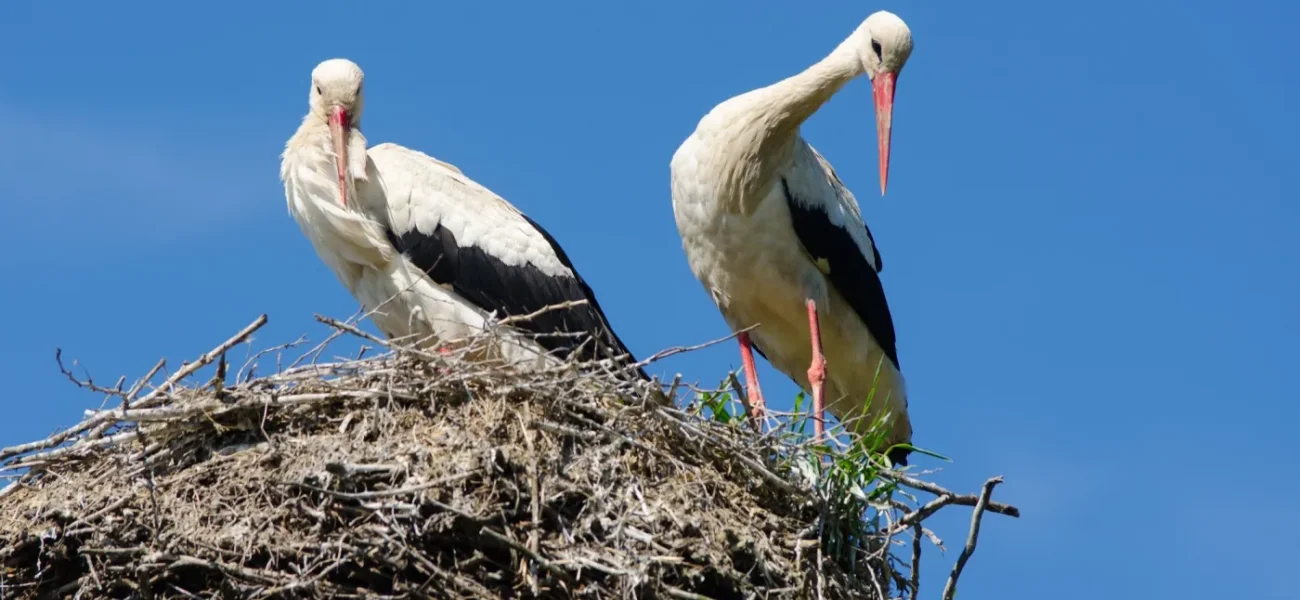
Rodenticides Threaten Polish Storks as Amphibian Populations Decline
Scientists warn that popular rodent poisons pose a lethal threat to white storks in Poland, compounding the challenge of a drastic drop in their natural amphibian food supply. Deadly Trap for Storks...
Scientists warn that popular rodent poisons pose a lethal threat to white storks in Poland, compounding the challenge of a drastic drop in their natural amphibian food supply.
Table Of Content
Deadly Trap for Storks
The use of popular mouse and rat poisons poses a lethal danger to storks, warns Dr. Natalia Tańska from the University of Rzeszów. Birds are poisoned by consuming rodents that have previously ingested the toxin. The problem is all the more serious as annual stork assemblies have just begun in the Podkarpacie region, and the birds are preparing for an exhausting migration of thousands of kilometers to Africa.
Rodenticides laid out for mice and rats are a deadly trap for storks, Dr. Natalia Tańska from the University of Rzeszów told PAP. The birds are poisoned when they eat rodents that have previously swallowed the poison. Meanwhile, annual stork assemblies have begun in the Podkarpacie region.
If food is scarce and poor, it is naturally a problem, but human activity harms storks even more, said Dr. Natalia Tańska from the Faculty of Biology, Nature Conservation, and Sustainable Development at the University of Rzeszów.
As the scientist explained, one of the threats is substances used to combat rodents. We lay out poisons for mice and rats. Rodents eat them and later fall victim to storks. In this way, the birds are also poisoned and end up in wild animal rescue centers, Tańska added.
Drastic Decline in Amphibians
The second problem is the availability of natural food. According to the researcher, a particularly noticeable drop is seen in the number of amphibians, which are a key element of the storks’ diet.
Tańska compared current observations with the situation from years ago. In the past, during summer evenings when driving a car, it was hard not to encounter a toad or frog on the road. They were full of them everywhere, basking on the asphalt. Now, to see a toad or frog, you have to be very lucky. This year I saw one, she said.
Podkarpacie Population and Assemblies
Despite these problems, observations conducted in the Podkarpacie region do not currently indicate a sudden deterioration in the condition of the local stork population. Most monitored nests are occupied, and many of them have raised at least two young.
Before the autumn migration, storks gather in food-rich areas. In Podkarpacie, the first larger concentrations of storks, called assemblies, began to appear in early August this year, in line with their natural life rhythm. The birds primarily choose freshly mown meadows, pastures, and wetlands where they can find more food.
Behavior During Stork Assemblies
The behavior of storks during assemblies does not mean, however, that the birds jointly determine the departure date or migration route.
These are not pre-arranged meetings. Storks simply appear in places where there is plenty of food. Over time, more and more of them gather there. Young birds can observe the behavior of adult individuals and benefit from their experience, Tańska explained.
Gathering at a feeding ground allows the birds to prepare for one of the longest journeys they make during the year. Depending on their wintering grounds, storks have to cover about 5,000 to 10,000 km. However, they do not complete this route in a single flight, covering about 100 to 300 km per day while stopping for food and rest.
Thermal Currents and Flight Weather
During migration, storks primarily use thermal currents, which allow them to cover significant distances without constantly flapping their wings.
Storks do not fly with active flight all the time, meaning they do not flap their wings continuously. They use so-called thermal columns—warm air rising from the heated earth. Thanks to this, they can rise and move like gliders, the scientist said.
This method of movement makes the birds particularly dependent on weather conditions. During storms and other adverse weather phenomena, they stay in place and wait for conditions to improve.
Migration Timetable and Factors
The timing of the migration start depends, among other things, on the completion of breeding and the independence of the young, as well as day length and temperature, especially at night. This year’s observations do not indicate that storks in Podkarpacie have started migration preparations exceptionally early.
Tańska added that, in her opinion, young storks started learning to fly with a slight delay this year. Still at the beginning of August, some young remained in nests, practicing flight and using food brought by parents.
Before they fly, they must practice a lot. They flap their wings, try to fly, and gradually gain skill. This year I have the impression that this process started a little later, Tańska said.
Younger birds and individuals that lost their broods usually depart first. Storks that raised young set off later because they need more time after the breeding season to rebuild energy reserves.
Raising a brood is a huge energy expenditure for both the female and the male. Therefore, birds that raised young need a bit more time to replenish energy reserves and depart slightly later. It is normal that even in mid-seeding September you can meet weaker individuals or those that were sick earlier and set off for Africa only then, Tańska explained.