



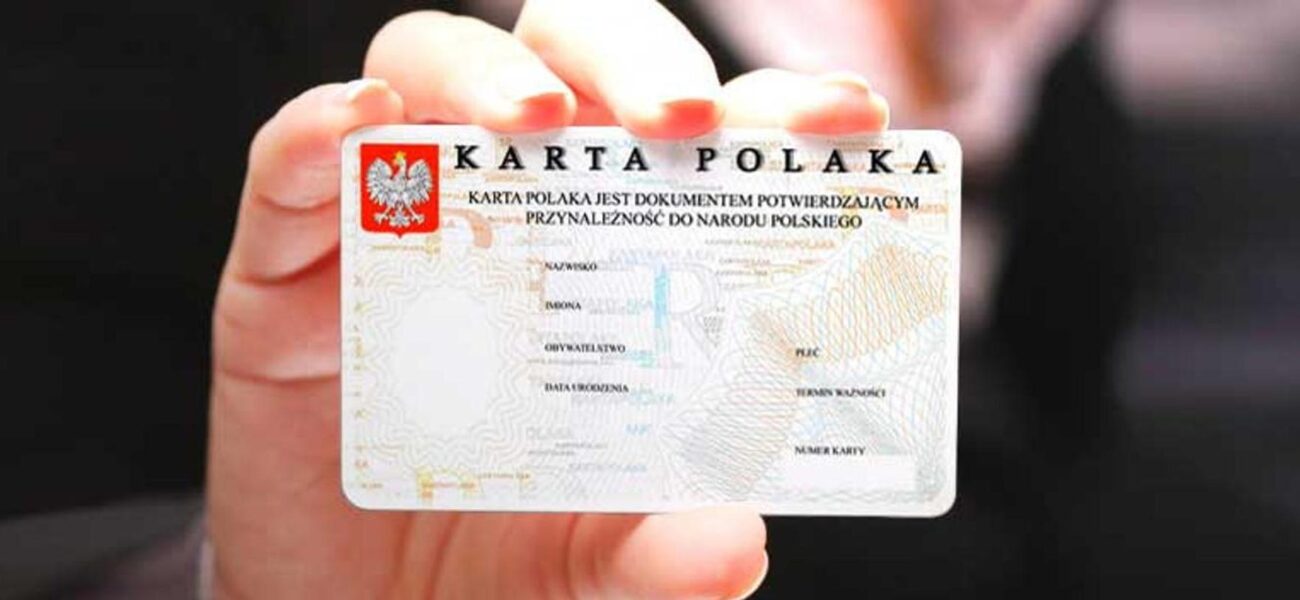
The Myth of Free Privileges: The Truth About the Karta Polaka in Kraków and Lesser Poland
Amid online claims of surging fraud and handouts for Ukrainians applying for the Karta Polaka in Lesser Poland, official provincial data reveals a steady decline in applications and dozens of...
Amid online claims of surging fraud and handouts for Ukrainians applying for the Karta Polaka in Lesser Poland, official provincial data reveals a steady decline in applications and dozens of rejections.
Table Of Content
Decline in Applications Despite Online Outcry
While internet forums in Kraków buzz with accusations targeting Ukrainians applying for the Karta Polaka, cold data from the provincial office shows a completely different picture. The number of applications is successively dropping.
Although interest in obtaining the Karta Polaka in Lesser Poland was high a few years ago, the latest data from the Lesser Poland Voivodeship Office shows that the number of submitted documents is systematically decreasing. Officials examine each case extremely meticulously. Since the beginning of 2024, dozens of negative decisions have already been issued, driven not only by formal deficiencies but also by attempted fraud.
To recap, the Karta Polaka is an official document confirming belonging to the Polish Nation. It does not grant Polish citizenship or the right to cross the border without a visa, but it provides a series of facilities and rights within Poland, such as exemption from the work permit requirement and the right to conduct business activity on the same terms as Polish citizens, the right to free education in higher education institutions and the opportunity to apply for scholarships, or a 37% discount on train travel in Poland.
Local internet forums have recently seen a mass influx of posts calling for a halt to the issuance of the Karta Polaka in Kraków and Lesser Poland. “Kraków cannot be a mecca for accidental Poles. Polish citizenship and the privileges associated with it should be sacred, not a commodity,” reads one post. “We have reached absurdity. Ukrainians bring us a grandfather from a cheerful village, they learn three words of Polish by heart, and then they come to Kraków to collect free privileges,” writes another internet user.
One might think that with the protracted war in Ukraine, applications for the issuance or renewal of the validity of the Karta Polaka would increase year after year. Meanwhile, data shared by the Lesser Poland Voivode’s Office shows a clear downward trend in the number of cases reaching the Kraków department. In 2024, 114 applications for the Karta Polaka and 9 renewal applications were submitted. A year later, there were 80 applications for issuance and 5 for renewal. This year (as of August 20. ), the office reports 53 applications for issuance and only one for renewal.
False Papers and Lack of Grounds: 32 Negative Decisions
In response to allegations regarding the process of issuing the Karta Polaka in Kraków and Lesser Poland, the Lesser Poland Voivodeship Office informed KRK News that a total of 32 negative decisions were issued between 2024 and 2026. The majority of them (28) fell in 2024, while 4 refusals were recorded in 2025, and no negative decisions had been issued by the end of August 2026. Why do officials say “no”? In 13 cases, a negative decision was issued when the applicant in the Karta Polaka procedure submitted an application or attached documents containing untrue personal data or false information, or when they stated an untruth or concealed the truth, or forged or altered a document for use as authentic or used such a document as authentic. Meanwhile, in 19 cases, the applicant did not meet the conditions specified in Article 2 of the Karta Polaka Act, according to Maksymilian Kosowski, Head of the Media and Social Communication Unit of the Voivodeship Office in Kraków.
Who Can Receive the Karta Polaka?
Many myths have grown around the issuance of the Karta Polaka on the internet. Browsing local discussion forums, one can encounter many posts suggesting that “only” submitting a proper application is enough to receive them. Maksymilian Kosowski debunks these reports. The Karta Polaka can be received by a person who demonstrates their connection with Polishness through at least a basic knowledge of the Polish language, which they consider their native language, and the knowledge and cultivation of Polish traditions and customs; in the presence of the consul of the Republic of Poland, hereinafter referred to as the “consul”, or in the case referred to in art. 12 ust. 4 – the voivode, or an employee designated by them, submits a written declaration of belonging to the Polish Nation; demonstrates that they are of Polish nationality or at least one of their parents or grandparents or two great-grandparents were of Polish nationality, or presents a certificate from a Polish or Polonia organization confirming active involvement in activities for the benefit of the Polish language and culture or the Polish national minority for a period of at least the last three years; submits a declaration that they or their ascendants were not repatriated or were not repatriated from the territory of the Republic of Poland or the Polish People’s Republic, on the basis of repatriation agreements concluded in the years 1944-1957 by the Republic of Poland or by the Polish People’s Republic with the Belarusian Soviet Socialist Republic, the Ukrainian Soviet Socialist Republic, the Lithuanian Soviet Socialist Republic and the Union of Soviet Socialist Republics, to one of the states being a party to these agreements, he emphasizes.
How Long Does the Process Take?
As Maksymilian Kosowski emphasizes, the deadline for settling the case depends on the complexity of the evidentiary material. An additional burden for officials remains the overall number of legalization cases in the region. The time required to complete the task results from the specifics of a given case; each proceeding is considered individually. Furthermore, the duration of all administrative proceedings is influenced by the avalanche-like increase in applications flowing into the Voivode of Lesser Poland (applications from third-country nationals regarding temporary residence permits, permanent residence permits, and EU long-term resident status), we hear.
Qualified persons are scheduled for a personal submission of documents (the presence of children under 13 years of age is not mandatory). It is during this meeting at the office that practical knowledge of the Polish language, knowledge of traditions and customs, and the applicant’s actual connection with Polishness are tested. After the decision is prepared and signed, the document is sent by mail, and in the case of a positive resolution, after ordering the printout, the ready Karta Polaka is collected in person at the department’s headquarters in Kraków.