






Tourists Paid 40 Euros to Visit a Fake Roman Amphitheater in Italy
A local entrepreneur in northeastern Italy was jailed after building a fake ancient Roman amphitheater in his garden, which duped tourists, local authorities, and guidebooks for over a decade....
A local entrepreneur in northeastern Italy was jailed after building a fake ancient Roman amphitheater in his garden, which duped tourists, local authorities, and guidebooks for over a decade.
Table Of Content
Discovery of the Supposed Ancient Theater
In the early 2000s, a new archaeological site in Arcugnano near Vicenza in northeastern Italy gained widespread attention. Local entrepreneur Franco Malosso von Rosenfranz claimed he encountered an ancient Roman amphitheater visited by Julius Caesar and Cleopatra after returning from Egypt. Malosso stated he unearthed the site in his large garden when a landslide in 2005 exposed the missing theater.
Promotion and Official Recognition
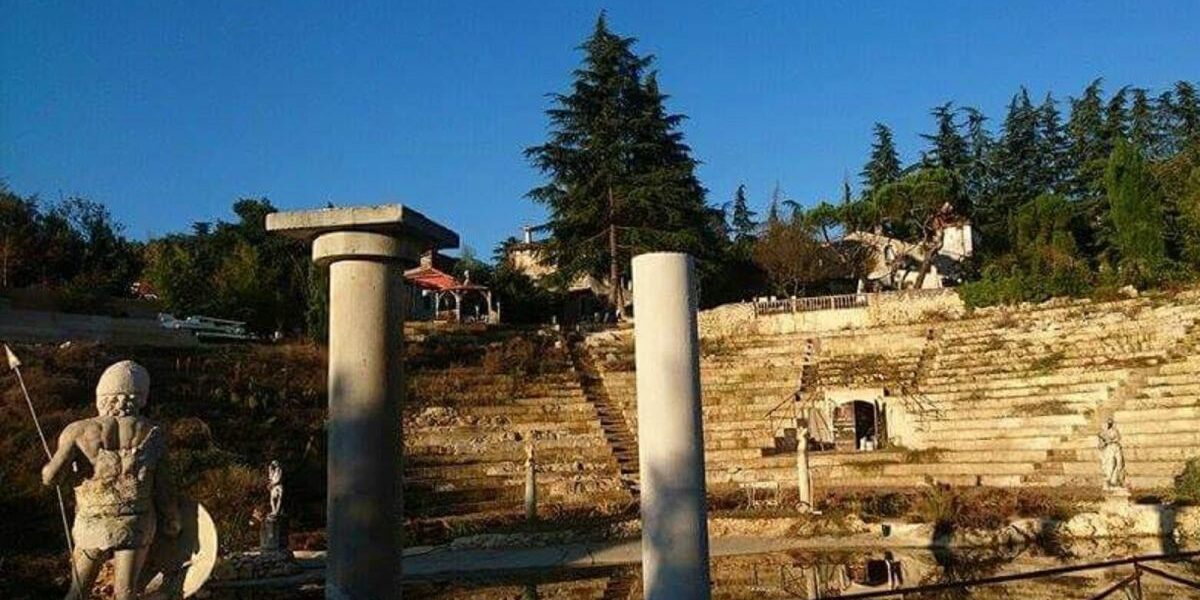
The site was quickly promoted, and tourists visited in crowds, paying up to 40 euros for admission. Lectures and concerts were also organized in the Arcugnano amphitheater. In promotional materials, Malosso described his amphitheater as the oldest, largest, and one of the most spectacular in the world. Local authorities even included information about the monument in a tourist guidebook, and an EU-funded tourist application mentioned it.
Investigation Uncovers a 21st-Century Hoax
An investigation by the Italian prosecutor’s office showed that the alleged open-air monument, featuring column ruins and an artificial lake, was a fake from the early 21st century rather than a structure built before 393 AD. The inquiry, launched in 2016 following a report filed by the city of Arcugnano, revealed that Malosso’s forgery was meticulously planned, requiring hill leveling and other extensive earthworks.
Materials and Decade-Long Legal Battle
The theater’s stairs were built from artificially aged modern stone blocks imitating ancient materials, while other elements were easily exposed as they were made of concrete, fiberglass, and papier-mâché. The trial lasted 10 years, and the case even reached the Supreme Court, with Malosso’s defense consistently maintaining that the forgery was done so clumsily that no one could believe it was an authentic archaeological find.
Imprisonment and Restoration Order
A few months ago, Malosso, now 69, finally entered prison to serve a sentence of over two years. He was found guilty of forging works of art and erecting artifacts without required permits, and was ordered to demolish all illegal structures and restore the hill to its original state.
Expert Perspective on Heritage Verification
Knowledge about historical monuments is now so advanced and accessible that it is hard to imagine anyone being fooled this way, stated Dr. Piotr Kopszak, director of the Museum of the Archdiocese of Warsaw and art historian. Kopszak believes tourists planning to visit Italy still should not fear encountering fake monuments, noting there are too many institutions dealing with heritage in that country for frauds like the one in Arcugnano to happen frequently.
Recommendations for Verifying Heritage Information
The historian encourages verifying information through institutions such as Italy’s FAI (Fondo Ambiente Italiano), a non-profit organization working to protect and promote Italian historical heritage. Serious guidebooks are also verified quite thoroughly and do not publish unverified information, he observed. Co-author: Anna Gwozdowska (PAP). Edited by Jan Latała.