



Tusk Announces €10 Billion Metro Fund and 100% Tourist Tax Revenue for Polish Municipalities
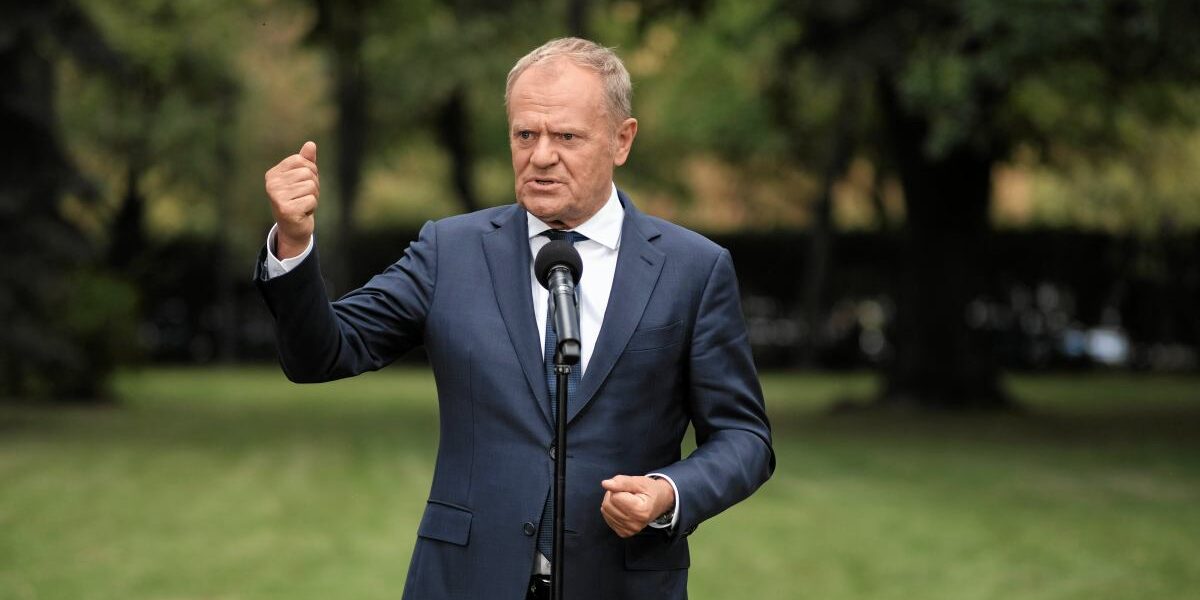
During a Thursday press conference in Kraków, Prime Minister Donald Tusk unveiled a massive infrastructure funding package and sweeping municipal tax reforms ahead of upcoming local elections. Metro...
During a Thursday press conference in Kraków, Prime Minister Donald Tusk unveiled a massive infrastructure funding package and sweeping municipal tax reforms ahead of upcoming local elections.
Table Of Content
Metro Funding and Tourist Tax Revenue
Prime Minister Donald Tusk announced during a Thursday press conference in Kraków that the Ministry of Infrastructure has developed a €10 billion financing program for building subways in Polish cities. Kraków has been pointed out for months as the first beneficiary of these funds, having already mapped out its first two metro lines following analyses, though local authorities repeatedly stressed the investment would not launch without government and EU support.
The second major announcement was the prime minister’s preliminary agreement with the head of the Ministry of Finance regarding the division of revenues from the planned tourist tax. Instead of the previously considered variant where 80 percent of the funds would go to municipalities, Tusk declared that the entire fee—meaning 100 percent—will feed local government budgets.
The very idea of introducing a tourist tax in Poland—one of the few countries in Europe that currently does not charge overnight accommodation fees from visitors—has dragged on for years. Two parliamentary bills on the matter are being processed in the Sejm, and Kraków, visited annually by over ten million tourists, has long estimated its losses from the lack of such a fee at 50-100 million PLN annually. As recently as May, the Ministry of Finance signaled restraint regarding the new levy, pointing to the risk of a presidential veto.
Monika Piątkowska’s Mayoral Candidacy
Monika Piątkowska announced her candidacy in June with the backing of Prime Minister Donald Tusk and Deputy Prime Minister Władysław Kosiniak-Kamysz. However, she will run not from a joint party committee, but from a voter committee—KWW Moniki Piątkowskiej – Ponad Podziałami.
During a Wednesday rally at Park Bednarskiego in Kraków, she indicated that “Above Divisions” means for her, among other things, building cooperation between local government, the government, entrepreneurs, universities, and social organizations. She assessed that “today Kraków needs a mayor who is capable of building partnerships with everyone above divisions, who is capable of securing funds for the implementation of ambitious plans, and who is capable of successfully and effectively implementing projects for the city.”
She added that although “her heart is on the left,” and although she is a KO member, she can also cooperate with very “unobvious” environments that are precisely on the other side of the political scene. Piątkowska stated that as a candidate for mayor of Kraków, she combines an ambitious city development plan for decades with efficient management and stabilization of the situation in the city.
Debts and Municipal Priorities
According to Piątkowska, the biggest challenge for the new mayor of the city will be the issue of regulating the city’s debt, which amounts to approximately 8 billion PLN. She announced that she has prepared a 3-year debt restructuring plan that will allow this sum to be reduced by 1 billion PLN during that time.
During the rally, she listed five main issues she would focus on as the future mayor of the city, referred to by her as “Piątka Piątkowska.” She listed urban infrastructure matters among them, including efforts to build the metro, the Pychowicka and Zwierzyniecka routes, and new tram lines, as well as work on easing traffic flow in the city. She also assessed that the Clean Transport Zone was introduced in too large an area and should be limited to the city’s second ring road, while assuring that a tourist tax will be introduced in the city.
Among Piątkowska’s further postulates were issues of improving urban safety, including energy and water security, the development of projects facilitating the rental and purchase of apartments for young people, and municipal scholarships for the most talented young residents of Kraków.
Early Mayoral Elections in Kraków
Early elections in Kraków will take place on September 27 in connection with the May referendum in which city residents recalled Mayor Aleksander Miszalski (KO) from office.
On Monday, the election commissioner finished accepting notifications on the establishment of committees—ultimately 24 were registered, including 10 political party committees, one organization committee, and 13 voter committees.
Among them are committees of, among others: former Supreme Audit Office President Marian Banaś, Bartosz Bocheńczak (Confederation), Michał Drewnicki (PiS), Łukasz Gibała (Kraków for Residents committee), Daria Gosek-Popiołek (Left), Jan Hoffman, one of the initiators of the May referendum to recall the previous city mayor, Michał Klimek (Confederation of the Polish Crown), Aleksandra Owca (Razem Party), Monika Piątkowska (Above Divisions committee), Sławomir Pietrzyk (Polish Social Democracy), Grażyna Zofia Świat (Nonpartisan Local Government Activists of Małopolska), and former Kraków councillor Łukasz Wantuch.