




Wrongfully Convicted: Piotr Pytel Released After 20 Years in Prison
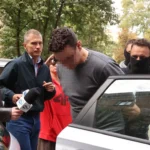
Piotr Pytel walked free from a Rzeszów prison on June 22 after serving two decades of a life sentence for a Munich murder he maintains he did not commit. Legal Path to Freedom Piotr Pytel had...
Piotr Pytel walked free from a Rzeszów prison on June 22 after serving two decades of a life sentence for a Munich murder he maintains he did not commit.
Legal Path to Freedom
Piotr Pytel had unsuccessfully sought a pardon several times before Justice Minister Waldemar Żurek announced on June 18 that the procedure would be reopened. The aim was to secure a suspension of the sentence while the pardon request is being processed under current Polish law.
On Monday, June 22, Pytel was released from the Rzeszów Penal Institution due to a temporary suspension of his sentence. The final decision regarding his permanent freedom now rests with the President of Poland as he reviews the formal pardon application.
The 2004 Munich Case
The case dates back to March 2004, when Tomasz W., known as “Lis,” planned to rob Ekaterina I. in Munich. Pytel stated he accompanied “Lis” to the vicinity of the victim’s apartment but remained at a bus stop, waiting for an acquaintance, Zdzisław Z., to pick them up.
Pytel maintained that he was aware of the planned robbery but never consented to or participated in the murder. He claimed he only learned of the victim’s death through radio reports. Authorities identified Pytel by tracking mobile phone signals near the crime scene, even though he was at a bus stop 500 meters away.
Flawed Evidence and Denied Retrial
The conviction in 2006 was based on circumstantial evidence and the testimony of another prisoner, who allegedly implicated Pytel after police offered a reward for information. Pytel’s DNA was never found in the victim’s apartment, as he was not present during the crime.
In 2009, Pytel was transferred to Poland to serve his life sentence. Subsequent investigations by Polish authorities eventually led to a confession from Tomasz W., who admitted to the murder and exonerated Pytel. Despite this, German prosecutors refused to reopen the case, arguing the new evidence was insufficient.