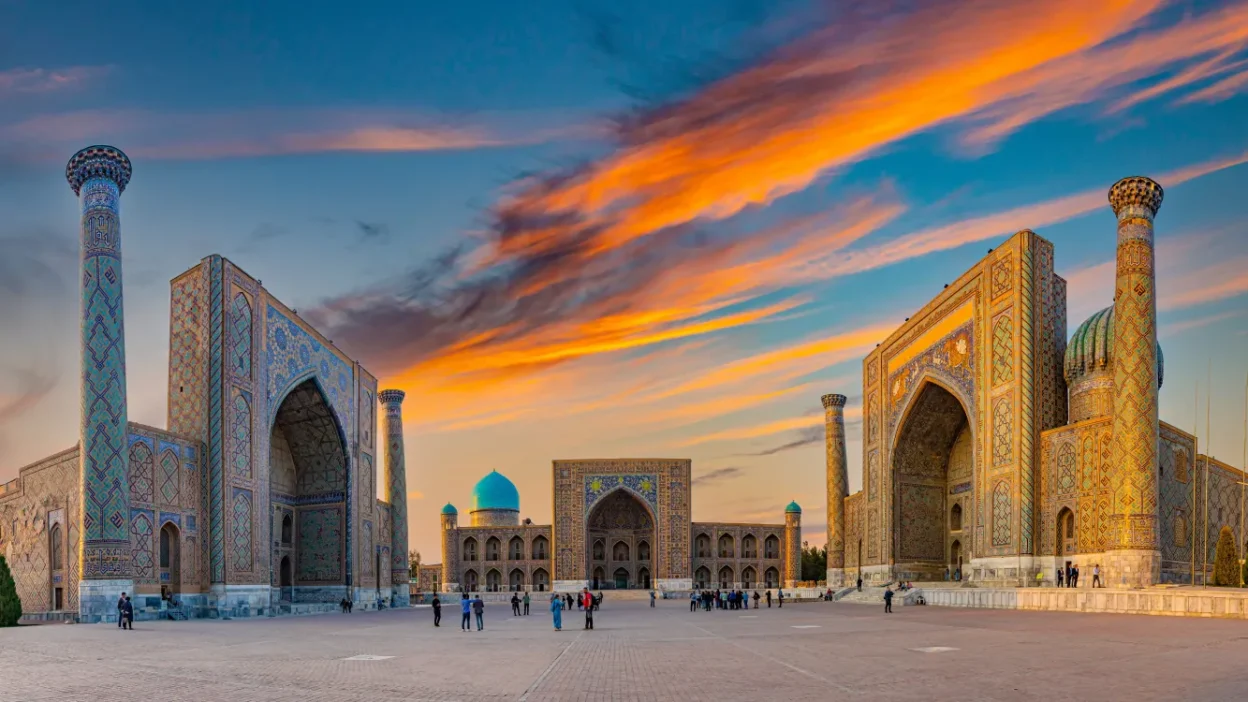
Poland and Uzbekistan signed a letter of intent in Samarkand to bolster collaboration in higher education, including student exchange and joint research initiatives.
Uzbekistan-Poland Academic Exchange Agreement Signed
Heads of the science ministries of Poland and Uzbekistan signed a letter of intent regarding cooperation in higher education on Monday in Samarkand. The declaration encompasses student exchange programs, the establishment of research centers, and strengthening regional cooperation between Central Asian countries and the European Union.
The document was signed by Poland’s Minister of Science and Higher Education, Marcin Kulasek, and Uzbekistan’s Minister of Higher Education, Science and Innovation, Kongratbay Sharipov.
Key Areas of Collaboration
According to the letter of intent, Poland and Uzbekistan will collaborate by creating joint research centers, academic consortia, and supporting long-term university partnerships; increasing academic mobility; and supporting regional cooperation initiatives in higher education between Central Asian countries and the European Union.
Minister Kulasek Highlights Benefits
“Academic exchange, student exchange, scientific exchange, joint projects, joint research, and ultimately joint grants – that’s what we’re aiming for at the third Polish-Uzbek forum,” stated Minister Kulasek in Samarkand.
He noted that Uzbek students and researchers recognize the high quality of Polish science, as well as the lower cost of studying in Poland compared to countries like Germany, France, or the United Kingdom.
Poland Opens Doors to International Students
The Ministry plans – in collaboration with the National Agency for Academic Exchange (NAWA) – to launch a program for strategic countries to promote international cooperation in higher education. These countries include Turkey, Vietnam, South Korea, and Uzbekistan. This will foster institutional and scientific cooperation, encompassing students and doctoral candidates. The topic was discussed with the Uzbek Minister of Science on Sunday.
Uzbekistan’s Areas of Interest
The Uzbek side is particularly interested in cooperation in areas such as economics, especially agricultural sciences, medicine, engineering, energy, and social sciences, according to Minister Kulasek.
Growth in Uzbek Students Studying in Poland
The number of students from Uzbekistan studying at Polish universities is growing. According to GUS data, there were only 280 in the academic year 2016/17, but 2,141 in 2021/22. This number has slightly decreased in recent years (1,709 students from Uzbekistan in 2024/25), partly due to restrictions related to migration policy, including amendments to visa regulations (the law came into effect on July 1 last year).
Currently, almost 1,500 Uzbek citizens study in Poland, placing them among the top ten groups of foreign students in Poland.
Uzbekistan Prioritizes Education Development
Uzbekistan, with a population of over 37 million, is a dynamically developing country with a high birth rate and a very young demographic structure. The country emphasizes modern education for its youth, operating 14 “presidential schools” for gifted children preparing for highly skilled specialist roles. High-quality education is also guaranteed by schools affiliated with universities.
Economic Impact of International Students
A report published at the end of January by the University of Economics in Katowice found that foreign students studying in Poland are long-term investors in the Polish economy. The authors estimated that the impact of all foreign students in Poland (approximately 108,000) is 6.8 billion PLN annually.
Central Asia-EU University Congress
The Central Asia-European Union University Congress 2026 is currently taking place in Samarkand, Uzbekistan, and includes the III Polish-Uzbek Rectors’ Forum. The meeting includes representatives from the EU, Germany, Italy, Denmark, Slovakia, Kazakhstan, Tajikistan, and Kyrgyzstan. Parallel forums are being held with universities from Austria, the Czech Republic, Serbia, Slovakia, and Slovenia.
The meeting follows the strategic cooperation agreement between the EU and Central Asia, signed in Samarkand last April by European Commission President Ursula von der Leyen and European Council President Antonio Costa with the presidents of five Central Asian countries (Kazakhstan, Kyrgyzstan, Tajikistan, Turkmenistan, Uzbekistan).
Congress Organizers
The congress is organized by the ministries of science and health of Uzbekistan, Poland’s MNiSW, the Conference of Rectors of Academic Schools in Poland, the National Agency for Academic Exchange, the Perspektywy Educational Foundation, and the IREG Observatory on Academic Ranking and Excellence.
The next congress is scheduled to be held in Gdańsk next year.