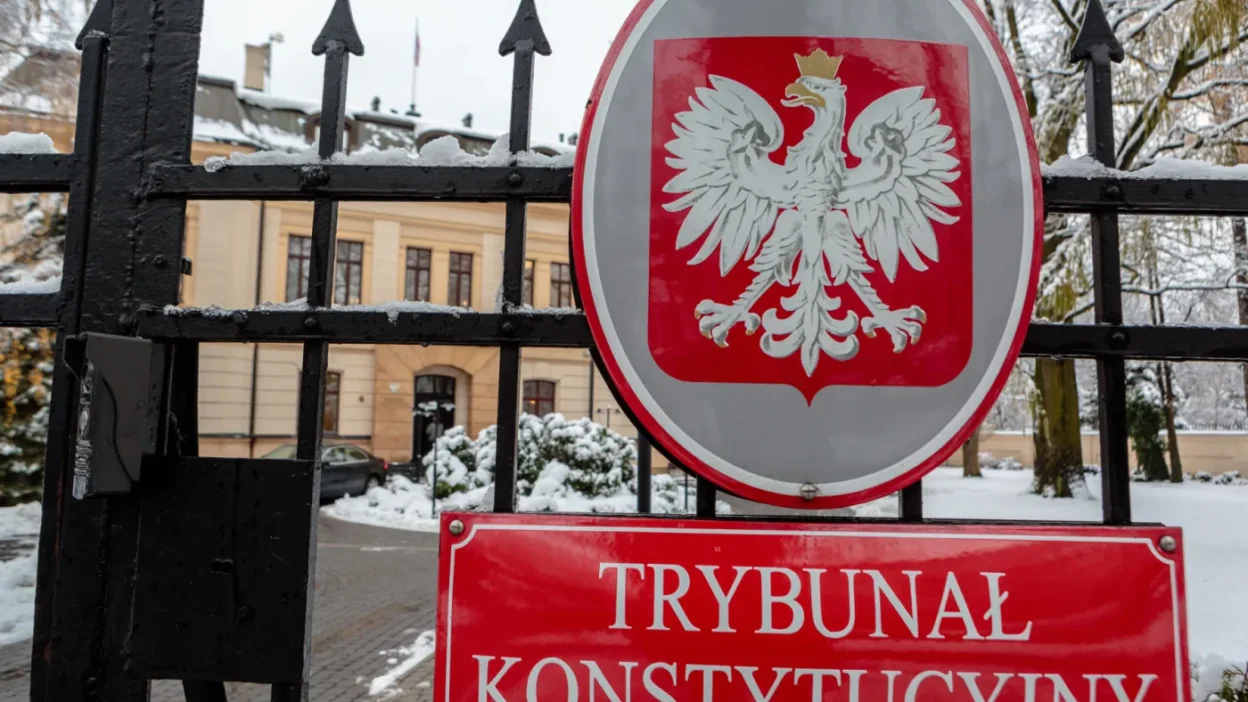
Poland’s Constitutional Tribunal has deemed provisions of the law governing the National Council of the Judiciary (KRS) unconstitutional, impacting upcoming judicial appointments.
Constitutional Tribunal Ruling on KRS Law
The Constitutional Tribunal ruled against the constitutionality of the provisions governing the selection of new judges to the KRS. This decision stems from an attempt to prevent the replacement of the Council’s composition, whose term ends in May of this year.
The Thursday ruling followed a request from the KRS, challenging several provisions of the current KRS law (Journal of Laws of 2024, item 1186) concerning the nomination and verification of candidates.
Tribunal Sides with Applicants
In the majority of cases, the Tribunal sided with the applicants. Judge Bogdan Święczkowski, the rapporteur, stated that it is unacceptable for the Minister of Justice to have exclusive authority over verifying judges’ signatures without legal consequences for non-compliance, potentially leading to candidate disqualification.
The law did not, for example, provide a mechanism for candidates to independently confirm the judicial status of those who signed their nomination papers.
Immediate Effect of the Ruling
The Tribunal emphasized that the effects of the ruling are immediate upon public announcement during the hearing, regardless of official publication. The ruling was issued during ongoing proceedings to select 15 new KRS judges.
Potential Procedural Flaws
Any procedure conducted contrary to the effects of this ruling will be flawed. This, in turn, could affect the validity of the National Council of the Judiciary’s composition resulting from proceedings conducted using provisions deemed unconstitutional by the Tribunal.
Dissenting Opinion
Judge Jakub Stelina submitted a dissenting opinion to the ruling.