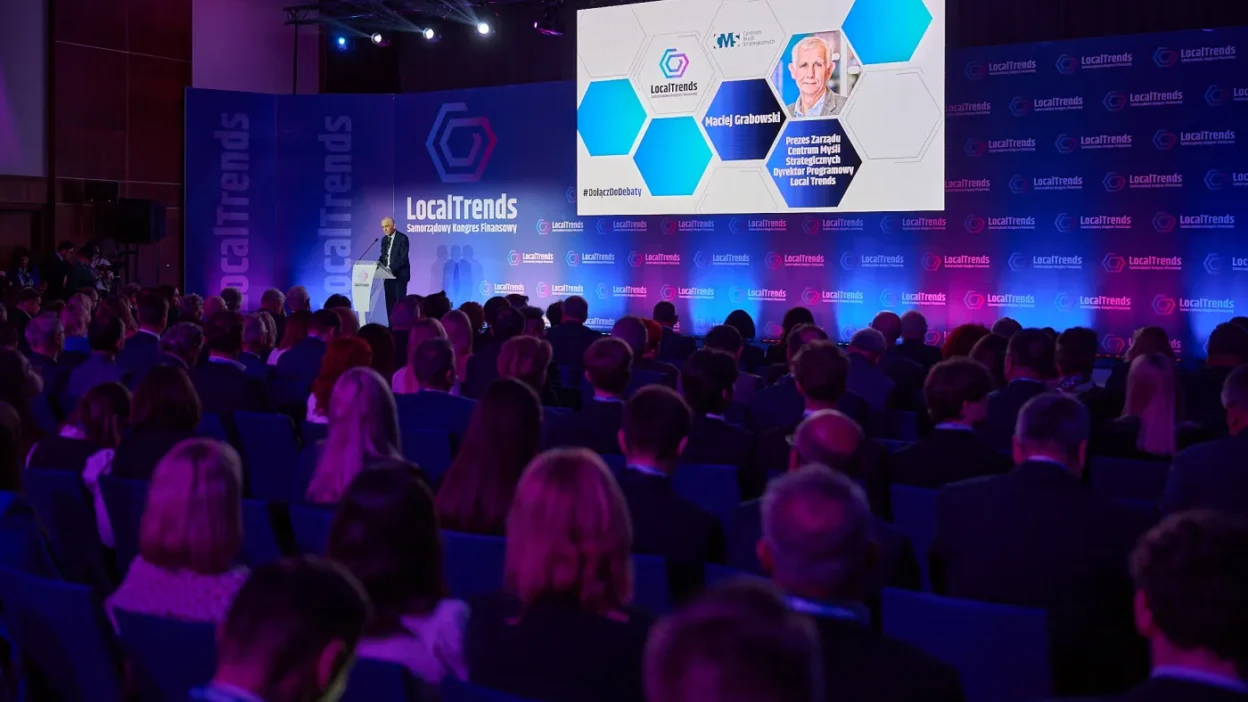
The sixth Local Trends congress in Sopot convened local government officials, experts, and businesses to discuss the future of municipalities, finances, and technology on April 15-16.
Digital Infrastructure as a Foundation for Competitiveness
The first day of the congress featured a debate on regional competitiveness, local economic attractiveness, and pro-innovation digital infrastructure. Discussions highlighted that developing digital infrastructure is no longer optional, but a key condition for regional development.
Participants discussed the importance of data from telecommunications operators in city management, the challenges of integrating this data, and the need to educate residents on using digital tools. These elements are crucial for cities and residents to safely and effectively utilize digital solutions.
Telecom Provider Perspective
Michał Ziółkowski, Board Member for Technology at PLAY, emphasized the crucial role of infrastructure from a telecommunications operator’s perspective: “Creating modern fixed and mobile infrastructure is key. It’s the foundation for creating innovative solutions for residents and for creating conditions for business development. Development of telecommunications infrastructure directly impacts GDP growth, employment, and enables remote learning and work. Our investments also curb the outflow of people from smaller towns to large cities, as many activities can be done remotely thanks to modern networks.”
The debate clearly showed that access to digital services is becoming as important as basic communal infrastructure, and a lack of it can hinder the development of local economies.
District Heating: Transformation and Financing
Another key topic was the debate on district heating under pressure from transformation – as EU funding opportunities diminish. The discussion focused on the sector’s massive investment needs, estimated at hundreds of billions of zlotys, and the need to build new financing models.
Experts agreed that energy transformation is impossible without cooperation between the public and private sectors, and an increased role for commercial capital.
Financial Sector and Development Fund Perspectives
Robert Sochacki, Vice President of the Management Board of Bank Pekao S.A., outlined the conditions necessary for financial sector engagement. Piotr Sękowski, Director of Investment for Local Government Investments at the Polish Development Fund, highlighted the need to build comprehensive financing models, emphasizing that smaller heating companies and projects at the county level require particular support due to limited access to capital.
Local Government Finances Under Scrutiny
The second day of the congress evaluated the reform of revenues for local government units. While the financing system has stabilized, discussions revealed it still requires corrections and further changes.
Hanna Majszczyk, Deputy Minister of Finance, summarized the current situation, noting that a full assessment of the reform will only be possible after 2026, and further systemic and constitutional changes may be necessary.
The debate highlighted the tension between growing expectations for local governments and financial constraints, as well as the need for greater flexibility in managing public funds.
Partners and Organizers
PLAY was the general partner of the event. Other partners included: Agency for Regional Development of Pomerania, Bank Gospodarstwa Krajowego, Bank Pekao S.A., Energa Wytwarzanie, GAZ-SYSTEM, National Fund for Environmental Protection and Water Management, ORLEN Petrobaltic S.A., and the Polish Development Fund. The event was organized by the Center for Strategic Thought and the MTP Group. Hosts included: the City of Sopot, the City of Poznań, the Pomeranian Voivodeship, and the Wielkopolska Voivodeship. Partnering self-government associations included: the Union of Polish Metropolises named after Paweł Adamowicz, the Union of Polish Cities, the Union of Polish Counties, the Union of Polish Voivodeships, and the Union of Rural Municipalities of Poland.
Continued Discussions in Poznań
Discussions initiated in Sopot will continue in the fall during the European Local Government Forum Local Trends, to be held on October 1-2 in Poznań, at the Poznań Congress Center. The forum will bring together local government officials, experts, and business representatives to discuss the future of cities and regions in the context of two key pillars: modernity and security.
The focus will include artificial intelligence, cybersecurity, smart city management, and technologies that enhance the resilience of local governments to future challenges. Innovation and adaptability will determine the pace of development and the quality of life for residents.
Local Trends remains a platform for dialogue that connects key stakeholders around the most current challenges facing local governments, translating these discussions into concrete action plans.