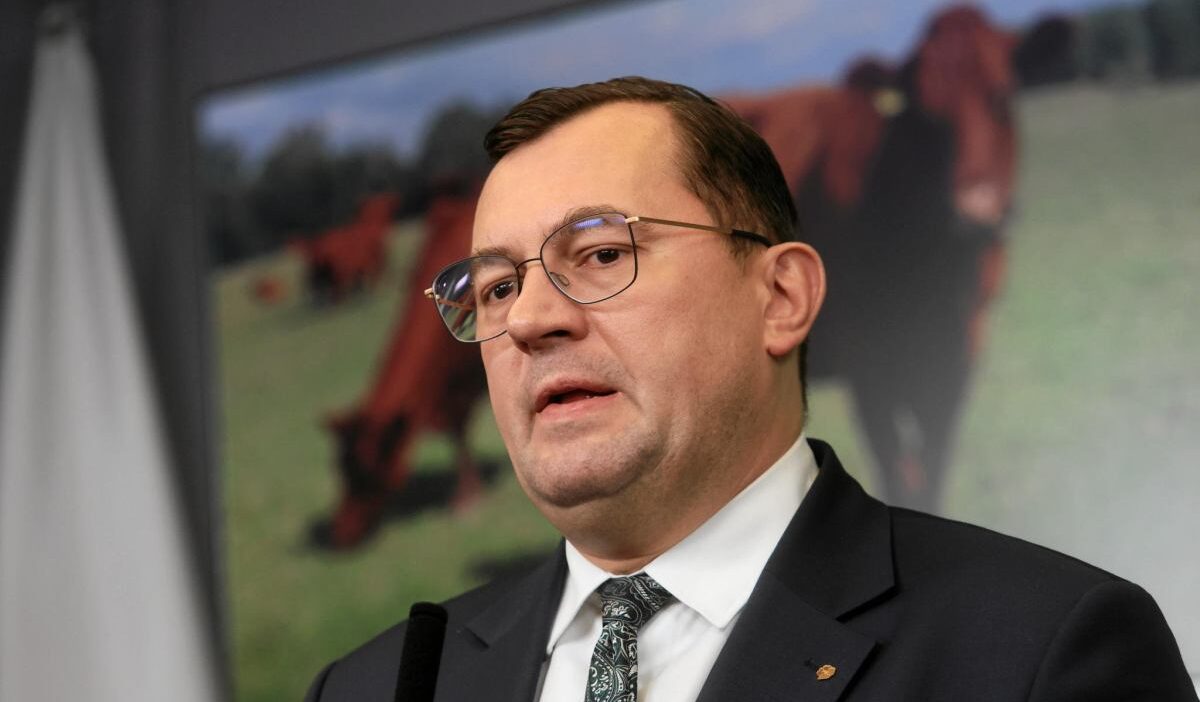
Polish Agriculture Minister Stefan Krajewski defiantly urges opponents to stop blocking the EU-Mercosur trade agreement, declaring the fight for farmers’ interests continues.
Minister’s Defiant Stance
Minister Stefan Krajewski stated the Polish government will not abandon the fight for farmers’ interests despite previous EU-level decisions agreeing to the deal. “Despite the mistakes of predecessors who agreed to the EU-Mercosur agreement, we are not giving up. This is not the end of the fight,” he wrote. He announced key decisions regarding the agreement’s future will be made in the European Parliament next week, urging unity among Polish MEPs.
Prepared Legal and Enforcement Measures
Krajewski confirmed the government has prepared concrete legal instruments and enforcement actions. “We have ready legal scenarios (ECJ) and services fully prepared for controls,” he stated. The goal is to realistically protect the domestic agricultural market from the effects of trade liberalization with South America. “As the Polish government, we will do everything to protect Polish farmers,” he pledged.
Appeal to Opposition and Unions
The minister directly addressed the opposition and parts of the agricultural sector in his post, arguing that political disputes should not override the interests of the Polish countryside. “Stop interfering. Set aside the principle ‘the worse, the better’,” he wrote. “Today, the Polish countryside is more important than your poll ratings and private interests.” He concluded, “There is no matter more important than Poland.”
Background on the Signed Agreement
The EU-Mercosur trade agreement, signed after 25 years of negotiations, covers Argentina, Brazil, Paraguay, and Uruguay and eliminates tariffs on over 90% of products. Most EU states supported it, despite opposition from Poland, France, and Austria. Italy’s change of stance, convinced by benefits negotiated for itself, was crucial. The European Commission emphasizes industrial benefits and geopolitical significance, including raw material access and strengthened EU international position.
Farmer Warnings of Losses
The agreement’s impact on agriculture is highly contentious. Beef and dairy producers fear cheaper food imports from Latin America and unfair competition, noting Mercosur farmers face less stringent environmental and animal welfare standards than in the EU. Although the agreement includes safeguards allowing tariff reinstatement if imports surge or prices fall, this has not appeased protesting farmers. They argue the trigger thresholds will be difficult to meet and member states like Poland could face serious consequences.
Decisive Weeks Ahead
The government indicates the coming weeks will be critical. Outcomes in the European Parliament and potential legal actions could determine the agreement’s future in its current form. Critics highlight the agreement was signed before being ratified in the Parliament.