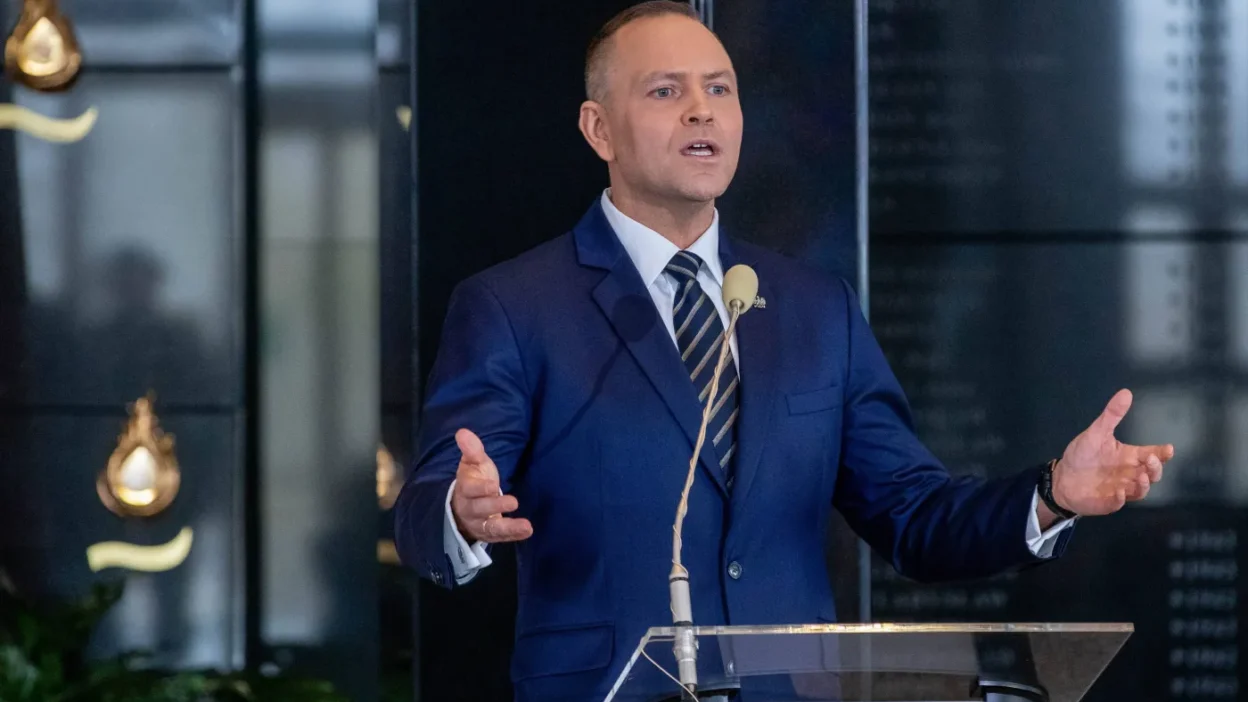
President Duda unexpectedly convened top Polish military commanders, bypassing standard protocol and raising tensions with the government.
Presidential Summons Sparks Military Concerns
President Andrzej Duda’s decision to directly summon top Polish military commanders without prior consultation with the Ministry of National Defence (MON) has caused surprise and concern within the armed forces. The move is seen as a potential shift in established civil-military cooperation protocols.
Key commanders, including Wiesław Kukuła, Marek Sokołowski, and Maciej Klisz, were invited directly by the National Security Bureau (BBN) led by Sławomir Cenckiewicz, with the MON chief receiving only formal notification, according to Onet.
Deviation from Standard Procedure
Traditionally, such meetings require prior agreement with the Minister of National Defence. During peacetime, the government, through the Ministry of Defence, exercises direct control over the army, while the President functions as the supreme commander in cooperation with the executive branch.
Military sources indicate that bypassing this established procedure was perceived as a disruption of the existing order. However, commanders reportedly secured the approval of Defence Minister Władysław Kosiniak-Kamysz beforehand to avoid accusations of disloyalty.
Presidential Prerogatives and Governmental Control
Poland’s political system is not presidential, meaning the President’s powers are distinct from those of the executive branch. While the President has significant prerogatives, including influence over general appointments and strategic direction, day-to-day command and management of the armed forces fall under the government’s purview.
Operational tasks, planning, and army funding are primarily the responsibility of the Ministry of National Defence. Consequently, meetings concerning armed forces development, strategy, and equipment modernization typically involve the Minister.
Dispute Over Modernization and the SAFE Act
The meeting’s official purpose was to refine guidelines for armed forces development, but its political context is broader. Recent weeks have seen a significant dispute over the financing of army modernization, particularly regarding the controversial SAFE Act.
President Duda’s veto of the SAFE Act was viewed by the military as a decision contrary to the recommendations of some commanders. The program proposed utilizing external funds, including European instruments, to accelerate technical modernization, a concept supported by several generals.
Erosion of Trust and Potential for Parallel Influence
The veto of the SAFE Act has been perceived within the military as not only a financing dispute but also as a sign of the politicization of security issues. Consequently, trust in President Duda among some senior officers has reportedly weakened.
Some observers suggest the President’s actions may be aimed at building an independent decision-making base, separate from the government, potentially leading to a parallel center of influence over the army, raising concerns given the current international security situation.
Role of the National Security Bureau
The involvement of Sławomir Cenckiewicz from the BBN has raised further questions regarding access to classified information and the scope of topics discussed. Concerns have been raised about whether only non-classified matters were addressed or if classified information was also discussed, requiring strict security procedures.
The BBN’s role as an advisory body to the President is well-defined, but its direct engagement with commanders is sometimes seen as an expansion of its influence beyond standard boundaries.
New Presidential Approach and Potential Consequences
Government sources believe the recent events may signal a new approach from the Presidential Palace, involving more direct contact with commanders, bypassing traditional communication channels. This practice could lead to the creation of a parallel center of influence on the army, raising serious concerns in the context of the war in Ukraine and threats on NATO’s eastern flank.
Security experts emphasize that a cohesive command system is fundamental to the effectiveness of the armed forces, and any disruption to this balance could lead to decision-making chaos, especially in crisis situations.