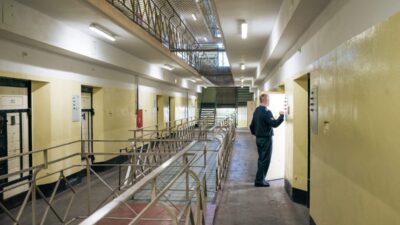
On October 9, 2011, 50-year-old Colonel Andrzej G. murdered inmate Józef F. in Sztum prison, later claiming voices told him to kill.
The Incident
During parliamentary elections, Colonel Andrzej G., director of Sztum prison, requested to speak with inmates. He first met a prisoner in Cell 53, then proceeded to Cell 46 where 66-year-old Józef F., serving a 20-year sentence, was detained. After dismissing the guard, G. entered alone. A few minutes later, another inmate reported Józef F. had “slashed himself with a cleaver.” Prison staff found Józef F. lying on his bed with a bleeding neck and a large kitchen knife nearby. Despite resuscitation attempts, he died from massive blood loss.
The prison’s deputy commander encountered G. on the stairs; G. wore a bloodstained shirt and jacket. G. later instructed a subordinate to draft a fax stating “the director killed the inmate,” claiming voices compelled him. He appeared detached and requested tea.
Mental State Confessions
While drinking tea, G. displayed physical agitation. He discussed green tea preparation, mentioned his wife was “at a conference in the capital,” and later stated, “My wife is gone, I think I killed her—no, she’s at a conference.” He acknowledged hearing “terrifying voices” for a decade but refused to link them to the murder. When asked if he committed a crime, he responded, “Yes, I’ll get life imprisonment and I want life imprisonment,” adding he would be a “fantastic prisoner” working in the library.
G. stated the knife was hidden under his jacket and the guard couldn’t have known. He requested no consequences for the guard who opened the cell. A note later found in his home read: “I’m sorry. Voices in my head made me do it. I couldn’t harm you.”
Aftermath and Legal Outcome
G., a 20-year prison service veteran with a background in clinical psychology, was arrested sober and admitted guilt but refused explanations. An autopsy revealed Józef F. sustained multiple stab wounds; death resulted from a severed common carotid artery. Psychiatric evaluation diagnosed G. with severe depression with psychotic symptoms during the act, noting he couldn’t recognize the crime’s nature or control his actions due to illness.
In March 2012, G. was hospitalized for observation and released the same month. On June 29, prosecutors dropped the case citing criminal code provisions on diminished mental capacity. G. retired and never faced imprisonment or institutionalization. The prison service subsequently implemented mandatory stress prevention workshops for long-serving staff and aggression management training for directors.
System Changes
Colonel Krzysztof Kowaluk, writing in a prison service journal, emphasized the tragedy of a “law enforcement representative” killing an inmate, highlighting prison work’s psychological toll: “combined with long-term stress, it’s a time bomb.” He noted misconceptions about prison work benefits while underscoring threats officers face.
An internal investigation found no fault in subordinates’ actions; they weren’t required to search the director before he entered cells. The case prompted systemic changes to officer support protocols.