

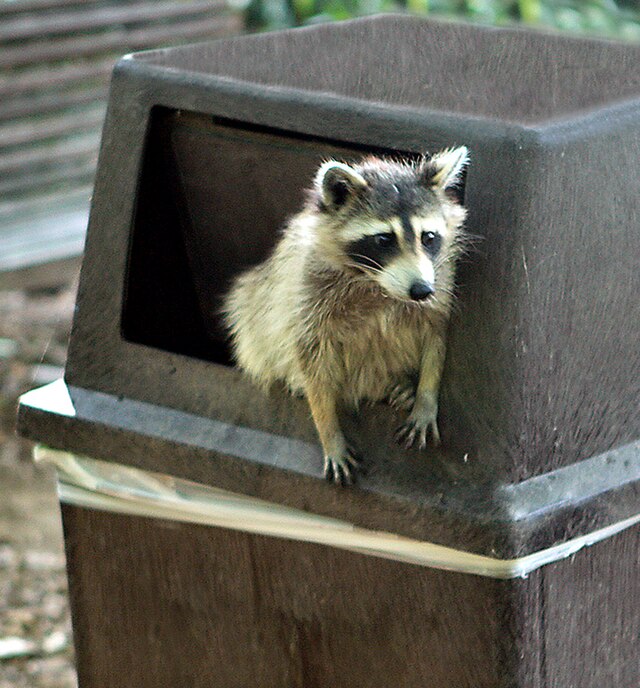
Raccoons, an invasive North‑American species, are increasingly appearing in Warsaw’s parks, residential areas, and along the Vistula, posing a serious risk to river bird populations.
Urban Spread
Raccoons are no longer a curiosity; they walk close to blocks, frequent Bartycka Street parking on Mokotów, and appear on trees along Grójecka Street. Their presence is now noted not only in forests but also in dense urban areas, where they freely roam around shops and dumpsters.
Their first sightings near the city were recorded a few years ago in Kampinos National Park and close to Modlin by the Vistula, later confirmed by camera traps in the Bielań Forest.
Origin and Invasion Pathway
Native to North America, the raccoon entered Europe mainly through the fur industry in Germany, from where it gradually spread eastward into Poland.
Today it is classified as an invasive alien species; it cannot be legally kept or bred, and authorities must control its numbers. In Germany, tens of thousands are killed annually, while in Poland the scale of control is smaller though the species is hunted year‑round.
Ecological Threat
With agile, paw‑like hands and excellent swimming ability, raccoons climb trees, swim across the Vistula, and reach river islands and tree cavities where seabirds nest.
They raid nests of gulls and the large European population of white‑cheeked grebes, destroying eggs and chicks—an alarming threat to riverine bird communities.
Disease Risk
Raccoons can carry dangerous diseases, including rabies, tularemia, and parasites whose larvae can attack the nervous systems of animals and, in rare cases, humans.
Adaptation to City Life
In cities, raccoons swiftly learn to exploit easy food sources, cracking open trash containers, slipping into attics and lofts, where they build nests that produce noise and odor.
Studies show that urban populations gradually diverge from forest counterparts, displaying reduced shyness and increased “tameness”—traits that favor survival near people.
Management Challenges
Nature conservationists and city services call for systematic measures: monitoring raccoon sites, using traps, deploying drones with thermal cameras, and effective removal. However, their friendly appearance makes public approval of culling difficult.
Without decisive steps, the raccoon is destined to become a permanent Warsaw resident—much like wild boar, foxes, and crows, but far more hazardous to river birds and the urban ecosystem.


