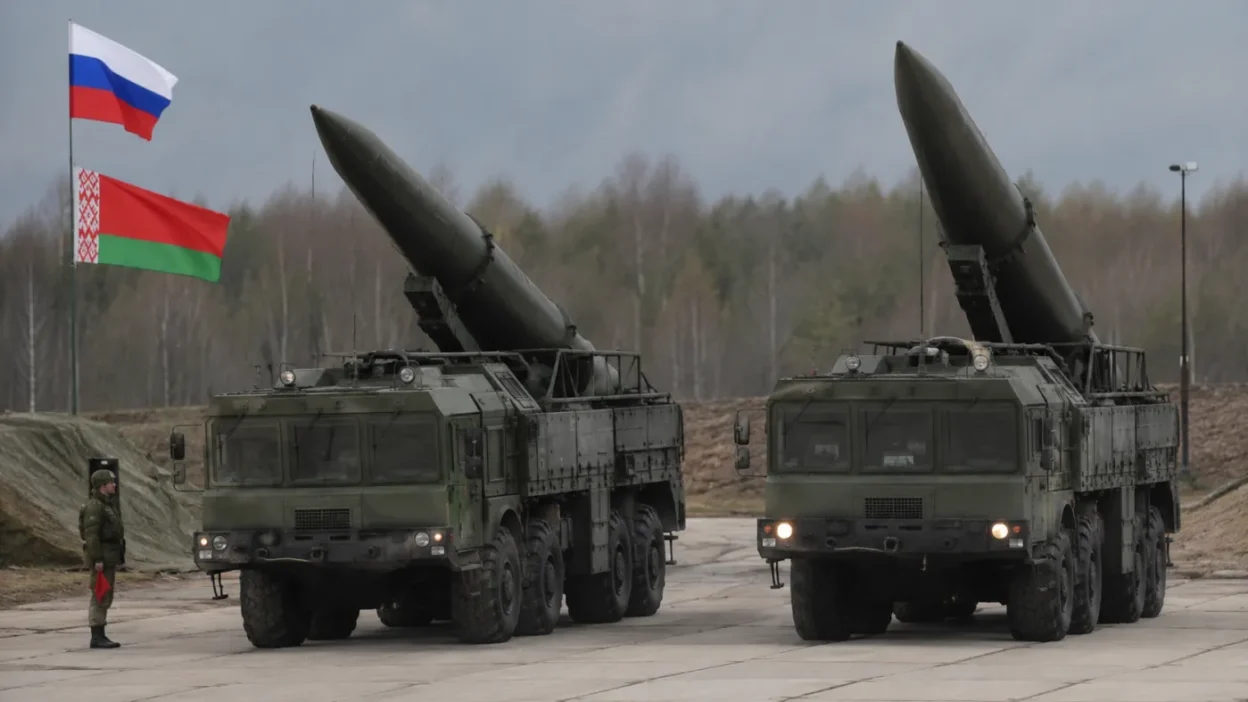
The Russian Ministry of Defense has officially confirmed the deployment of nuclear warheads to field storage facilities in Belarus as part of joint exercises involving Iskander-M missile systems.
Nuclear Deployment Confirmed
Russia has confirmed that nuclear munitions were delivered to field storage sites for a missile brigade participating in joint drills with Minsk. The Russian Ministry of Defense stated that these warheads were installed on Iskander-M short-range ballistic missile systems, which are capable of striking targets within a 500-kilometer range across Central and Eastern Europe.
The maneuvers, which began on May 19 and are scheduled to conclude on May 21, are focused on the preparation and use of nuclear forces in the event of aggression. Moscow claims this is a demonstration of combat readiness and the integration of Belarusian units into the Russian nuclear deterrence system.
Massive Scale of Military Exercises
The scale of the current maneuvers is exceptionally large, involving over 64,000 personnel and approximately 7,800 units of military hardware. The exercises include the deployment of 200 missile launchers, 140 aircraft, and 73 surface vessels, alongside 13 submarines.
Eight strategic nuclear submarines capable of carrying intercontinental ballistic missiles have been engaged in the operations. The drills also incorporate the Russian Northern and Pacific Fleets, strategic long-range aviation, and units from the Leningrad and Central military districts.
Strategic Context and NATO Tensions
The placement of tactical nuclear weapons in Belarus has been ongoing since 2023, following an agreement between Vladimir Putin and Alexander Lukashenko. While Minsk claims the drills are routine and not directed at any specific state, Ukraine and several NATO members view them as a form of political and military pressure.
Analysts from the Institute for the Study of War suggest that the exercises are primarily psychological and propagandistic. The maneuvers occur amid heightened tensions on NATO’s eastern flank, with Russia using nuclear rhetoric to discourage Western support for Ukraine and lower the threshold for potential nuclear use in its revised doctrine.