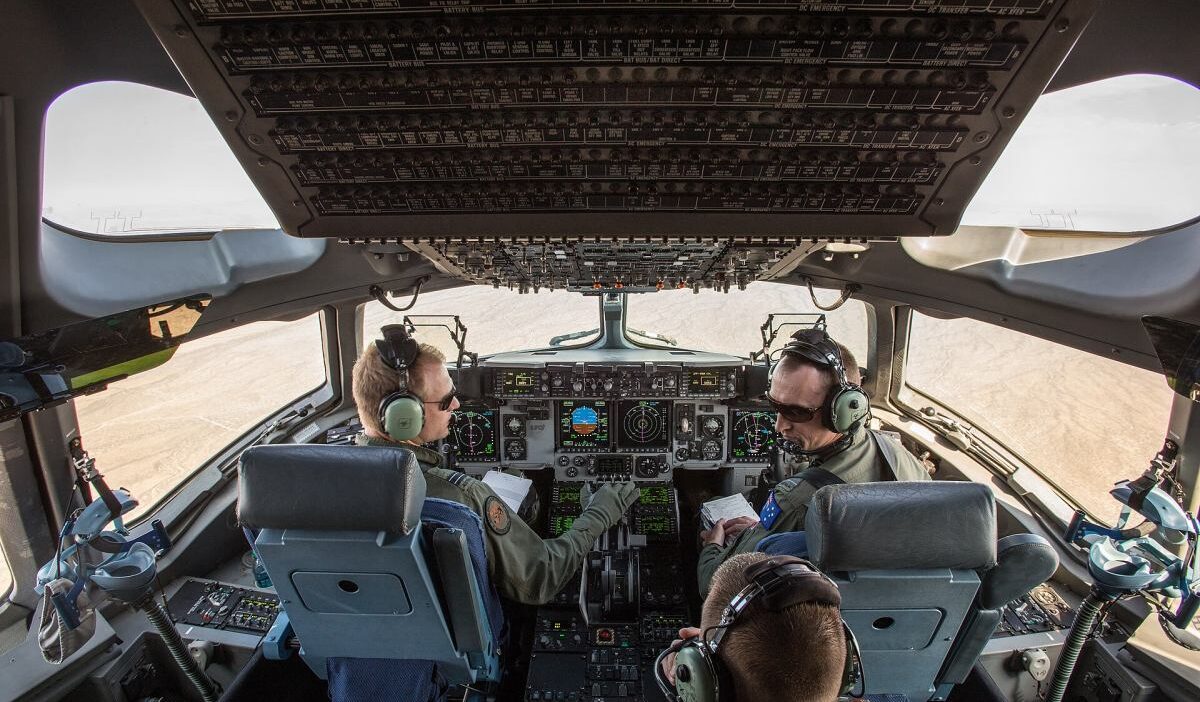
A C-17 Globemaster III aborted its departure from Al-Udeid Air Base in Qatar as Trump declared killing in Iran had ceased and no hangings were planned.
Aborted Flight and Evacuation Preparations
A C-17 Globemaster III, scheduled to depart around 21:00 Polish time from Al-Udeid Air Base in Qatar to Chania Airport in Crete, had its preparations halted. Air traffic control ordered the crew back to their parking spot, awaiting further orders. This occurred shortly after several KC-135 aerial tankers departed Al-Udeid, fueling speculation about an evacuation or combat support preparations. Reuters later reported, citing US administration sources, that the Pentagon had ordered a partial evacuation of personnel from Al-Udeid, the closest US military base to Iran.
Signaling Pressure or Preparations?
The sudden reversal suggests a potential pause in developing US military action. This coincided with Trump’s 21:00 Polish time press conference stating killing in Iran had “stopped” and no hangings were planned, reasons he previously cited for intervention. Iranian airspace was closed to civilian traffic at 23:15 Polish time, reopened five hours later. Israeli media reported heightened military readiness, including air force and security services, potentially to cover a US attack and Iranian retaliation. However, no visible buildup of US forces in the region occurred, unlike before the June 2025 conflict.
Lack of Serious Attack Capability
The US appears unprepared for a major air campaign against Iran. No visible deployment of critical assets like tanker aircraft, AWACS planes, electronic warfare aircraft, heavy transports, or fighter jets (F-22/F-35) has occurred. The nearest carrier is in the South China Sea, requiring about two weeks to reach Iran. While a limited attack using B-2 stealth bombers from the US, possibly with Israeli support, is feasible, its scale would be small. B-2 missions require extensive preparation—flight planning, tanker support, electronic jamming—to ensure success and minimize risk, similar to the months-long Maduro capture plan.
Iran Under Pressure, Trump’s Ambiguous Goals
Tehran faces significant pressure from domestic unrest, economic ruin, and weakened military capabilities after recent conflicts, with limited support from China or Russia. The US threat, amplified by June 2025 strikes and the Maduro operation, lacks clear objectives. Repeating nuclear program strikes risks admitting prior Trump administration claims of its destruction were inaccurate, as Israeli and French assessments noted only severe damage, not eradication. While military signaling pressures the regime, American goals remain unclear, possibly aiming for compliance with interests like Venezuela’s oil and money, rather than regime change.