

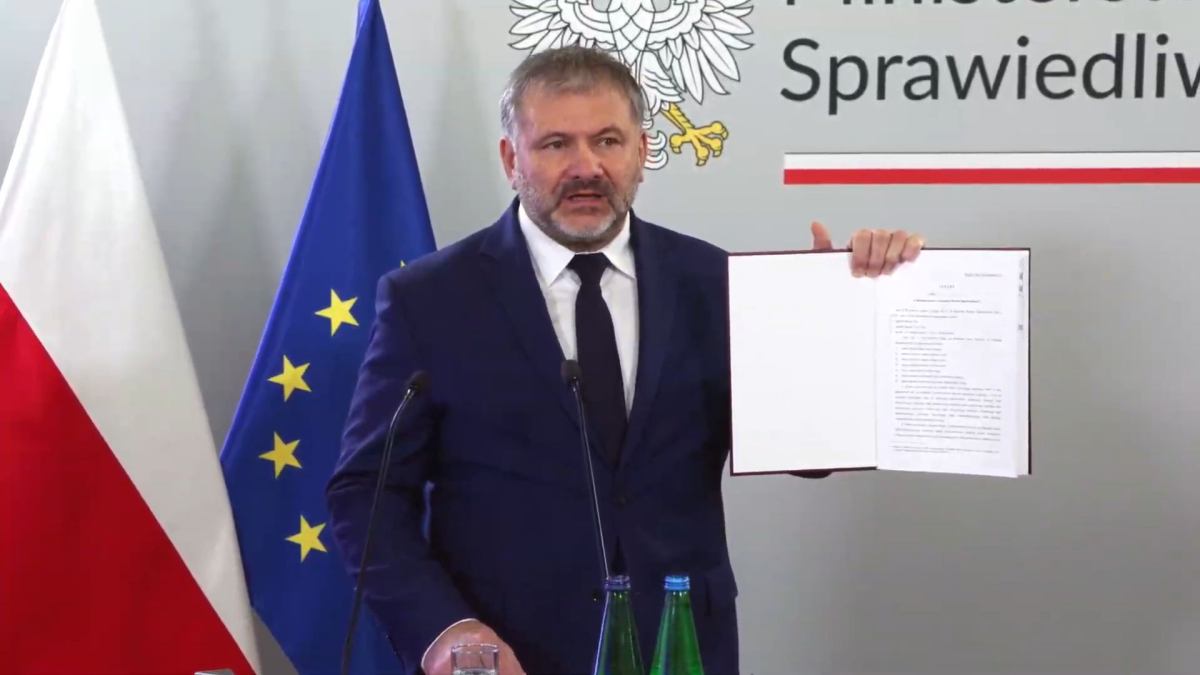
Justice Minister Waldemar Żurek announced on Thursday, November 6, a sweeping overhaul of the National Council of the Judiciary (KRS), promising a landmark change.
Waldemar Żurek Announces KRS Changes
On Thursday, November 6, Minister of Justice Waldemar Żurek held a press conference in which he presented a draft amendment to the law governing the National Council of the Judiciary (Krajowa Rada Sądownictwa, KRS). He stated that he hopes this will be a revolutionary piece of legislation.
Elections for the KRS
The amendment would introduce a new eligibility rule: only judges with at least ten years of experience, including a minimum of five years in their current court, could stand for election. Candidates would be nominated by a group of active judges, the Naczelna Rada Adwokacka, the Krajowa Rada Radców Prawnych, or the Krajowa Rada Notarialna.
The selection process will also change. Under the current system, a two‑stage election is used: lower‑court judges elect delegations, which then choose KRS members. The proposed version would allow every judge in Poland to vote directly, making the elections universal among judges.
Voting Limits per Judge
The draft establishes that each judge may vote for no more than fifteen candidates, respecting the proportionate representation of each court as defined in the statute. Regional judges would be able to select one candidate from the Supreme Court. Candidates receiving the highest counts within each group would win seats, and the Supreme Court candidate with the most votes would be appointed to the KRS.
Proposal for a Social Council
Żurek also presented an idea for a Social Council with a four‑year term to advise on the assessment of judicial and assessor candidates. Its members would be appointed by several professional bodies, including the Central Chamber of Advocates, the National Chamber of Legal Advisers, the National Chamber of Notaries, the National Chamber of Bailiffs, the Main Council of Science and Higher Education, the Ombudsman for Citizens’ Rights, the National Council of Prosecutors, and three representatives from NGOs.


