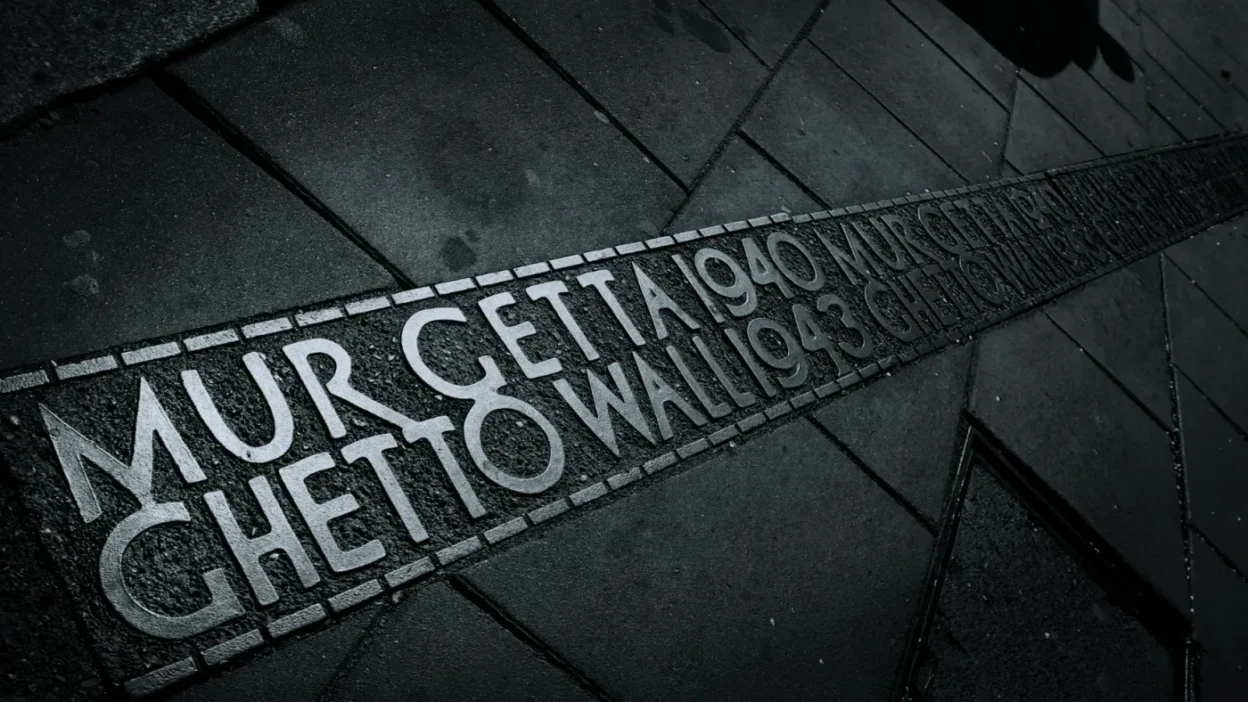
On April 19, 1943, the Warsaw Ghetto Uprising began, with Jewish fighters battling for dignity against overwhelming odds in Nazi-occupied Poland.
The Warsaw Ghetto and Its Inhabitants
In October 1939, a census ordered by German authorities recorded approximately 360,000 Jews residing in Warsaw. Following a decree issued by Heinrich Himmler on October 30, 1939, mandating the resettlement of Polish and Jewish populations from incorporated territories, an additional 90,000 Jews arrived in Warsaw by October 1940.
These newcomers were crammed into an area of just 3 square kilometers, leading to severe overcrowding and unsanitary conditions. This contributed to high mortality rates, initially from diseases like typhus, and later from starvation.
Escalating Conditions and Population Density
Despite deaths and escapes, continued migration further congested the ghetto, whose territory continued to shrink. Between January and March 1941, approximately 50,000 Jews from the western part of the Warsaw district arrived, bringing the ghetto’s population to a peak of around 460,000.
Life Within the Ghetto Walls
Life within the Warsaw Ghetto was horrific. Marek Stok’s diaries described the winter of 1941 as filled with “thousands of beggars, vagrants constantly bivouacking on the street,” reduced to skeletal figures begging for alms. Corpses lay in the streets, often ignored until someone covered them with newspapers.
The Mass Deportations to Treblinka
On July 22, 1942, the Germans began deportations from the Warsaw Ghetto, sending approximately 250-300,000 Jews to the Treblinka extermination camp over two months. Despite German assurances of work in the East, news of the atrocities reached the ghetto, shattering any remaining illusions.
Formation of Resistance Organizations
Those left in the ghetto, primarily young and able-bodied men, were temporarily needed for labor. However, in January 1943, new deportations to Treblinka began, prompting the formation of resistance. The Jewish Combat Organization (ŻOB) was established in late July 1942, led by Mordechaj Anielewicz, Icchak Cukierman, Marek Edelman, Hersz Berliński, and Michał Rozenfeld.
The Jewish Military Union (ŻŻW), composed of members from the pre-war Jewish nationalist Betar movement, also operated within the ghetto, though less is known about its activities.
Preparing for Armed Resistance
By late 1942, the ŻOB had 600 members, largely unarmed. The Polish underground was reluctant to sell weapons, anticipating their own future needs. Jewish resistance fighters sought arms from the “Aryan” side and manufactured makeshift weapons, including Molotov cocktails and acid-filled light bulbs. They also began constructing tunnels, bunkers, and shelters.
The Outbreak of the Uprising
The uprising erupted on the morning of April 19, 1943, when 850 Waffen-SS soldiers armed with machine guns, flamethrowers, and armored vehicles entered the ghetto through the Nalewek gate. They were met with initial success by Jewish insurgents.
Later that day, larger and better-equipped German forces, under the command of SS Gen. Jurgen Stroop, re-entered the ghetto. Approximately 1,000 poorly armed insurgents faced over 2,000 German soldiers, including Wehrmacht, SS, and auxiliary units from Ukraine, Lithuania, and Latvia, supported by armored vehicles and artillery.
Weeks of Fierce Fighting
For nearly a month, the Germans failed to fully subdue the Warsaw Ghetto. The heaviest fighting occurred around Zamenhoffa and Nalewek streets, and Muranów Square. The Germans systematically advanced, burning and destroying buildings to force civilians out of bunkers and shelters.
Limited Polish Assistance
Limited attempts by the Polish underground (small units of Kedyw, Socialist Fighting Organization, and GL) to assist the isolated Jewish fighters were unsuccessful.
An Appeal to the Polish People
The ŻOB issued an appeal to the Polish people, stating their fight was for the freedom and honor of both nations, and calling for retribution for the crimes committed at Auschwitz, Treblinka, Bełżec, and Majdanek.
The Fall of the Uprising and Final Days
On May 8, 1943, the Germans discovered and surrounded a large bunker at 18 Miła Street, housing several hundred people, including the ŻOB headquarters and over 100 Jewish fighters. Civilians emerged, while most insurgents, including Mordechaj Anielewicz, committed suicide.
Despite appeals from the Polish government in London, the uprising received no response from the Allies. In protest against the world’s indifference, Szmul Zygielbojm, a member of the National Council of the Republic of Poland in London, committed suicide on May 12, 1943, leaving a letter condemning the inaction.
The remaining insurgents fought in small, scattered groups until May 16, 1943, when Gen. Stroop declared the pacification action complete and ordered the Great Synagogue on Tłomacka Street to be blown up.
The Destruction of the Ghetto and Its Aftermath
The Warsaw Ghetto was leveled. Stroop’s report indicated that over 56,000 Jews were found and liquidated in bunkers between April 20 and May 16, 1943. Approximately 6,000 died in combat or from fires and suffocation. Another 7,000 were murdered within the ghetto, and the same number were sent to Treblinka. The remaining 36,000 were sent to other camps, primarily Auschwitz and Majdanek.
German losses were reported as a few dozen killed and wounded, though Jewish and Polish sources claim higher figures. Several dozen ŻOB soldiers survived the uprising, but most did not live to see the end of the war, dying in partisan units or after being betrayed to the Germans. Some participated in the Warsaw Uprising.
Only a few survivors remained, including Icchak Cukierman and Marek Edelman, members of the ŻOB leadership. Israel Gutman, a historian and witness at the Eichmann trial, also survived, enduring Majdanek, Auschwitz, and Mauthausen.
Legacy of the Uprising
The Warsaw Ghetto Uprising inspired resistance in other ghettos, including Białystok, Będzin, Częstochowa, and Wilno.