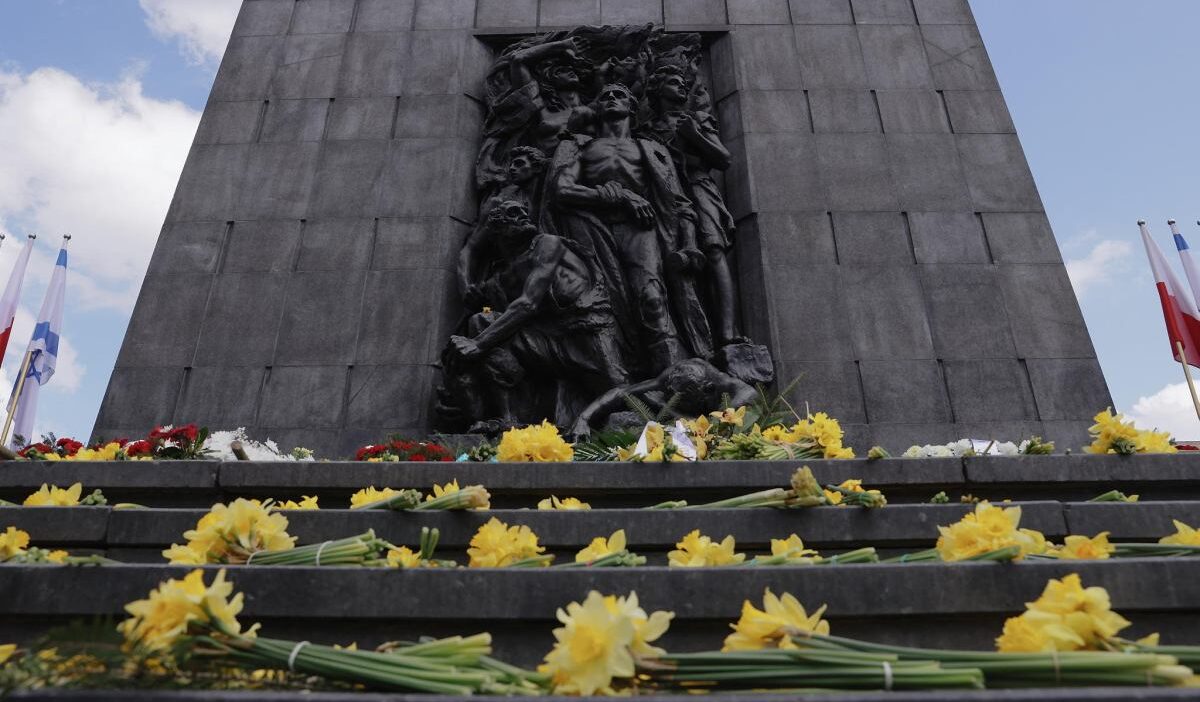
Warsaw will sound sirens at noon today to honor the 1943 Ghetto Uprising heroes and simultaneously test the city’s warning system.
The Siren’s Dual Purpose
Warsaw city officials announced that sirens will be activated at 12:00 PM for one minute, emitting a continuous signal. This serves both to commemorate the heroes of the Warsaw Ghetto Uprising and to test the functionality of the city’s warning system. Residents are not required to take any action, as the siren activation is symbolic and technical in nature.
The Warsaw Ghetto: A History of Imprisonment
The Warsaw Ghetto was the largest established by the Germans. In 1940, occupying forces walled off a section of central Warsaw, confining nearly half a million Jews from the capital and surrounding areas.
The Uprising Begins
On the night of April 18-19, 1943, during the Jewish holiday of Passover, German military units surrounded the Warsaw Ghetto. Early the next morning, German forces entered the ghetto with the intention of its final liquidation.
Armed Resistance
Members of Jewish armed organizations – the Jewish Combat Organization (ŻOB), led by Mordechai Anielewicz, and the Jewish Military Union (ŻZW), led by Paweł Frenkel and Leon Rodal – fought for dignity against the German forces.
A Month of Fighting
For nearly a month, the Germans were unable to subdue the Warsaw Ghetto. The heaviest fighting occurred in the areas of Zamenhoff and Nalewek streets, and on Muranow Square.
German forces systematically advanced through the ghetto, burning and destroying houses, forcing civilians to leave bunkers and shelters.
The Fall of the Ghetto
On May 8th, Anielewicz and several dozen fighters were surrounded. A small number of Jews managed to escape through the sewers from the burning ghetto. On May 16, 1943, the Germans blew up the Great Synagogue on Tłomackie Street, marking the end of the Warsaw Ghetto.
Casualty Figures
According to reports from SS General Jurgen Stroop, from April 20 to May 16, 1943, over 56,000 Jews were found and liquidated in discovered bunkers. Approximately 6,000 were killed on the spot during fighting, fires, or by carbon monoxide poisoning.
Another 7,000 Jews were murdered by SS members within the ghetto, and an equal number were deported to Treblinka, where they were exterminated. The remaining portion, around 36,000, were sent to other camps, primarily Auschwitz and Majdanek.
German and Jewish Losses
German losses, according to the same reports, were several dozen killed and several dozen wounded. Jewish and Polish sources indicate that the actual German losses were several times higher. The Warsaw Ghetto Uprising ignited a will to fight in other centers, leading to armed resistance, albeit on a smaller scale, in ghettos in Białystok, Będzin, Częstochowa, and Vilnius.
The Ringelblum Archive
Three individuals from the approximately 60 who comprised the Ringelblum Archive survived the war, and only one knew where it was hidden.