Citizens are mounting fierce opposition against several major municipal infrastructure projects in Warsaw, citing concerns over traffic congestion, the loss of historical character, and aesthetic degradation of their neighborhoods.
The Krucza Street Controversy
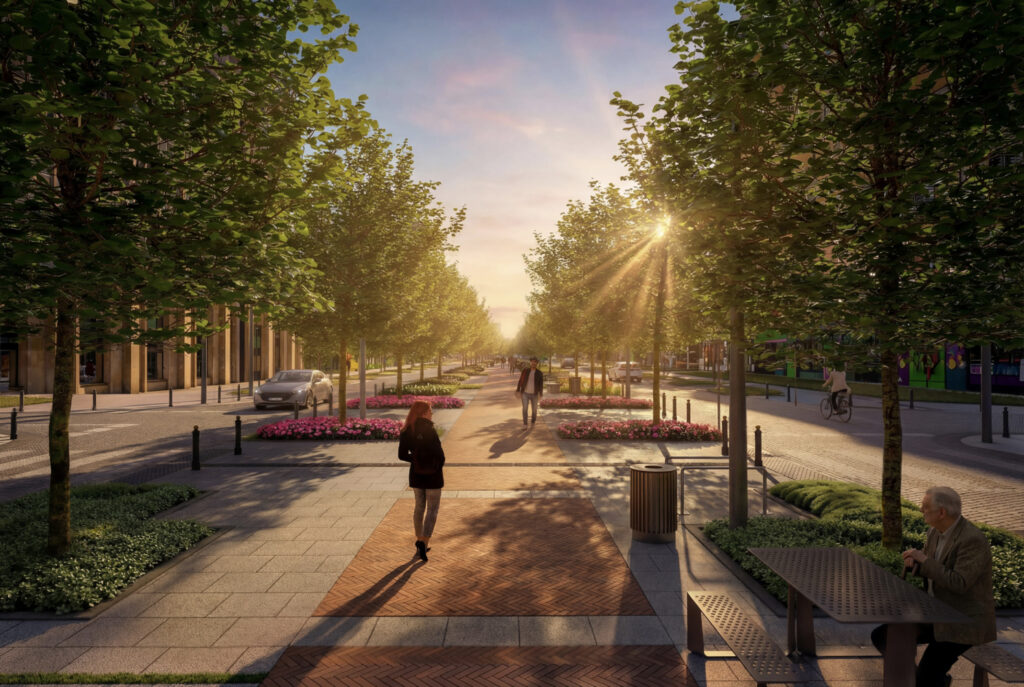
Despite being added to the registry of historical monuments in March 2026, the city is moving forward with plans to narrow Krucza Street. The project includes a pedestrian passage, 250 new trees, and reduced vehicle lanes, sparking claims that the development ignores the street’s protected status and lacks proper social consultation.
Municipal authorities defend the plan as a necessary evolution, noting the current four-lane layout is underutilized. Officials maintain that the redevelopment will transform Krucza from a transit-heavy artery into a greener, safer local space, despite fears from residents regarding parking shortages and increased noise.
Saska Kępa’s Acoustic Barrier Dispute
Residents of Saska Kępa are protesting the installation of grey metal acoustic screens along the modernized Trasa Łazienkowska. Critics describe the structures as an “urban catastrophe” that obscures views and isolates the neighborhood, leading to public demands for the replacement of opaque panels with transparent alternatives.
City hall clarifies that these screens are a required component of the wider modernization of the Trasa Łazienkowska, which is expected to reach completion in July 2026. The project also includes noise-reducing pavement and significant new planting to mitigate environmental impact.
Tensions Rise Over Jana Pawła II Avenue
Planned modifications to Jana Pawła II Avenue, involving the narrowing of lanes and the addition of bicycle paths, have triggered threats of a mayoral recall referendum. While the city successfully adjusted plans to protect and increase parking spots, residents remain unconvinced, fearing the infrastructure changes will mirror the severe traffic congestion experienced during the Marszałkowska renovation.
The city emphasizes the benefits of the broader “New Center of Warsaw” initiative, which aims to prioritize pedestrian safety and greenery. However, the recurring nature of these disputes highlights a fundamental divide between administrative urban planning goals and the immediate concerns of local residents.