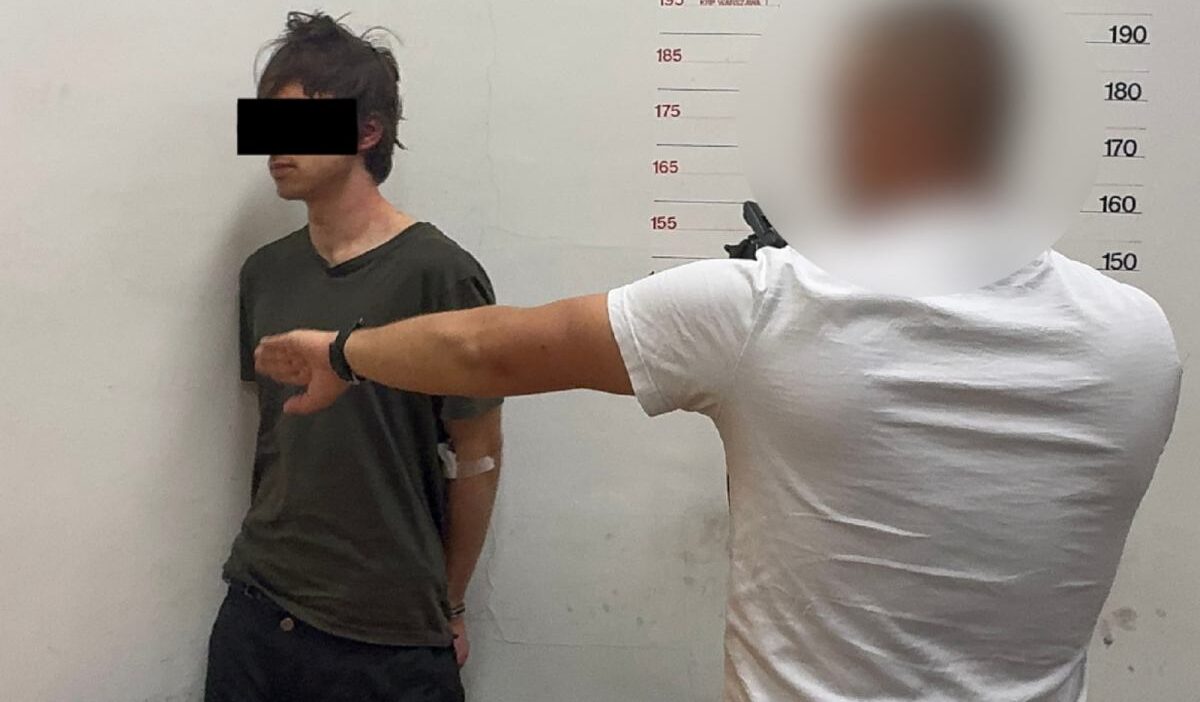
A University of Warsaw law student, Mieszko R., has been found not guilty of murder due to a psychotic state, following the killing of a university employee in May 2025.
Student’s Background and Arrival in Warsaw
On May 7, 2025, uniformed officers informed R.’s mother in Gdynia of her son’s arrest in Warsaw for the murder of a woman and the attempted murder of another with an axe. Family attempts to reach Mieszko by phone were unsuccessful as news of the campus attack spread.
R. began his university studies in Warsaw in 2022, leaving his mother and younger brother in Gdynia. He enrolled in law at the University of Warsaw, a source of family pride. Initially residing in a dormitory, he later moved into a rented apartment in Rembertów at age 20.
Limited Family Contact and Growing Isolation
R.’s father last visited him a year and a half before the incident, while his mother visited more frequently, though specifics were unclear. His younger brother visited once during a vacation, noting the apartment’s disarray, similar to his childhood bedroom. R. often visited his mother, spending time in the forest chopping wood.
Neighbors’ Observations of Unusual Behavior
Neighbors described R. as “strange,” noting his unkempt appearance, greasy hair, and avoidance of greetings. He rarely opened his apartment door fully and would quickly change direction when encountering neighbors, seemingly avoiding interaction. Residents reported frequent late-night water usage.
The Condition of the Apartment
A search of R.’s apartment revealed a dirty, foul-smelling space with scattered clothes and books, but no law textbooks. Furniture was sparse, lacking a bed, with blankets and a mattress on the floor. The apartment door had been repeatedly vandalized with messages like “murderer” and “death for death.”
Past Behavior and Possessions
Acquaintances from secondary school described R. as quiet, withdrawn, but generally friendly and intelligent. He had a keen interest in history and military artifacts, including a machete and other sharp tools. Despite this, he was considered mild-mannered and morally grounded.
Final Days Before the Attack
R.’s father reported no concerns during a recent meal with his son, stating he wasn’t receiving psychiatric treatment or using drugs. His brother recalled a philosophical argument during the same visit, where R. expressed a belief that someone was “programming” him and asked his brother not to “program” him, claiming reality wasn’t real.
Online Activity and Disturbing Searches
R.’s internet search history revealed a preoccupation with identity issues, aggression, and potentially harmful substances. He researched topics like the effects of coca leaves, ancient Greek narcotics, and the dangers of mixing drugs with alcohol. He also searched for information on werewolves, hidden Down syndrome, ADHD, schizophrenia, and psychotic episodes.
Escalating Fantasies and Violent Ideation
R. searched for information on school shootings, including where to obtain ammunition. He expressed violent fantasies online, asking questions like “Why do I fantasize about hurting others?” and “Fantasizing about genocide?” He also searched for erotic massage parlors and a map of red-light districts in Poland.
The Day of the Attack and Confession
On the day of the attack, R. traveled from Gdynia to Warsaw by train, briefly considering returning the axe to his apartment. He believed a lecturer was demanding he “get rid of superpowers,” believing he could run and jump exceptionally high. After encountering people discussing a crime, he felt threatened and ultimately attacked a university employee.
Delusions of Predation and a Simulated Reality
Following his arrest, R. claimed he attacked because he saw demons in the faces of officers and felt compelled to fight them. He stated he packed the axe intentionally, believing he needed to kill to prove he was a predator, not a victim, and was instructed by voices to consume a “innocent sheep”.
Psychiatric Evaluation and Legal Outcome
Psychiatric evaluations determined R. was suffering from a psychotic disorder at the time of the crime, with his ability to understand his actions and control his behavior completely impaired. As a result, prosecutors moved to dismiss the charges and place him under involuntary psychiatric care, a motion granted by the court.
Concerns About Future Risk and Treatment
Experts expressed concern that R. may feign cooperation with treatment to secure his release, and recommended a long-term, high-intensity security measure. Further investigation is ongoing regarding the actions of witnesses and potential negligence in reporting the incident.