U.S. Navy Secretary John Phelan was dismissed after 13 months in office, following disagreements over a proposed new battleship program championed by President Trump.
A Swift Departure
U.S. Secretary of the Navy John Phelan was relieved of his duties Thursday afternoon after serving for 13 months. Despite a close relationship with the President and initial perceived favor, his dismissal came amid a growing conflict with Defense Department head Pete Hegseth.
Multiple U.S. media outlets report Phelan initially refused to believe the news of his removal, repeatedly attempting to secure a face-to-face meeting with Trump at the White House for confirmation. The President ultimately informed him of the decision by phone, ending his hopes of remaining in office.
Trump’s “Dream Battleship”
Phelan’s dismissal highlights the risks of attempting to cater to Trump’s preferences with unrealistic promises. The core of the dispute centers on the President’s vision for new battleships, unveiled during a press conference last December.
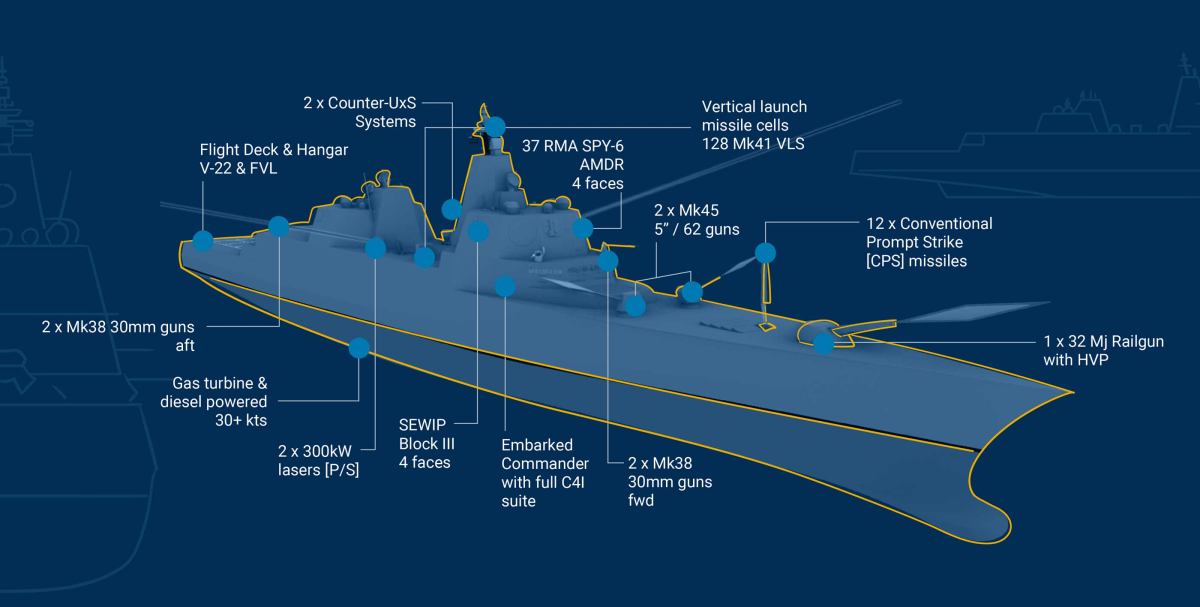
Trump and Phelan announced plans to build the world’s largest surface warships (excluding aircraft carriers), heavily armed with hypersonic missiles, laser and electromagnetic weapons, and capable of carrying nuclear weapons, all constructed with American materials in American shipyards. Trump characterized the proposed vessels as “the most magnificent ship of our times” and part of a larger “golden fleet” expansion of the U.S. Navy.
A Clash of Visions
The battleship plan appealed to Trump’s fascination with large, gray warships. Phelan reportedly crafted the idea specifically to appeal to the President, largely bypassing Hegseth and his deputy, Stephen A. Feinberg. They subsequently launched a campaign to undermine Phelan, informing Trump that he was not a “team player.”
Phelan’s declarations regarding the battleships were considered highly unrealistic. Analyst Mark Cancian of the CSIS think tank noted in December that the proposed specifications were so exceptional that they would spark debate, but ultimately the ship would never sail, with design taking years and costing $9 billion – contradicting the Navy’s focus on smaller vessels.
Existing Naval Constraints
The U.S. Navy has been conducting studies on a new large surface combatant for years. Currently, its large surface ships consist of seven aging Ticonderoga-class cruisers being decommissioned and 76 Arleigh Burke-class destroyers undergoing modernization.
While destroyers are being upgraded, their hulls are too small for further development. The Zumwalt-class destroyers, initiated in the 1990s, proved to be a costly failure, with the program reduced from over 20 ships to just three experimental vessels. This has prompted renewed consideration of larger surface combatants.
From Destroyers to Battleships
Initial plans focused on slightly larger destroyers, but design challenges arose due to insufficient space for desired missile launchers. The idea of two subtypes – larger and smaller – was considered before Trump and Phelan favored the larger, battleship-sized option.
Most U.S. naval experts questioned the feasibility of the plan, citing the lack of recent experience in designing and building such large warships, with the Zumwalt program being a significant failure. The Littoral Combat Ship (LCS) program was also deemed a mass failure, and the new frigate program has faced repeated setbacks.
Internal Opposition and Limited Timeframe
Hegseth and Feinberg reportedly opposed Phelan’s pursuit of the battleship program and his attempts to gain favor with Trump. They also expressed concerns about his handling of the problematic frigate construction program. Phelan was stripped of oversight of submarine construction in 2025, limiting his core responsibilities as Secretary of the Navy.
Ultimately, Hegseth gained Trump’s ear, potentially by highlighting the issues with the new battleships. Trump may have hoped to begin construction on the first ship during his second term, but this was considered highly improbable, requiring a “miracle” from Phelan – a feat Trump apparently did not believe possible.