A nationwide Polish study reveals 77% of doctors experience work-related mental strain, with nearly a third struggling to balance professional and personal lives.
Doctor Wellbeing Beyond the Clinic
A nationwide Polish study conducted by PolpharmaDlaCiebie.pl found that 77% of doctors experience mental strain related to their work, and almost one-third report a deficit in work-life balance. The research indicates that the professional responsibilities of medical professionals extend beyond the clinic doors, significantly impacting their personal lives.
The study examines how the experiences of doctors vary based on years of service, gender, workplace, and specialization.
High Life Satisfaction Despite Challenges
Despite the pressures, the study shows a high level of life satisfaction among Polish doctors, with 92% rating their lives positively. This satisfaction remains consistent across gender (94% women, 91% men) and age groups (94% under 40, 90% over 60).
Work-Life Balance: A Mixed Picture
Maintaining work-life balance is a key factor in doctor satisfaction, but assessments are varied. One-third of doctors report their work-life balance is only average or poor.
Impact on Relationships and Family Life
Over half of doctors (60%) believe their work sometimes or significantly hinders their ability to fulfill their role as a parent. This impact is most pronounced among those under 39 (82%) and those employed in public hospitals (73%) and private clinics (72%). Only 6% of doctors feel their work positively supports their parenting, providing stability and fulfillment.
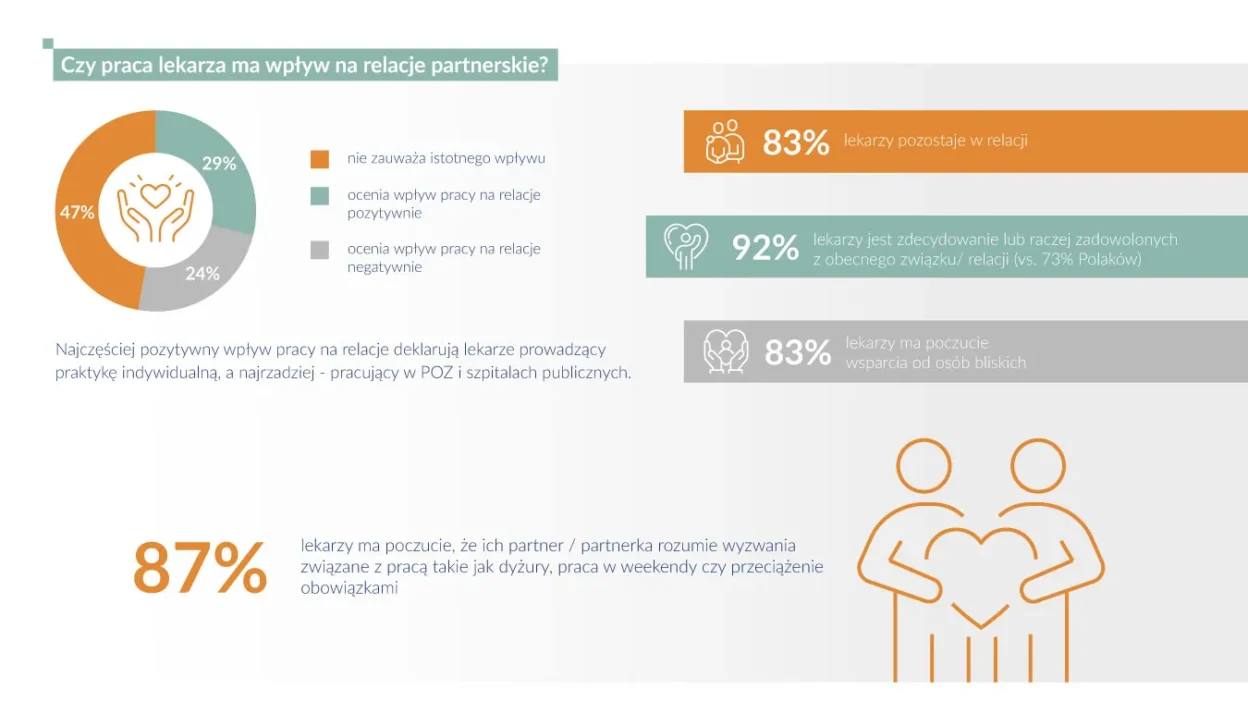
More than half of doctors (50%) feel their work impacts their relationships, positively or negatively. Those in individual practice report more positive effects (43%), while those in private clinics are more critical (33%). Despite professional burdens, only 11% of doctors are not currently in a relationship, and most are satisfied with their relationships (92% vs. 73% for the general Polish population).
Rest and Recovery Patterns
A significant majority of doctors (71%) find time for rest and recovery, but only 45% do so regularly. Only 6% report having no time for rest, similar to the general Polish population.
Doctors in individual practice are most likely to prioritize rest (96%), benefiting from greater control over their schedules. Those in private clinics have the least time for themselves (89%), with 11% reporting no rest at all, compared to 4% in individual practice. Doctors aged 60+ rest most regularly (59%), while those aged 40-49 (42%) and 50-59 (40%) rest the least.
Leisure Activities and Sleep Habits
Doctors’ leisure activities differ by gender, with female doctors more often relaxing with books or films, and male doctors preferring sports and physical activity. Age also plays a role, with younger doctors (
Only about 45% of doctors regularly sleep at least 7 hours per night, with most others (48%) averaging 5-6 hours. Doctors aged 60+ sleep best (59% getting 7-8+ hours), while those aged 50-59 sleep the worst (34%).