The Ukrainian State Interdepartmental Commission has approved long-awaited exhumations in the Volhynia region, a move described as vital for the future of bilateral relations between Poland and Ukraine.
Approval for exhumations in Volhynia
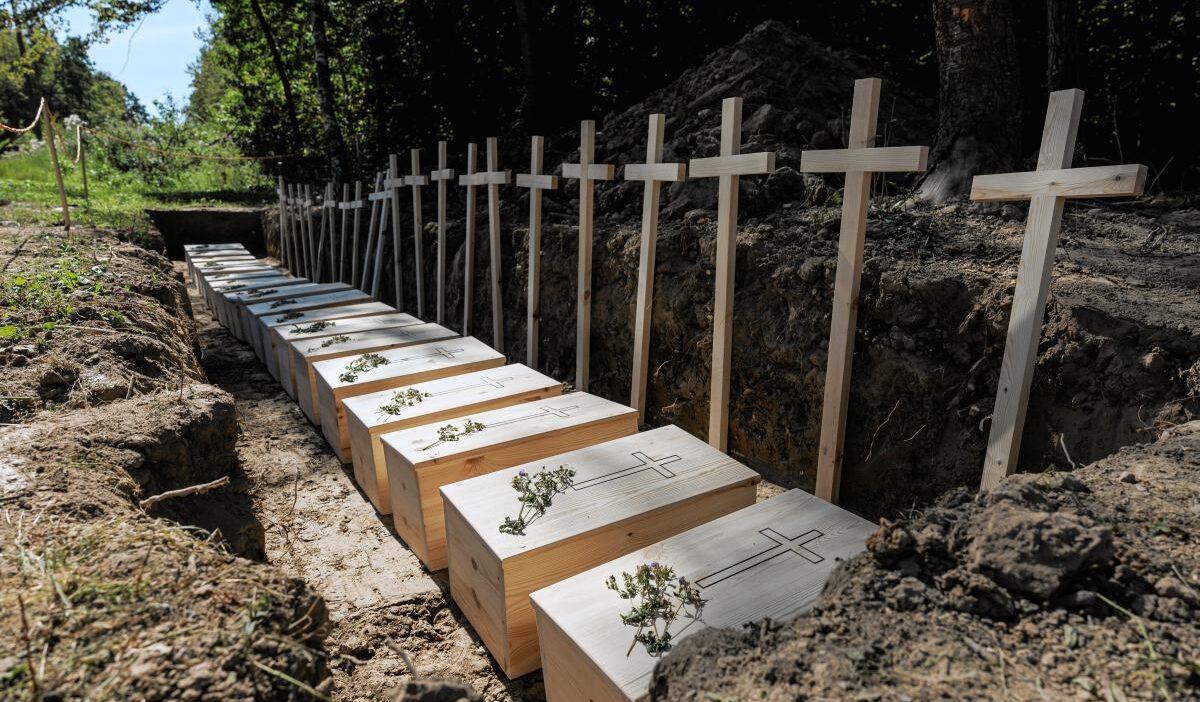
The decision was finalized during a meeting of the State Interdepartmental Commission for the Commemoration of Participants of the Anti-Terrorist Operation, Victims of War, and Political Repressions. Ukraine has officially granted permission for exhumation work in the Volhynia region.
Oleksandr Alfiorov, head of the Ukrainian Institute of National Remembrance, confirmed the decision via social media. He stated that the move is of immense importance for Polish-Ukrainian relations and follows a logical dialogue regarding reciprocal burial permits in both nations.
Specific sites and research
The authorization covers the site of the former village of Holosko Wielkie in Lviv, where Polish soldiers killed in 1939 are buried, as well as burial sites in the former villages of Ostrowki and Wola Ostrowiecka, where residents perished in August 1943. Additionally, the commission approved the re-exhumation of 60 Polish soldiers reburied between 2015 and 2016 in Mosciska to allow for DNA analysis, alongside the exhumation of Soviet soldiers in the Ternopil region.
Tensions over UPA commemorations
The announcement follows a controversial decision by President Volodymyr Zelensky to name a Ukrainian military unit after the “Heroes of the UPA.” The president described the naming as a step to restore historical national military traditions.
The move sparked significant backlash from Polish politicians, with calls from some, including Karol Nawrocki, for President Zelensky to be stripped of the Order of the White Eagle. Meanwhile, Interior Minister Marcin Kierwiński described the naming as a poor decision, though he urged against hysterical reactions to maintain focus on countering Russian imperialism.
Historical context of the Volhynia Massacre
In July 1943, the Ukrainian Insurgent Army (UPA) conducted coordinated attacks on approximately 150 Polish-populated villages in the Volhynia region. This crime, commonly referred to as the Volhynia Massacre, was carried out by members of the Organization of Ukrainian Nationalists (OUN-B) and the UPA.
Poland and Ukraine maintain divergent views on these historical events. While Poland classifies the actions as genocide, Ukraine often views the OUN and UPA through the lens of their anti-Soviet resistance movement during and after World War II.