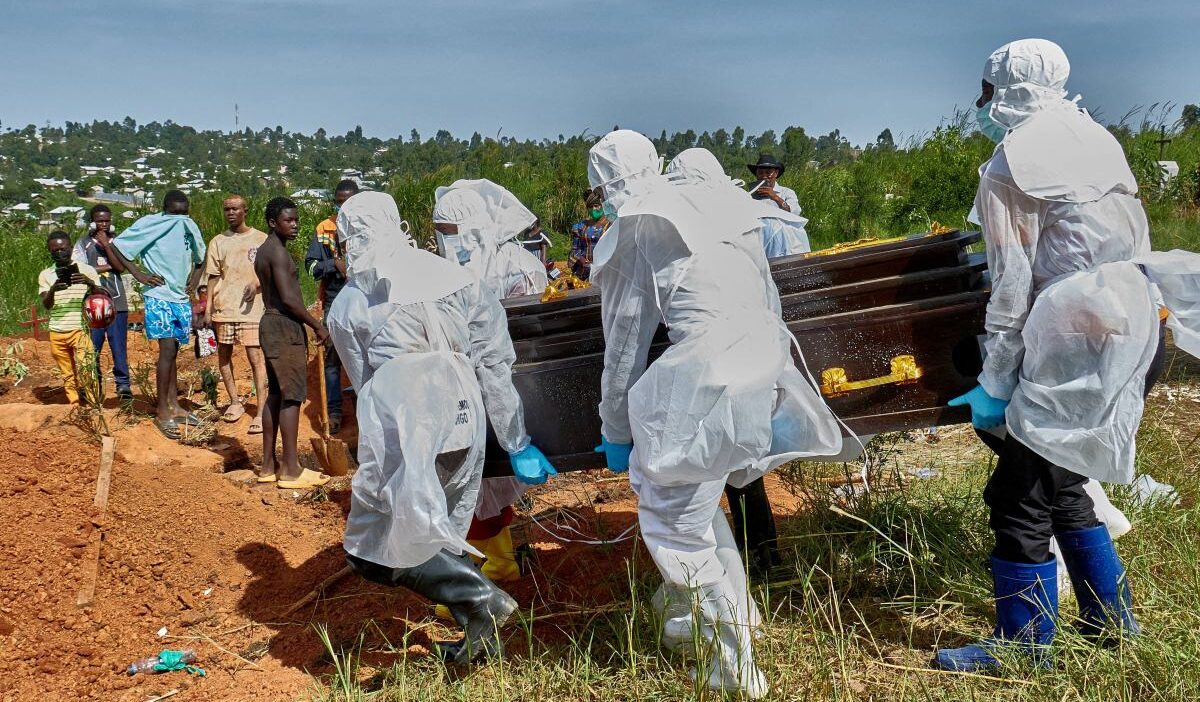
Following reports of rising Ebola infections and deaths in the Democratic Republic of Congo, Uganda has officially closed its border to curb the outbreak, defying World Health Organization guidance.
Uganda’s Current Epidemiological Status
The Ugandan Ministry of Health reported on Wednesday, May 27, that no new confirmed Ebola cases have been detected in the country since Monday. However, the number of individuals who have been in contact with infected people has increased, with the majority being healthcare workers.
According to the latest figures, there have been seven confirmed cases of infection and one death in Uganda.
Outbreak Severity in the Democratic Republic of Congo
The situation remains more severe in the neighboring Democratic Republic of Congo, where doctors have diagnosed 121 patients, 17 of whom have died from Ebola. Medical professionals suspect that an additional 1,077 people may have been infected, with 238 deaths recorded among this group, though the cause of these deaths remains unconfirmed.
Outbreaks have been identified primarily in the Ituri, North Kivu, and South Kivu provinces.
Strict Border Closure and Safety Protocols
The National Ebola Task Force, chaired by Vice President Jessica Alupo, has ordered an immediate closure of the border, citing the risk of the epidemic spreading from the Congo. Only authorized Ebola response teams, humanitarian operations, and essential transport are permitted to cross under strict health monitoring.
Individuals entering Uganda from the Congo face a mandatory 21-day isolation period. While schools near the border remain open, they are subject to rigorous safety procedures, and a specialized medical facility is being prepared for the community.
Mandatory Public Awareness Campaigns
The government has issued a mandate requiring all media outlets to allocate at least 30 minutes of prime-time programming to public education regarding Ebola prevention, detection, and reporting procedures.
WHO Stance on Border Restrictions
The World Health Organization has previously cautioned that no country should close its borders in response to the May Ebola epidemic. Experts argue that such measures are typically driven by fear rather than scientific justification and risk incentivizing illegal border crossings, which could further accelerate the spread of the disease.