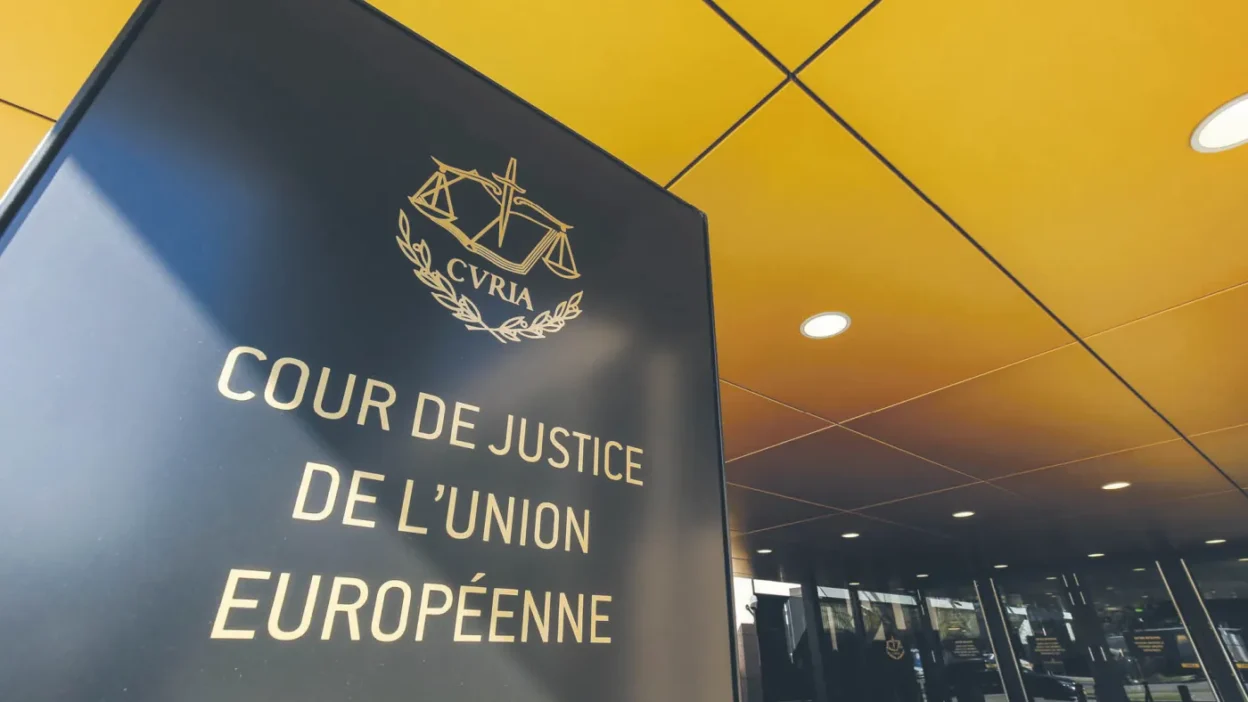
A landmark ruling by the Court of Justice of the European Union (CJEU) on April 23, 2026, challenges bank profits and redefines lending rules, potentially lowering installments.
CJEU Ruling Reshapes Lending Practices
The CJEU’s decision in case C-744/24 strikes at the core of bank profitability and fundamentally alters the principles of lending. The court questioned the practice of charging interest on certain fees, paving the way for lower repayment rates.
The ruling, issued on April 23, 2026, could upend consumer credit practices in Poland and across the European Union. The court specifically addressed the controversial mechanism of “cost crediting,” which allows banks to charge interest not only on the principal amount but also on costs like commissions and fees added to the debt balance.
The Core of the Dispute: Real vs. Nominal Costs
A preliminary question referred by a Polish court concerned the compatibility of “cost crediting” with EU law. The central issue was whether these costs could be treated as capital, subject to interest, even though they were not actually made available to the consumer.
Banks previously treated these costs as capital. However, the CJEU distinguished between the “total amount of the loan” and the “total cost of the loan borne by the consumer.”
Impact on APR Calculation
This distinction affects the calculation of the Annual Percentage Rate (APR). According to EU directives, the APR should be based on the total loan amount, understood as funds actually made available to the consumer. The CJEU clarified that banks should not apply the contractual interest rate to costs not actually disbursed.
Banks Can Include Costs, But Not Through Artificial Inflation
The court did not prohibit banks from including costs in the loan price, but stipulated that this must be done indirectly—for example, by adjusting the interest rate—rather than artificially inflating the capital. This subtle but significant difference may force a restructuring of many financial products.
Potential for Reimbursement and Improved Transparency
The ruling opens the door for borrowers to seek reimbursement and may have far-reaching consequences. The CJEU also emphasized the importance of clear and understandable loan structure presentation for consumers, with potential serious consequences for financial institutions that fail to comply.
A Landmark Decision for Future Disputes
Case C-744/24 is expected to become a key reference point in future legal disputes between banks and borrowers, signaling a stronger EU focus on genuine, rather than merely formal, consumer protection.