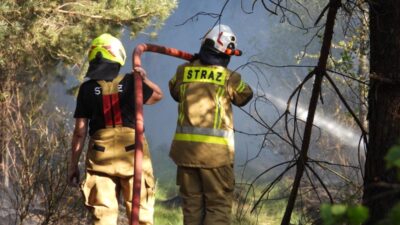
On May 29, five Dromader firefighting aircraft operated by the State Forests were deployed to contain a forest fire that has been burning in the Międzyleś region since May 28.
Logistical Operations at Warsaw-Babice
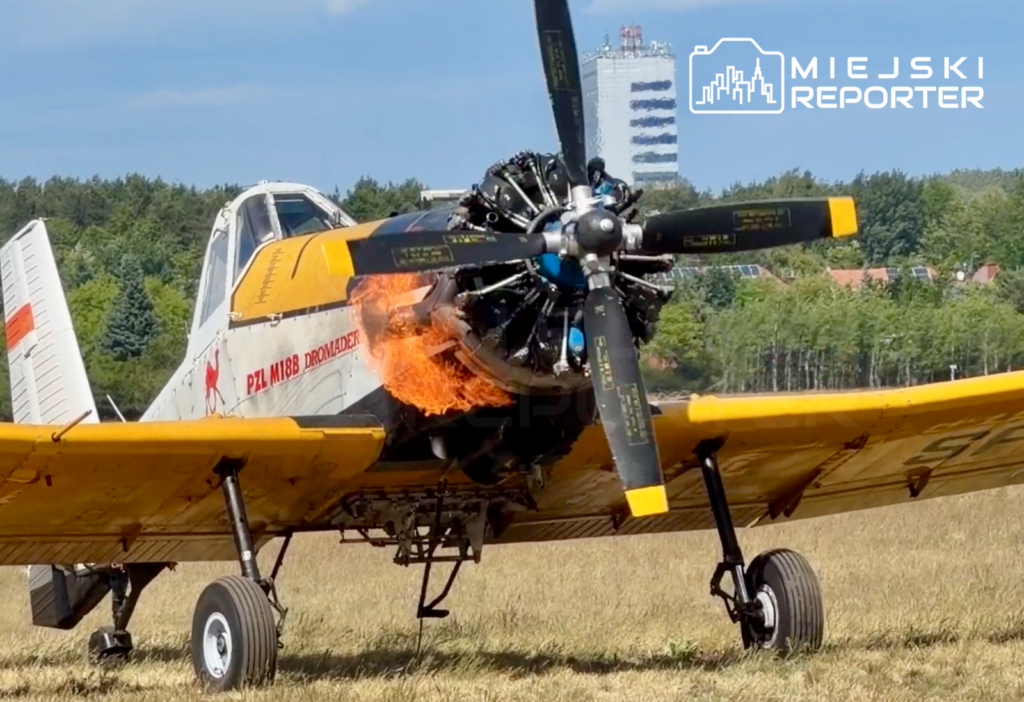
Five Dromader aircraft arrived from bases in Radom, Kielce, and Białystok to support ground crews. On May 29, around 2:00 PM, all five machines landed simultaneously at the Warsaw-Babice airport, also known as Bemowo, to refuel and replenish engine oil and water supplies.
The airport acted as a vital logistics hub for the firefighting efforts. Each aircraft carries approximately 2,400 liters of water, providing an operational flight time of about three hours before requiring replenishment.
Tactical Water Refilling Strategy
To optimize the firefighting cycle, the planes refilled their water tanks at the military airport in Mińsk Mazowiecki, which significantly shortened the return time to the blaze. Because refueling is not permitted for civilian aircraft at that location, the Dromaders returned to Warsaw-Babice for fuel and oil.
By 3:30 PM, the fleet had resumed operations, targeting the forest fire in the Wołomin County. This coordinated approach between different airfields proved essential for maintaining a continuous suppression effort.
Capabilities of the Dromader Aircraft
The PZL18M Dromader, manufactured in Mielec, Poland, was originally designed as an agricultural aircraft but has become a staple in forest firefighting. Its primary advantage is the ability to perform rapid, successive water drops directly on the fire front.
Each unit can carry approximately 2,000 liters of water or fire retardant. Being a single-engine plane, it is specifically adapted for low-altitude maneuvers in the challenging conditions often found over burning forest tracts.
Coordinating Large-Scale Aerial Support
The use of five aircraft simultaneously underscores the severity of the fire in the Międzyleś area. Aerial support is critical for large-scale forest fires, especially when ground access is difficult and shifting winds require immediate, high-volume water intervention.
The success of these operations relies heavily on the efficiency of the flight cycle—linking the time between fire drops, water collection, and refueling stops to maximize the time spent over the fire zone.