International aid organization CARE reveals how global media attention disproportionately covers some crises while leaving others in the shadows, affecting humanitarian response.
Media Disparities in Crisis Coverage
Media coverage often begins only when a disaster reaches massive scale, aiming for wide reach. While understandable from a journalistic perspective, this approach does not do justice to people affected by crises, according to international organization CARE.
Differences in global media attention are drastic. Analysis commissioned by the organization found approximately two million publications worldwide about the war in Gaza’s conflict zone, while the least “mediated” conflict – in the Central African Republic – received only 1,500 articles online.
In total, 43 million people are affected by crises that remain largely invisible to the public worldwide.
Overlooked Crises
This does not mean media should speak less about suffering in Gaza, the dire situation in Syria, or Russia’s brutal attacks on Ukraine. Report authors acknowledge that attention often stems from perceptions of international importance of a conflict or appears only in absolute worst situations. It’s also understandable that not all crises and events can be discussed in an ideally equal manner.
However, it’s clear that disasters and wars in Africa attract significantly less attention than those on other continents. This is also a matter of resources and isolation. From places where there are no journalists and sometimes even no internet access, less information reaches us.
“Many people suffer, yet no one pays attention to them. Every life is equal, and we have a moral obligation not only to care for others but to turn that care into action,” says Michelle Nunn, CEO of CARE.
Impact on Humanitarian Aid
The organization emphasizes that lack of attention often means fewer possibilities for helping victims – there is less money from major donors and individual support. Meanwhile, in 2025, global humanitarian aid funds have been “decimated” as a result of decisions by Donald Trump, who eliminated the government aid agency along with its multi-billion dollar budget.
Many of the crises in the report are closely related to climate change. Driven by increasingly severe droughts and floods, they destroy crops and push people into poverty, and at times – hunger. As global warming progresses – which will soon exceed the dangerous 1.5-degree Celsius level – such disasters will increase.
Therefore, CARE in its report reminds of the 10 most forgotten and overlooked crises. These include countries that are rarely mentioned in the media, as well as some that attract foreign tourists – who often aren’t even aware of the dire situation for most residents of the country.
Central African Republic
The ongoing civil war since 2012 between successive governments and militias has led to the displacement of 20% of the population, over one million people. Most are refugees seeking shelter in neighboring countries. Half of the population needs humanitarian assistance. Despite numerous natural resources – from gold and uranium deposits to priceless rainforests – it remains one of the poorest countries in the world.
Namibia
Exceptional landscapes and high safety levels make Namibia one of the most popular tourist destinations in Sub-Saharan Africa. However, in 2024/2025, the worst drought in 100 years deepened poverty and malnutrition risks. Due to high temperatures and rainfall shortages, wheat yields were down by 84%. For most residents who rely on agriculture, this means catastrophe. At the beginning of last year, 1.3 million people faced malnutrition risks. Fortunately, the situation improved somewhat in the second half of the year. However, water problems are often chronic. In rural areas, only one in five people has access to basic sanitation facilities, leading to the spread of infectious diseases.
Zambia
This country also attracts tourists from around the world – primarily due to the mighty Victoria Falls. However, as CARE notes, even floods in other regions of Zambia fail to generate significant interest.
Floods – additionally intensified by dam breaks under water pressure – destroyed entire villages and crops. Over 1.2 million people – 12% of the population – faced food insecurity. The organization supports farmers by providing them with corn varieties more resistant to difficult climatic conditions.
Malawi
Climate disasters – both droughts and floods – led to the declaration of a state of emergency in autumn 2025. Over 4 million people face malnutrition risks. There too, residents clearly see the impact of climate change on their lives – instead of “normal” weather, they observe either droughts or heavy rains and floods. Additionally, deforestation – for firewood or for sale – contributes to soil erosion, with fatal consequences for people, animals, and the environment.
Honduras
The first country on the list outside Africa faces a systemic, multi-faceted crisis. Half of the country’s 11 million population lives below the poverty line. The climate crisis exacerbates the crisis, impacting agriculture. “We expected good harvests this year. But then came the heavy rains and destroyed everything,” said Teresa, a small-scale farmer.
Another reason for the growing crisis is violence, particularly against women. Poverty and inequality lead to increased crime, with women being the primary victims. When women farmers lose their crops – and with them their source of livelihood – they become particularly vulnerable to exploitation and oppression. Therefore, one way of support is strengthening agricultural communities – building knowledge, good practices, and infrastructure to protect against crop loss.
North Korea
This state appears in the media primarily when discussing international politics or missile tests. However, information about the country’s realities is limited. Meanwhile, according to UN estimates, over 10 million residents – more than 40% of the entire population – suffer from malnutrition. Almost no foreign aid reaches there. Nearly one in five children in North Korea is affected by malnutrition, which can have lifelong negative health consequences.
Angola
2025 brought drought, a cholera epidemic, and social unrest. Nearly 2.6 million people need humanitarian assistance.
Although Angola is one of Africa’s largest oil producers, a significant portion of the population lives in poverty.
Burundi
A country mired in systemic crisis of poverty, climate disasters, and unstable political situation for years. At the same time, between 100,000 and 200,000 refugees from neighboring countries, including the Democratic Republic of Congo, live there.
According to CARE observations, for women and girls in an already precarious situation, the situation further deteriorates: “domestic violence, child marriages, early pregnancy, insufficient access to contraceptives, and almost complete responsibility for household chores and care.”
Zimbabwe
Partly due to drought, 2.7 million people in rural areas face constant hunger risks. According to the UN World Food Program, nearly one in four children under five years old is malnourished.
“We only managed to gather two buckets of sorghum. That wasn’t enough. We tried to eat in the morning and evening everything we could find after working in nearby fields,” Alice, a Zimbabwean farmer, told organization workers about the last harvest season.
Madagascar
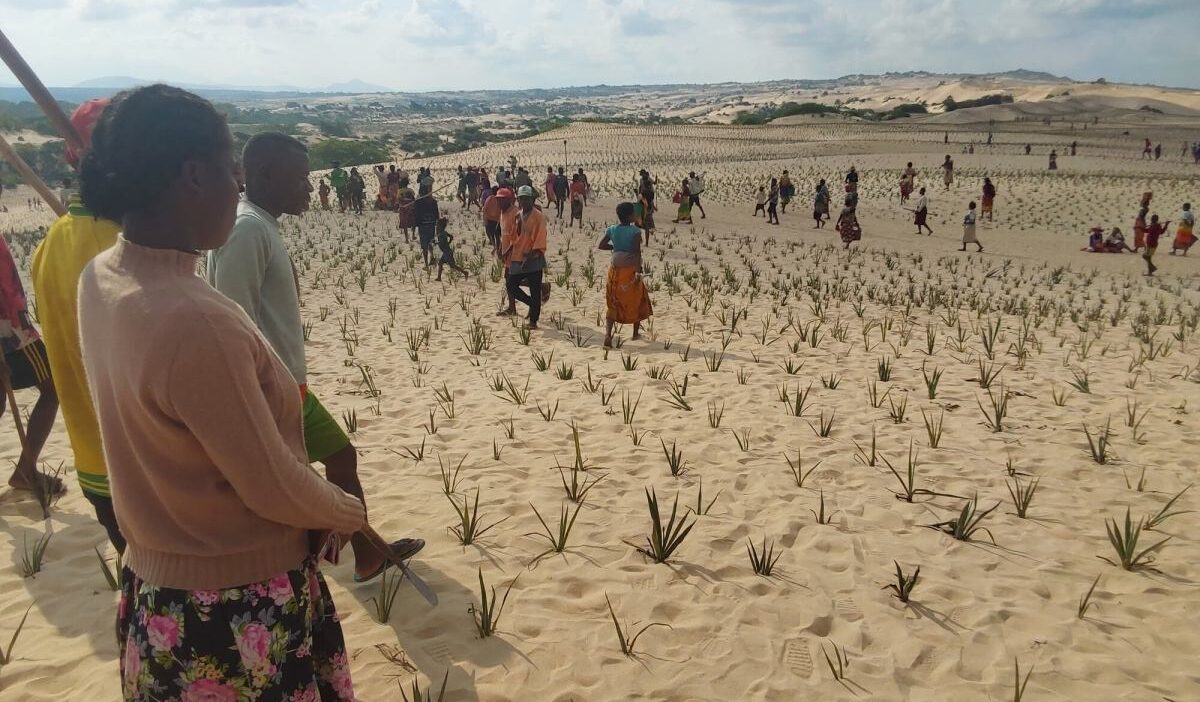
Tourists associate the island with its extraordinary nature that attracts visitors. However, the situation of its residents is dire. Extreme weather events, including repeated cyclones, destroyed livelihoods and crops in 2025. Cyclones Honde and Jude struck within just two weeks of each other. 4.7 million people need humanitarian assistance.
Destruction of crops by extreme weather means farmers have no money to support their families, for education, basic medicines, or even food.
The political situation in the country is also unstable. Anti-government protests in September ended with a military coup, and military commander Michael Randrianirina became president.