Poland’s Łucznik arms factory is struggling to secure new military orders, prompting criticism from the opposition and a response from the government.
Czarnek Calls for Orders, Sikorski Points to SAFE Veto
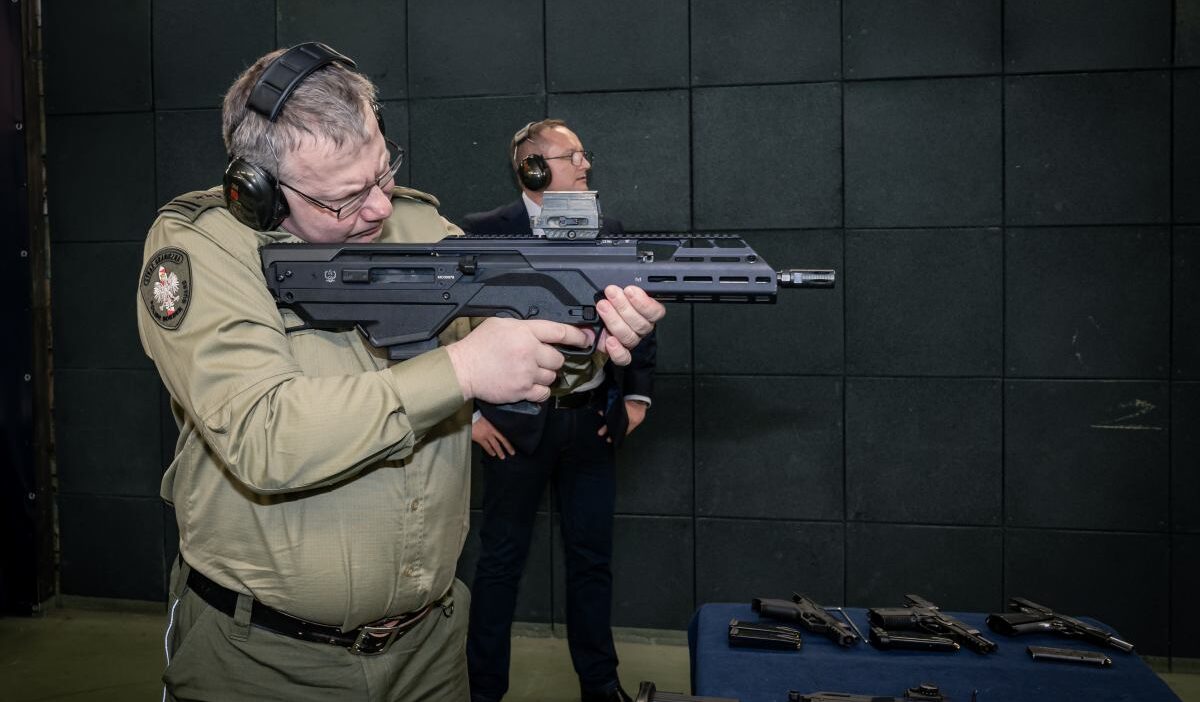
On Tuesday, the Defence Portal reported that despite recent development and investment, the Radom-based Fabryka Broni “Łucznik,” part of the Polish Armaments Group, may face difficulties securing new orders from the Ministry of National Defence, particularly for GROT A3 rifles. This could lead to job losses.
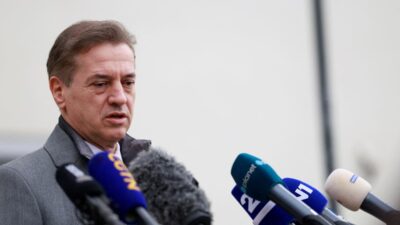
Przemysław Czarnek, PiS’s prime ministerial candidate, addressed the situation on Monday during a press conference in front of the Łucznik factory. He emphasized that workers need orders, not pity or empty promises.
Czarnek Questions Lack of Orders
Czarnek stated that Sławomir Cenckiewicz, head of the National Security Bureau (BBN), informed him about the situation at the factory after meeting with its employees. Czarnek only attended a morning press conference and declined to meet with management or workers to avoid disruption.
Unspent Funds and Grot Rifle Demand
According to Czarnek, Łucznik should receive orders through the Armed Forces Support Fund, which totaled 79 billion PLN this year. He noted that approximately 20 billion PLN remained unspent from the fund in the previous two years under the governments of Donald Tusk and Władysław Kosiniak-Kamysz.
Czarnek calculated that the Radom factory needs annual orders for 40,000 GROT rifles, costing an estimated 350-400 million PLN.
Opposition Criticism and Accusations
Czarnek questioned why Łucznik did not receive orders from the 20 billion PLN available in the Armed Forces Support Fund, accusing the current government of deliberately undermining the Polish arms industry. He blamed the ruling coalition – Tusk, Kosiniak-Kamysz, Civic Coalition, Left, PSL, Poland 2050 – for attempting to destroy Polish industry.
Sikorski Responds, Tusk Offers Reassurance
Deputy Prime Minister and Foreign Minister Radosław Sikorski responded on X, criticizing Czarnek as a hypocrite and referencing the veto of the SAFE mechanism.
Prime Minister Donald Tusk stated on Friday that a solution to the situation is near, attributing the problem to President Karol Nawrocki’s veto of the SAFE implementation law.
Tusk on SAFE Veto and Alternative Solutions
Tusk assured that efforts are underway to prevent difficulties for Łucznik despite the veto, acknowledging that finding an alternative solution is more challenging and costly. He attributed the situation to President Nawrocki’s actions.
Kosiniak-Kamysz on Financial Constraints and Export Opportunities
Deputy Prime Minister and Defence Minister Władysław Kosiniak-Kamysz expressed interest in orders but emphasized financial limitations. He urged Łucznik to pursue opportunities beyond the Polish military through various tenders and export markets.
SAFE Veto Details
In March, the President vetoed the law implementing the SAFE mechanism, which would have established a financial instrument managed by the Bank Gospodarstwa Krajowego to utilize EU funds for defense spending. 89% of these funds were intended for Polish arms companies, with support also extending to the Police and Border Guard. Poland’s application for 43.7 billion euros was approved by EU institutions, making it the largest beneficiary of the 150 billion euro program.
The government subsequently declared its intention to borrow funds for the existing Armed Forces Support Fund, but regulations restrict the use of these funds to army-related purposes.