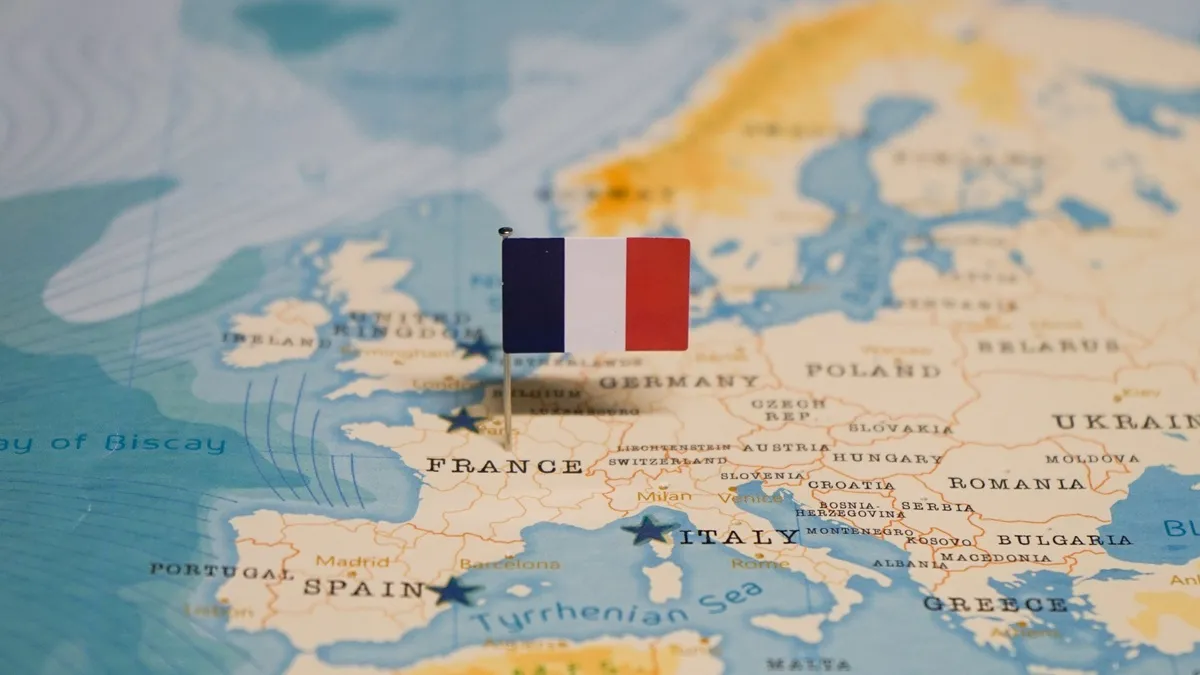
The first intergovernmental summit between Poland and France will be held in Gdańsk on April 20th, focusing on security, energy, and European policy.
Poland-France Defense Cooperation and Deterring Russia
A key topic of discussion will be security, including the development of defense industry cooperation. Poland, having significantly increased its military spending in recent years, is seeking technological and industrial partners.
France possesses a developed defense sector, encompassing aviation, air defense systems, and space technologies. Discussions will cover both bilateral projects and initiatives within the European Union, including the SAFE concept for joint defense investment and cooperation on communication satellites.
French Nuclear Deterrent
The discussion will also address the possibility of extending France’s nuclear deterrent to its European partners. This is a politically sensitive topic, but it is increasingly relevant given uncertainties about the future of U.S. engagement in NATO.
Nuclear Energy and EDF’s Role in Poland
Another pillar of the talks will be energy, particularly the development of nuclear power. French energy company EDF is seeking participation in the construction of Poland’s second nuclear power plant, a project crucial for the country’s energy transition and CO₂ emission reduction.
France leads in nuclear energy in Europe, generating 67.3% of its electricity from nuclear power in 2024. Collaboration with an experienced partner like France could be technologically and organizationally significant for Poland, which is still building its nuclear sector.
Warsaw is also in talks with partners from the U.S. and Canada, aiming to maintain balance and competitiveness in the selection process. Decisions are expected before the 2027 parliamentary elections, with France concerned that delays could postpone the investment by several years.
European Policy and Single Market Disputes
The Gdańsk talks will also cover EU issues, where Poland and France have both cooperative and competitive relationships. Both countries collaborate on agriculture and energy policy, opposing the EU-Mercosur agreement and supporting the development of nuclear energy in Europe.
However, differences exist, particularly regarding the single market. Poland advocates for its further deepening, especially in the service sector, while France is more cautious, often protecting its own market. Disagreements also extend to climate policy, carbon footprint calculation, and the functioning of the ETS system, with Poland seeking a more flexible approach.
Record Trade Exchange Between Poland and France
Economic relations between Warsaw and Paris are developing dynamically. The value of mutual trade increased from €16 billion in 2014 to €31 billion in 2024, making France Poland’s third-largest trading partner, accounting for 6.1% of Polish exports.
Poland exports industrial products, including automobiles, automotive parts, machinery, and electrical equipment, as well as agricultural and pharmaceutical products to France. France supplies Poland with chemicals, industrial technologies, and high value-added products, with French capital strongly present in the Polish energy, financial, and commercial sectors.
The Nancy Treaty and a New Beginning
The Gdańsk summit implements the provisions of the Polish-French treaty signed in May 2025 in Nancy, which provides for regular intergovernmental meetings and deepened cooperation in key areas. The treaty was quickly ratified, demonstrating broad political consensus in Poland regarding closer ties with France.
However, experts note that the pace of implementation has been moderate, lacking large-scale projects to solidify cooperation at the operational level. The Gdańsk summit has the potential to change this if it yields concrete decisions and investments.