





15 Years Later, DNA Breakthrough Leads to Arrest in 13-Year-Old’s Murder
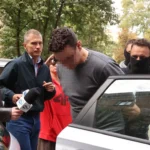
Following a revolutionary genetic genealogy method, Polish police arrested a 37-year-old man in Gdańsk on Tuesday morning for the 2011 murder of 13-year-old Izabela Strzałkowska. Arrest and...
Following a revolutionary genetic genealogy method, Polish police arrested a 37-year-old man in Gdańsk on Tuesday morning for the 2011 murder of 13-year-old Izabela Strzałkowska.
Table Of Content
Arrest and Confession
Officers from the Voivodeship Police Headquarters in Gdańsk detained Michał S. on Tuesday morning. On Wednesday afternoon, the District Court in Gdańsk remanded the suspect in the murder of 13-year-old Izabela Strzałkowska in custody. The 37-year-old faces up to life imprisonment.
The man immediately knew which crime was in question and confessed to the murder of 13-year-old Iza Strzałkowska. However, at the prosecutor’s office, apart from confessing to the murder, he refused to provide any explanations. At the time of the murder, Michał S. was 22 years old and lived near his victim in Gdynia Dąbrowa. Today, he has a wife and two preschool-aged children, worked normally, and had never been recorded by the police.
Investigation and Evidence
According to investigators’ findings, Michał S. was the victim’s neighbor, living in the same district of Gdynia Dąbrowa, just a few hundred meters from the crime scene. “In one of his first conversations with the police, he said: ‘yes, I am the person who did it,'” reported prosecutor Mariusz Marciniak from the Regional Prosecutor’s Office in Gdańsk.
Investigators interviewed over 950 people and collected more than 900 DNA samples.
The 2011 Crime
The murder took place on August 23, 2011, in Gdynia. The body of the girl, who had walked her friend to a bus stop in the evening, was found in a forest in the Dąbrowa district, 300 meters from the apartment building where she lived. Officers secured a potential perpetrator’s DNA profile at the scene.
“Police officers and prosecutors conducted painstaking, methodical work for years, analyzed dozens of expert opinions, interviewed hundreds of people, and secured and examined vast evidentiary material. However, despite the actions taken and wide-ranging analyses, the initial investigation did not lead to the identification of the perpetrator and was discontinued in 2013,” describes junior inspector Anna Banaszewska from the press team of the Voivodeship Police Headquarters in Gdańsk.
Cold Case Review
After the Regional Prosecutor’s Office took over the case in 2020, investigators began a new, detailed analysis of the evidentiary material. The prosecutor and police officers from the unsolved crimes team, the so-called X-Archival Department of the Investigative and Criminal Departments of the Voivodeship Police Headquarters in Gdańsk, produced thousands of more pages of documentation, interviewed a total of over 950 people, and collected over 900 DNA samples. They also obtained nearly 150 expert opinions from various specialties.
Revolutionary Investigative Method
According to the prosecutor’s office, the suspect was successfully detained thanks to a DNA profile. However, the difficulty in detecting the perpetrator of the murder stemmed from the fact that the incident occurred without direct witnesses, and the isolated DNA profile of the perpetrator never appeared in available databases. According to the police, the victim was likely accidental, and the attack was not planned.
“A breakthrough occurred thanks to a revolutionary investigative method applied for the first time in Poland. Cooperation with a team of experts appointed by the prosecutor in the field of genetic genealogy allowed for profiling individuals through kinship analysis in large databases. After two years of work, a man was identified whose genetic ties and other findings pointed to him as the potential perpetrator,” describes junior inspector Banaszewska.
Genetic Genealogy Match
Investigators tracked down the suspect after his relative voluntarily placed a DNA profile in a publicly available database used for family searches. Experts matched this trace with the profile secured years ago, which allowed them to narrow down the circle of suspects to specific related individuals.
Acting on the prosecutor’s orders, police officers collected biological material from the detained 37-year-old and forwarded it to two independent institutions in Gdańsk and Kraków. Comparative DNA analyses confirmed the full compatibility of the suspect’s profile with the material secured on the victim’s body in 2011.
Legal Proceedings and Message to Criminals
The man faces a penalty ranging from 12 years in prison to life imprisonment for the alleged act. The prosecutor’s office announced the continuation of evidentiary activities, including psychiatric, psychological, and sexological evaluations of the suspect.
“This was owed to the people involved in this case, it was owed to Iza’s family, it was owed to the society of Gdynia, to clarify this case, to explain, to show that there are no perpetrators of unsolved murders,” said prosecutor Marciniak. He added that the services sent “a clear signal to all perpetrators of unsolved murders: we are coming for you.”
Other Unsolved Cases Solved
The case of Izabela Strzałkowska is another unexplained murder solved after years thanks to the work of officers from the so-called X-Archiv and Gdańsk prosecutors.
In this context, prosecutor Marciniak recalled the case of 29-year-old postman Piotr Z., murdered on May 15, 1997. The suspect in this crime, Jarosław W., was detained after 26 years in March 2023, and in the autumn of last year sentenced by a non-final judgment to 15 years in prison. The prosecutor’s office appealed this verdict, demanding a higher sentence.