






Solar Eclipse Visible in Poland: Best Locations and Observation Safety Guidelines
A partial solar eclipse will be visible in Poland on August 12, offering varying observation conditions across the country while requiring strict eye protection. Total Eclipse Path and Partial...
A partial solar eclipse will be visible in Poland on August 12, offering varying observation conditions across the country while requiring strict eye protection.
Table Of Content
Total Eclipse Path and Partial Visibility in Poland
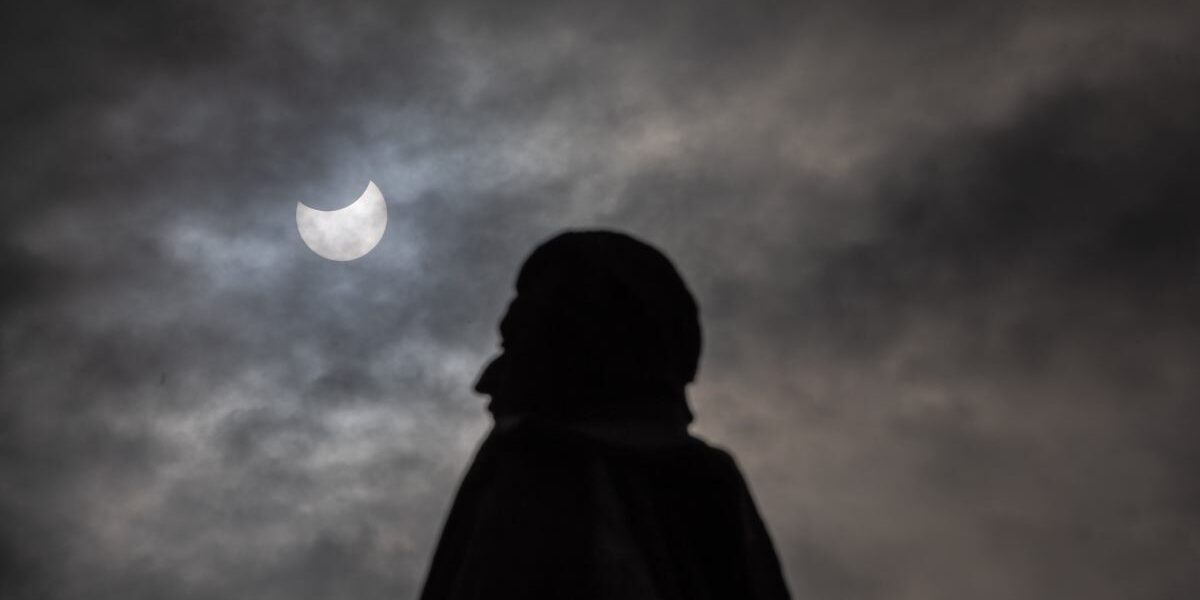
A total solar eclipse will become visible on August 12 in a path passing through, among other places, Iceland and Spain. In Poland, it will be possible to see it partially. During its maximum, the Moon will obscure a significant part of the solar disk, changing its shape into a crescent.
The eclipse will begin before sunset (in Poland, depending on the location, between 7:10 PM and 7:20 PM), but its end will occur after the Sun has set below the horizon.
Where to Watch the Eclipse in Poland
The most favorable conditions for observation will prevail in western and northern Poland. The maximum phase in our country will reach 88 percent in the Kłodzko Valley, and in the Masuria region it will be a maximum of 85 percent.
“In the vicinity of Wrocław, Gorzów Wielkopolski, and Szczecin, the Moon will obscure about 86 percent of the Sun’s disk. In the southeastern part of the country, the phenomenon will be shallower, and in the Rzeszów region it will reach about 58 percent,” said Dr. Elżbieta Kuligowska from the Astronomical Observatory of the Jagiellonian University.
It will be least effective in the Bieszczady Mountains, where observers will practically see 42 percent of the obscured disk because the Sun will set afterwards. East of the Olsztyn-Łódź-Opole line, the maximum phase will occur after sunset.
Moments of the eclipse for selected cities, given according to the “Astronomical Almanac for 2026” published by the Polish Astronomical Society (given sequentially: beginning, maximum phase, sunset):
Due to the low position of the Sun above the horizon, Dr. Elżbieta Kuligowska recommends finding a place in advance with an unobstructed view to the west, free from buildings, trees, and hills.
How to Safely View the Solar Eclipse
The scientist reminded that observing the Sun without proper protection can lead to permanent vision damage. Solar radiation can damage the retina of the eye, and the damage often occurs painlessly and remains irreversible.
Safe solutions include certified eclipse viewing glasses, as well as binoculars or telescopes equipped with appropriate solar filters. There is also the projection method, which involves projecting the image of the Sun onto a sheet of paper.
However, scientists warn against observation methods that have been surrounded by myths for years—such as CDs, smoked glass, sunglasses, or photographic film. These methods do not provide sufficient protection and give a false sense of security.
Scientific Background of Solar Eclipses
The Jagiellonian University researcher recalled that a solar eclipse occurs when the Moon passes between the Earth and the Sun, partially or completely obscuring its disk. She emphasized that although the phenomenon can only occur during a new moon, it is not observed every month.
“This is due to the fact that the Moon’s orbit is inclined relative to the plane of the Earth’s orbit by about 5 degrees. An eclipse occurs only when the new moon falls near the intersection point of both orbits,” she explained.
Dr. Kuligowska noted that the next opportunity to observe a deep partial eclipse will occur as early as August 2 next year. Meanwhile, the next total eclipse visible from the territory of Poland will have to wait until 2135.