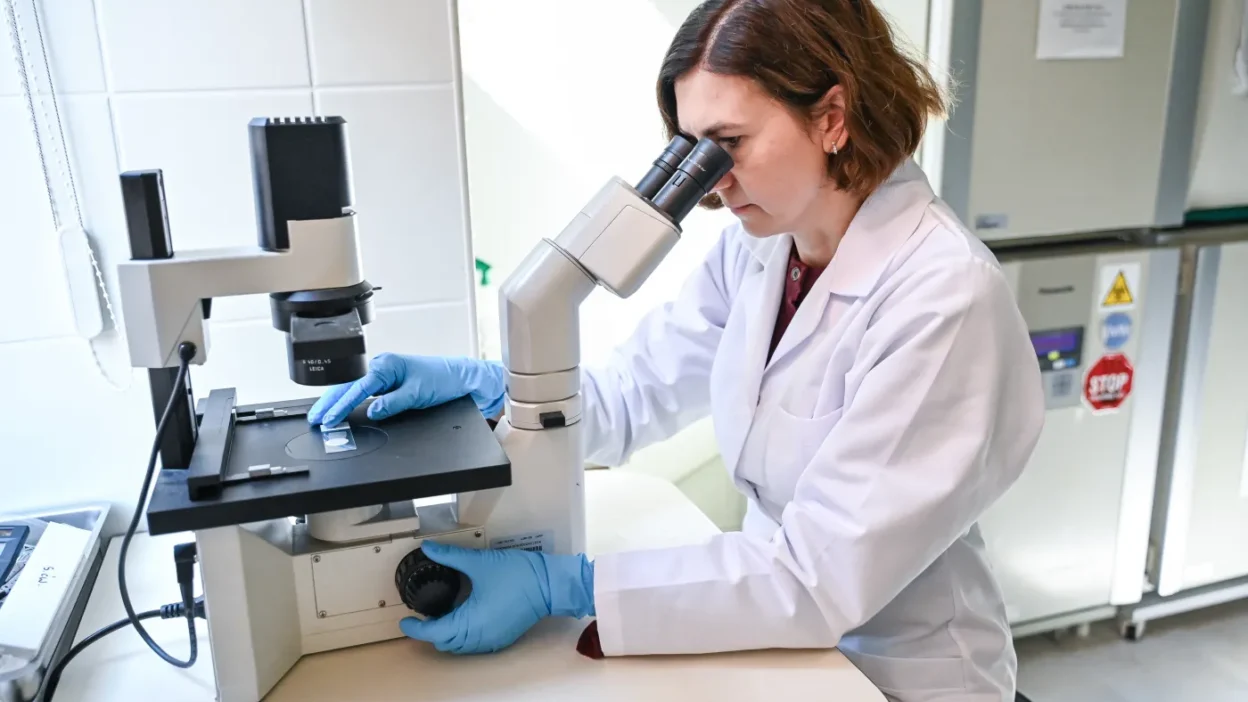
The “Eureka – Discovering Polish Inventions” competition spotlighted a new Krakow-based therapy utilizing extracellular vesicles to combat tissue fibrosis.
Competition Overview
The “Eureka – Discovering Polish Inventions” competition, organized by *Dziennik Gazety Prawnej*, has been running for several years, aiming to identify the 20 best Polish inventions submitted by universities and research institutes nationwide.
Tomasz Pietryga, editor-in-chief of DGP, emphasized the importance of supporting innovation and technological advancements, noting their growing role in the economy and public interest.
New Approach to Combating Tissue Fibrosis
One of the featured inventions addresses tissue fibrosis, a condition resulting from inflammation that can severely impair organ function, potentially leading to death.
Researchers at the Jagiellonian University, led by Dr. Sylwia Bobis-Wozowicz, have developed a promising new treatment approach involving the manipulation of extracellular vesicles.
The Role of Extracellular Vesicles
Tissue fibrosis can affect various organs, including the liver, pancreas, kidneys, and skin, stemming from chronic inflammation and excessive activation of stromal cells.
The Krakow team’s breakthrough centers on induced pluripotent stem cells (iPSCs), which can differentiate into various cell types or replenish stem cell populations, without raising ethical concerns.
Reprogramming Cells for Therapy
The researchers create iPSCs from blood or skin cells through reprogramming, reverting them to a highly potent state.
These reprogrammed iPSCs are then used to produce extracellular vesicles with specific properties.
“Love Letters” Between Cells
Extracellular vesicles, produced by all cells, act as messengers, exchanging bioactive molecules that can alter the behavior and function of other cells.
By modifying the conditions during iPSC cultivation, the team discovered that lowering oxygen levels increased the production of anti-fibrotic factors within the vesicles, specifically a microRNA molecule.
Reversing Fibrosis in the Lab
Experiments demonstrated that these vesicles could reverse the fibrosis process, reducing inflammation and decreasing the activation of stromal cells, effectively transforming fibrotic tissue back to a healthy state.
The team also found the treatment to be universally applicable to fibrosis in different organs, including the pancreas, liver, heart, and lungs.
Ongoing Research and Funding
The team is currently conducting research under the “Innovative Strategy for Treating Cystic Fibrosis” project (FENG.02.02-IP.05-0064/23), funded by the Foundation for Polish Science and co-financed by the European Union.