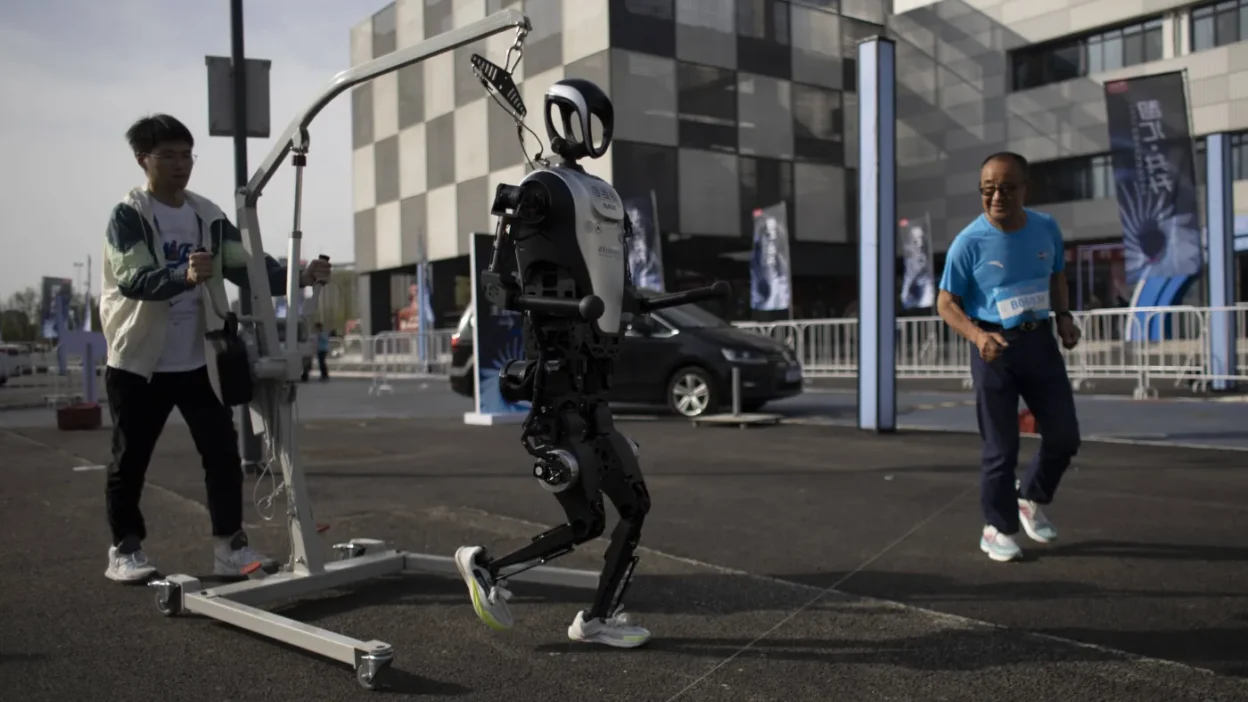
A humanoid robot developed by Honor completed a half-marathon in Beijing in 50 minutes and 26 seconds, surpassing the current human world record.
Robot Achieves World Record in Beijing Half-Marathon
A groundbreaking event unfolded in Beijing on Sunday as a robot outperformed human athletes in a half-marathon, achieving a time faster than the existing world record.
Over 100 humanoid robots participated alongside human runners on separate courses to prevent collisions and ensure safety.
Technological Leap in Humanoid Robotics
The winning robot, created by Honor, finished the race in 50 minutes and 26 seconds, significantly faster than Jacob Kiplimo’s recent world record of just over 57 minutes set in Lisbon in March.
This achievement marks a dramatic improvement from the previous year’s inaugural event, where many robots struggled with basic functions and most failed to finish.
Dramatic Progress Over the Past Year
Just a year ago, the same competition featured around 20 robots, many of which experienced difficulties maintaining balance or completing the course. The best robot time last year was approximately 2 hours and 40 minutes.
This year’s event saw a fivefold increase in participants and a substantial improvement in their performance, with several robots matching or exceeding the pace of professional human runners.
Safety Measures and Separate Courses
Organizers implemented separate courses for humans and robots due to differences in movement and the potential for unpredictable robot behavior.
Despite the impressive speed, some robots experienced issues like loss of balance or contact with barriers, highlighting the need for continued development and safety protocols.
China’s Investment in Robotics
The event in Beijing reflects China’s strategic investment in humanoid robotics, aiming to become a global leader in the field.
The Chinese government supports the industry through grants, infrastructure investments, and research programs, fostering rapid innovation and deployment of robotic technologies.
Potential Applications and Global Competition
While sporting events capture public attention, the practical applications of humanoid robots are crucial, spanning dangerous tasks, logistics, elder care, and more.
The development of humanoid robots is part of a global technological race involving the United States, Japan, and South Korea, with companies like Boston Dynamics and Tesla also making significant advancements.