A Polish political scientist analyzes two decades of party programs, identifying 2015 as a turning point in the use of populist communication strategies.
From “Empty Insult” to Scientific Definition
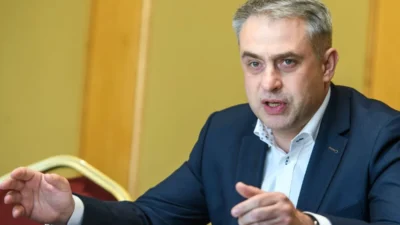
Is populism merely a pejorative term hurled at opponents, or a measurable political phenomenon? Dr. Jakub Krupa analyzes how the programs of Polish parties have changed over two decades, why 2015 was a pivotal moment, and whether anyone in today’s public debate is free from populist communication methods.
Does Populism Still Mean Something Today?
Yes, but it depends on the definition used. The problem in public debate is that, despite the constant use of the term, it is rarely defined. The concept has been drained of meaning, becoming an empty insult.
Why Has This Happened?
In media debate, it roughly means: “I disagree with you, and my opinion is better than yours.” In this sense, the word is used similarly to how fascism or nationalism were once used – thrown around to offend political opponents. This doesn’t bother me when it comes from an average citizen, but it’s worse when journalists or, above all, academics use it this way.
The Origins of the Insult
In popular scientific literature, populists have long been identified with the far left, the far right, or parties outside the political system. Oxford textbooks date the growing interest in populism to the 1960s and 70s.
And in Poland? When Did We Start Labeling Each Other This Way?
As Lesław Maleszka stated in the film “Three Buddies”: “That’s a very good question.” On one hand, one could point to the 1990 presidential campaign and the duel between Stan Tymiński and Lech Wałęsa, but on the other, the earlier “Solidarity” movement could also be classified as populist. Comparing these two phenomena doesn’t tell us much. It seems the use of the term as an insult came later.
The Perception of Populism and Law and Justice
There’s a common perception that populism in Poland equates to Law and Justice. But this isn’t actually the case. Such a superficial understanding of populism doesn’t contribute to understanding the reality around us. For the past few years, I’ve tried to defend the concept of populism as a useful tool, because if we want to use it responsibly, we must identify a specific area it describes.
Defining Populism for Analysis
In English-language literature, at least four ways of understanding the phenomenon can be distinguished: ideological, seeing populism as an ideology or an ideology with a “thin core” – one that doesn’t explain all of reality, but only a fragment. In this view, society is ultimately divided into two homogeneous and antagonistic groups: “pure” people and a corrupt elite. Strategic, based on a charismatic leader, where what is done is more important than what is said. Socio-cultural, where – in short – populism is what is “below,” when we rotate worldview and economic axes by 45 degrees: conservative worldview and economic protectionism.
A Combined Definition: Strategy and Discourse
The fourth approach posits that it is a certain logic of discourse. The definition I adopted is a compromise between strategy and discourse.
What Does This Mean in Practice?
This means – again – four elements: the people to whom we appeal; the elite, whom we accuse of something, regardless of their character; the enemy; and us, who represent “the people” in contrast to “them.” The enemy is a strong concept, but it’s at the end of a continuum of exclusion – before that, there’s the other, the foreigner, or the opponent, depending on the intensity of the criticism. The enemy can be economic, political, legal, cultural, or – recently popular in Poland – geographical, such as Ukrainians. In the populist scheme, the enemy often colludes with the elite, for example, when the latter “gives our money” to refugees or migrants.
Which Elites Have Been Most Criticized?
That’s fairly clear: political elites. The government – current or previous – political parties (“patriocracy”), or individual politicians named, as in the Civic Coalition’s “100 specifics” from 2023. An exception might be Ruch Palikota in 2011, which often attacked state elites, or Razem in 2015, criticizing economic elites. Interestingly, over the past 20 years, criticism of elites has increased among Polish groups, while the tendency to identify an enemy has weakened.
The Reason for This Shift
Perhaps party decision-makers realized they needed to appeal broadly and not exclude any groups, especially within the political community, because they could potentially be future voters. If we point the finger at those people, we risk alienating them.
Populism as a Spectrum, Not a Label
I generally avoid definitively labeling someone as a populist or not. Populism is a trait that can be measured on a scale. It’s not that it’s almost constitutive for some and completely foreign to others. It’s also difficult to say that populism is “left-wing” or “right-wing.” Populism exists on both sides – yes. But it’s not inherently left or right. Populism is chameleon-like, adapting to its environment, but it remains the same phenomenon. I also don’t agree with the concept of “enlightened populism,” attributed to Emmanuel Macron or Donald Tusk. Interestingly, the latter himself once called PO a party of “responsible populism” in a 2004 interview with “Gazeta Wyborcza.”
Is Everyone a Little Populist?
Not quite. Take the program of Marek Borowski’s Social Democracy of Poland from 2005. There’s little appeal to the people or criticism of elites. There’s not much to find there.
Key Factors in Populism’s Prevalence
If we categorize Polish parties by their position in the government and opposition, and by economic left-right and the GAL-TAN axis (a scale dividing groups according to cultural values), it turns out that their position within the political system best explains populism. The more oppositional, the more populist?
The Rise of Populism in 2015
More or less. Parties that are not only in opposition but also outside parliament have the highest level of populism. It’s logical: a new party without parliamentary representation is most likely to delegitimize the current elites it wants to remove from power.
The Role of Cultural and Economic Factors
Appeals to the people are more frequent among parties that, on the GAL-TAN axis, are on the TAN side, i.e., – simplifying – on the conservative-traditionalist side. This was clearly visible in the communication of PiS or – above all – the League of Polish Families, where there were many references to “Poles” and “the nation.” Conversely, drawing a “us-them” divide is more popular as one moves away from the center on the economic axis.
Key Moments of Populist Surge
2015 was a clear turning point, with a collapse of the existing system.
The Earlier Seeds of Populism
A real collapse arguably occurred 10 years earlier, when the Democratic Left Alliance relinquished power and PO-PiS emerged. At that time, groups associated with populism – the League of Polish Families, Self-Defense, and PiS with PO – were beginning to take shape. Of course, these groups – led by Roman Giertych’s formation – went about it differently than a decade later. In 2005, they criticized the post-communist system of the Third Republic, but Jarosław Kaczyński and Donald Tusk also proposed a sanation of the state and the construction of a counter-elite. In 2015, it looked different due to Paweł Kukiz. There was immense fatigue with eight years of PO-PSL rule. The then-Prime Minister left for Brussels, leaving Ewa Kopacz on the battlefield, who went to Poland and asked people on the train if they liked their cutlet, or went to schools and said she would ban doughnuts so children wouldn’t be “chubby.” A complete PR disaster. In the first round of the presidential elections, the unknown Andrzej Duda defeated Bronisław Komorowski, who decided to shoot himself in the foot by organizing a referendum intended to take votes away from Kukiz. The latter received 20 percent of the vote. One-fifth of voters were angry, even if they didn’t necessarily dream of JOWs over the Vistula or a change in the way parties are financed.
Kukiz vs. the Populists of 2005
He said directly: I will give power to the people, because “parties are like cancer on the healthy tissue of the nation.” Kukiz didn’t propose any counter-elite, as PiS always did. Instead, he wanted referendums and direct elections of peace judges. Then there’s the Razem party, which stands out for its stronger criticism of economic elites, and PiS, which became more radical after the Smolensk disaster, as did much of our politicians and media.
Avoiding Value Judgments
I generally try to avoid evaluating the phenomena we’re discussing, but when I think of a classic example of a Polish populist, like Andrzej Lepper, alongside Stan Tymiński, I almost feel sorry for him.
The Plight of the Polish Farmer
Imagine the situation of a Polish farmer falling into huge problems as a result of economic reforms, such as drastically increased loan interest rates or the liquidation of state agricultural enterprises. Meanwhile, the dominant narrative towards them is: they are dinosaurs of communism who don’t understand the modern economy. One could try to explain to society that this is all due to Gierek’s debts and the sanctions imposed during the martial law of the 1980s, but – firstly – it would be complicated, and secondly, the elites weren’t particularly interested in that. Looking back, Lepper’s actions were either funny or outrageous, but he represented people who were despised by the mainstream. Moreover, if you look at what the leader of Self-Defense actually said, today’s politicians have surpassed him.
Surpassing Lepper in Rhetoric
Let me give you a few examples from the linguistic level. I’ll skip all the excesses of Janusz Palikota related to a pig’s head, a dildo, drinking monkeys while suggesting that Lech Kaczyński was an alcoholic, or “f*ck PiS” expressed in eight asterisks and wonderful fun to the sounds of that song by PO politicians at the Campus Polska Przyszłości. Krystyna Pawłowicz: “cattle parliamentarians.” Jarosław Kaczyński: “traitorous faces,” “sewer rats,” “the worst sort.” Donald Tusk: “The kings of life are those who drink, beat their children, beat women, and haven’t been disgraced by work for many years.” Roman Giertych: “Our national task is not only to overthrow PiS, but to burn this plague to the root.” Stanisław Pięta: “I would throw this red lumpen intelligentsia on their face.”
A Reassessment of Lepper
These are just figures from the two largest groups. Against this background, Lepper can be assessed differently than 20 years ago. Another matter is that at some point, the leader of Self-Defense ceased to be credible to his electorate. Before becoming a politician, he was a red-faced man in work clothes. After a makeover, he became a tanned man in a suit with his hair slicked back.
What Does the Use of Populist Methods Say About a Party?
That it has mastered communication methods with voters. I think populism can pay off in many cases, regardless of whether it’s right or wrong. Imagine telling people they are capable, that great energy lies dormant within them, that no one should dictate whether they send their children to school at 6 or 7, that they are sovereign. Then add that you would move heaven and earth for these people if it weren’t for those ETSs from Brussels or another Tusk or Kaczyński. You have to admit that it’s a tempting vision to formulate your message that way.
Is Populism Necessary for Democracy?
It depends on how we understand “democracy.”
Dr. Jakub Krupa, political scientist, graduate of Jagiellonian University. Adjunct at Vizja University, collaborator of the Quantitative Research Center for Politics at the Jagiellonian University. He defended his doctorate in 2025, titled “Populism in the programs of Polish political parties in the years 2001-2023.”
Copyrighted material – all rights reserved. Further distribution of the article with the permission of the publisher INFOR PL S.A. Purchase a license. Enter the email address of the selected person, and we will send them free access to this article.
Related
Copyright © INFOR PL S.A.