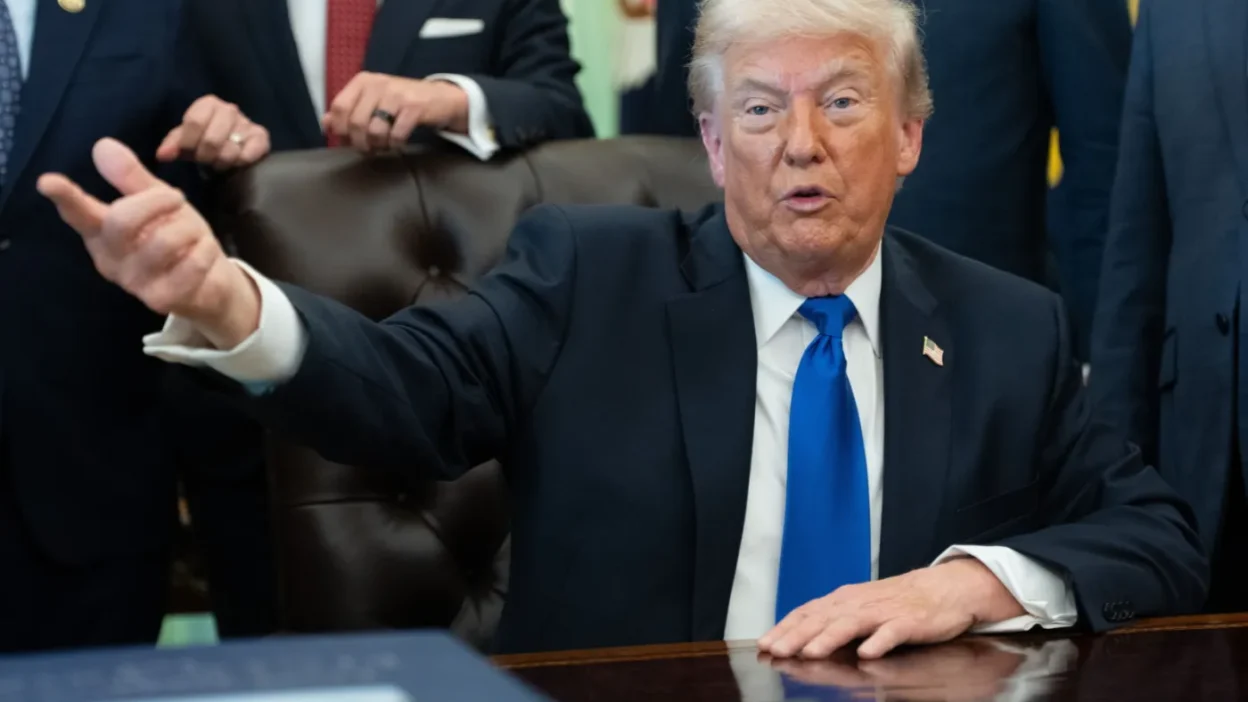
Former U.S. President Donald Trump announced plans to impose a 25% tariff on cars imported from the European Union next week, citing trade agreement violations.
Trump Announces Retaliatory Tariffs
Former U.S. President Donald Trump announced on Friday that he will increase tariffs on automobiles from the EU to 25% next week. He accused the European Union of not adhering to the trade agreement with the United States.
“I am pleased to inform everyone that, because the European Union does not fully adhere to the trade agreement we made, I will be increasing tariffs on cars coming into the United States from the European Union to 25% next week,” Trump wrote on his Truth Social platform.
U.S. Production as the Only Escape
If cars are produced in the U.S., the tariffs will not apply, Trump stated. He later told reporters that he had ordered the tariff increase and reiterated that the EU is not complying with the trade agreement. Trump did not specify what he believes constitutes the EU’s non-compliance.
Diplomatic Efforts and Existing Limits
EU Trade Commissioner Maroš Šefčovič visited Washington on April 24th, meeting with U.S. Treasury Secretary Scott Bessent. During a press conference, Šefčovič expressed confidence that the United States would adhere to the 2025 agreement with the European Union, despite ongoing U.S. trade investigations that could justify tariff increases. The agreement stipulates a maximum tariff of 15% on most goods from the EU, including cars.
Legal Status and Media Reaction
Currently, following a U.S. Supreme Court ruling that repealed most of Trump’s imposed tariffs, tariffs are 10% until July of this year. U.S. officials indicate they will be raised to 15% after the completion of investigations into unfair trade practices.
The Wall Street Journal noted that the United States has not yet officially taken any action to increase tariffs, and that Trump frequently issues threats through social media to gain concessions from trading partners.