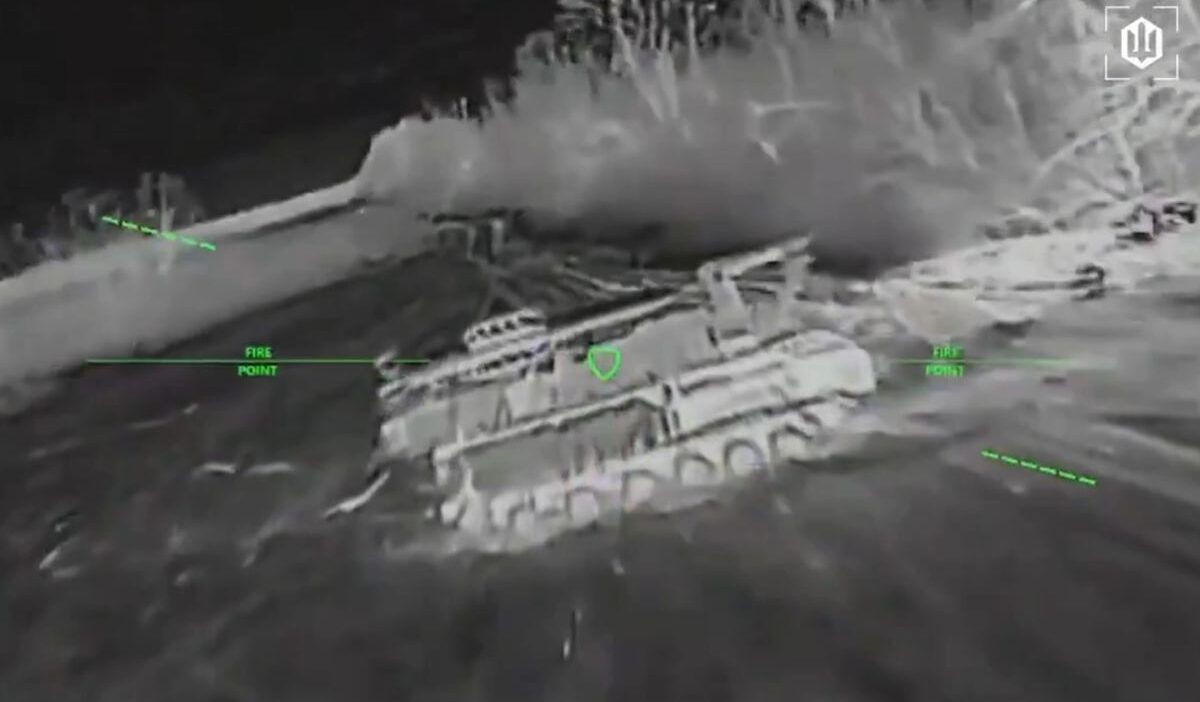
Ukrainian drones are increasingly targeting valuable Russian air defense systems, with daily videos showing successful hits in Donbas and Crimea.
Increased Frequency of Significant Attacks
Russian air defense systems have become regular targets for Ukrainian drones, with published videos showing drones diving toward this valuable Russian equipment. These attacks are particularly common in Donbas and on occupied Crimea, which Ukrainian forces have favored for countering Russian air defense.
One popular Russian military blogger lamented that Ukrainian improvements in drones and communication systems have made certain front sections particularly dangerous and nearly impossible to supply.
Shift to Higher Frequencies
Andrei Filatov, a Russia Today correspondent regularly traveling behind the front lines, expressed frustration in a weekend Telegram post. He wrote that the enemy found a way to bypass Russian defenses using FPV drones and began attacking logistics 50-60 kilometers behind the front, using frequencies of 9-10,000 MHz.
According to Filatov, specialists had warned about this possibility for a long time, but no one prepared. He noted that several roads have now become completely impassable, calling it a “damn game of survival.”
Extended Range Capabilities
The depth of Ukrainian attacks mentioned by the Russian is noteworthy. The standard range for FVP drones was previously about 20 kilometers behind the front line. Now, drone-relay systems working in teams with strike drones have become common, significantly increasing the operational range of the latter.
Ukrainians have also increasingly deployed their winged attack drones, similar to Russian Lancets. The “Bułava” drone, for example, is reportedly capable of reaching targets 100 kilometers behind the front line, as demonstrated by a successful attack on a Russian Buk air defense system on March 2.
Focus on Air Defense Systems
Russian air defense systems, even far behind the front lines, have been Ukrainian priorities for several months. Early March was particularly successful, with at least 7 videos of successful hits recorded, including 2 on Buk systems, 2 on Tor systems, 1 on an S-300W launcher, and at least 2 on Pantsir systems.
Ukrainian units involved in these operations regularly publish compilations of attacks. On March 6 alone, the SBU published video of strikes in northern Crimea, while Drone Forces released a series of attacks on air defense systems in Zaporizhzhia and Crimea.
Attacks on Strategic Targets in Russia
The scale of Ukrainian drone attacks on strategic targets in Russia has grown significantly. On a recent Sunday, Russia’s Ministry of Defense claimed to have intercepted 621 Ukrainian drones directed at targets in Russia, a figure later revised to 754, though the effectiveness of these interceptions remains unclear.
Despite the massive reported interception, damage was minimal, with fuel tanks in an Armavir fuel storage facility damaged and energy infrastructure in the Belgorod region affected. This highlights the ongoing challenge of Ukrainian drone attacks, which require precise hits to cause significant damage.
Challenges in Defense
Russia has significantly expanded its defense against drones, especially after a series of attacks on refineries in late 2025. However, the vastness of the country remains a persistent problem, requiring numerous air defense systems to protect strategic objects.
While exact figures are unknown, it’s clear that these air defense systems are among the most expensive types of weaponry, making it costly for Russia to withstand Ukrainian strikes and repair damaged equipment.