Supreme Court fined a regional court president for refusing to provide judge’s personal files, but Constitutional Tribunal rejected his constitutional complaint.
Background of the Case
The case originated in April 2023 when the Supreme Court requested personal files of a judge from a regional court president. These documents were needed to determine if an absolute appeal reason existed in a case before the Court, with suspicions that the challenged judgment had been issued by a so-called “neo-judge.”
In response, the court president asked the Supreme Court to provide the legal basis for requesting the full personal files of the judge. He questioned whether disclosing such documents would comply with data protection regulations. He received no response to this inquiry.
Supreme Court Decision
Instead of responding, the Supreme Court imposed a 3,000 złoty fine on the court president. The Court determined that he had failed to comply with the order to provide the personal files within the specified timeframe and consciously evaded the obligation. According to the Supreme Court, as the head of a state institution obligated to provide assistance in cassation proceedings, he had unjustifiably failed to provide this assistance.
Appeal and Constitutional Complaint
The court president challenged this decision, but the Supreme Court left his appeal without consideration, citing Article 426, paragraph 1 of the Code of Criminal Procedure, which states that Supreme Court decisions are not subject to appeal, including decisions imposing fines in cassation proceedings.
The punished official did not give up and decided to file a complaint with the Constitutional Tribunal. He wanted the TK to find Article 426, paragraph 1 of the Code of Criminal Procedure unconstitutional insofar as it does not allow appealing decisions issued by the Supreme Court in first instance. The applicant argued that this contradicts, among other things, the constitutional principle of two-instance court proceedings.
Constitutional Tribunal Ruling
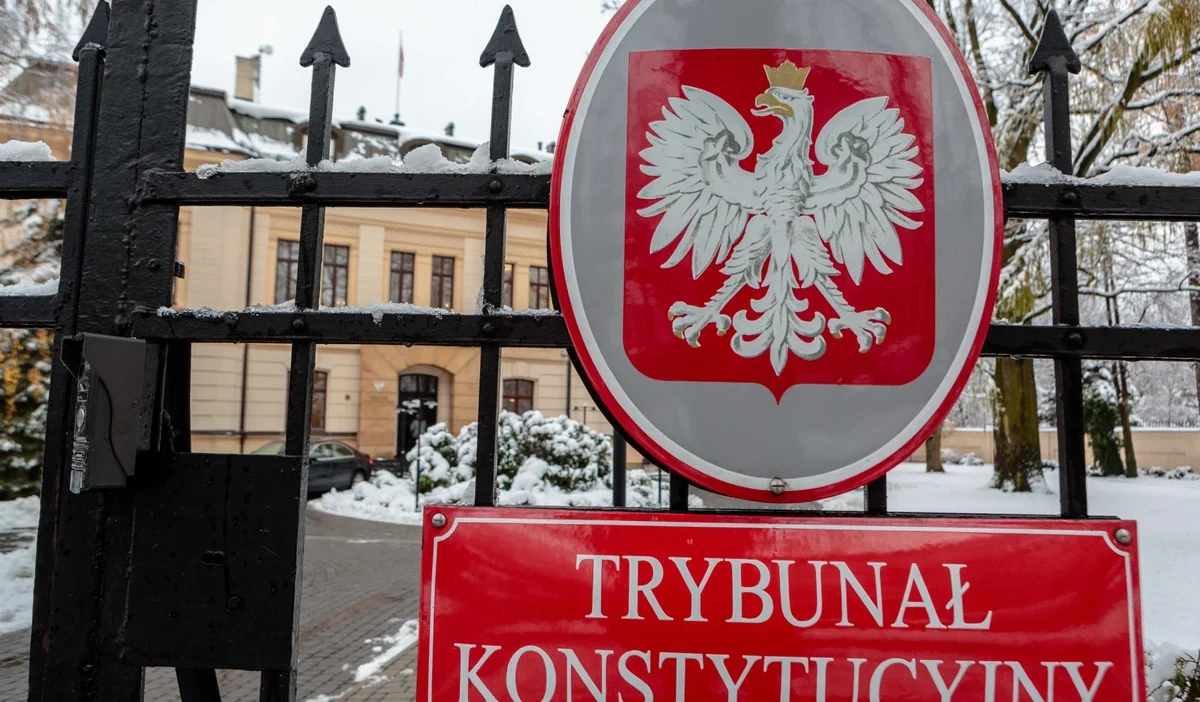
The Constitutional Tribunal, however, decided to discontinue the proceedings. It cited Article 79, paragraph 1 of the Constitution, which states that “everyone whose constitutional freedoms or rights have been violated has the right, under conditions specified by statute, to file a complaint with the Constitutional Tribunal concerning the conformity with the Constitution of a statute or another normative act on the basis of which a court or public administration authority finally ruled on his freedoms or rights or on his constitutional duties.”
The Tribunal concluded that this provision could not apply in this case because the complaint was filed by a court president, not by a natural person. “The content of the document initiating the proceedings clearly indicates this, in which the applicant is consistently identified not as a natural person – a private entity, but as an organ representing the Regional Court in O,” emphasized the TK in its recently published justification.
Public Officials and Constitutional Rights
The Tribunal stood on the position that entities performing public functions are not addressees of constitutional rights and freedoms, but guarantors of their implementation. “This results from the very function of these entities in the constitutional system: they are to perform state tasks, not benefit from the protection provided for individuals against public authorities,” the ruling states.
The Constitutional Tribunal also noted that the fact that the fine was imposed on a specific person serving as a president had no bearing on this assessment. This fact does not change the public nature of this action, as it resulted exclusively from competencies related to managing the court.
Dissenting Opinion
With the decision to discontinue the proceedings, TK President Bogdan Święczkowski disagreed and filed a separate opinion as one of the members of the bench. He stated that the Constitutional Tribunal too hastily concluded that the court president did not have standing to file a complaint because he acted as a public authority, not as “everyone” within the meaning of Article 79, paragraph 1 of the Constitution.
Święczkowski believed that the TK should have examined whether the Supreme Court’s decision to impose a fine on the president, and subsequently to leave his appeal without consideration, had an effect on the personal situation of the complainant. According to the TK president, the bench could have established whether the monetary penalty was paid, and if so, by whom, either through a hearing or by obtaining written information.