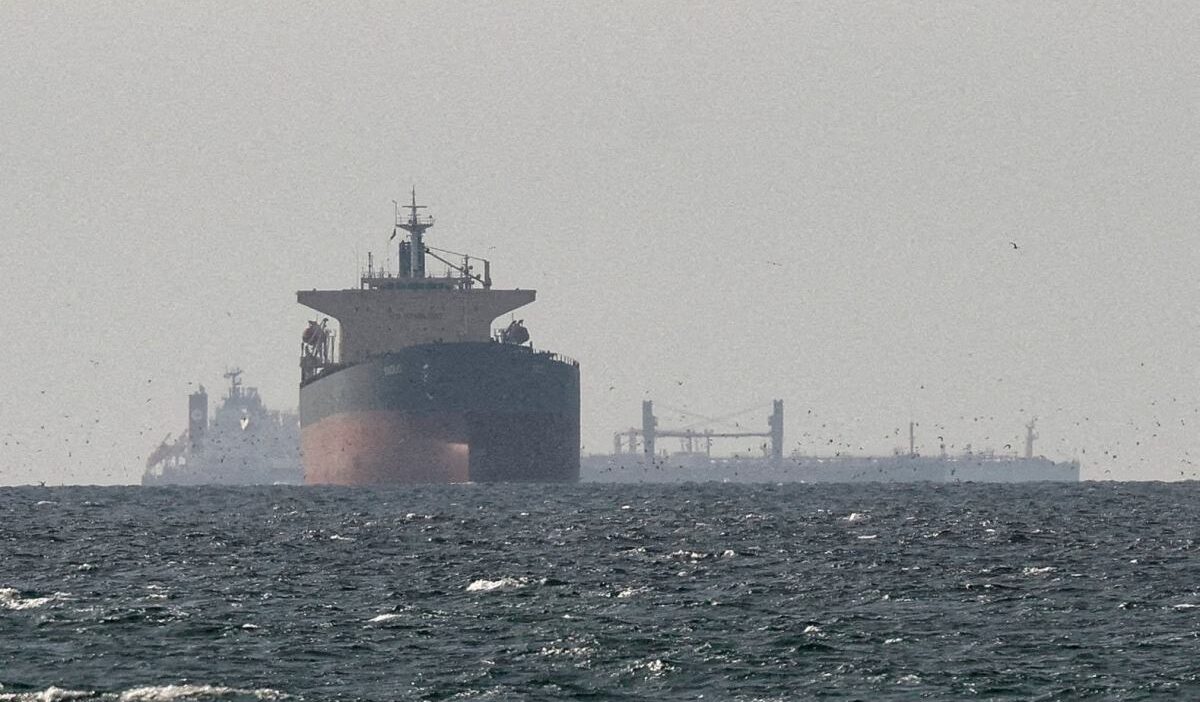
Former President Trump announced the U.S. Navy halted an Iranian cargo vessel, the TOUSKA, after it disregarded warnings during a maritime blockade.
Trump’s Account of the Interception
According to a post on his Truth Social platform, former President Trump stated that the Iranian cargo ship TOUSKA, nearly 900 feet long (274m) and comparable in weight to an aircraft carrier, attempted to breach the U.S. maritime blockade but failed.
Trump alleges the Iranian vessel ignored a warning from the USS Spruance, a U.S. missile destroyer, leading to the ship being stopped and damage to its engine room.
“Currently, the ship is under the care of the U.S. Marine Corps (…) We have full control of the ship and are checking what is on board!” Trump wrote.
Details on the Vessel and Sanctions
The TOUSKA is an Iranian container ship owned by the state-owned IRISL Group, which has been subject to U.S. sanctions since 2020.
A report from Wyborcza.pl notes that despite the sanctions, railcars marked with Cyrillic script continue to transit through Poland, allegedly as part of a deal between Trump and Belarusian President Lukashenko. [https://wyborcza.pl/magazyn/7,124059,32723010,mimo-sankcji-przez-podlasie-ciagna-wagony-opisane-cyrylica.html#s=S.index-K.C-B.1-L.2.duzy]
Broader Context of Maritime Blockade
This marks the first vessel seized by U.S. forces as part of the ongoing maritime blockade of Iran, aimed at intercepting ships traveling to and from Iranian ports.
Prior to this incident, U.S. Central Command (CENTCOM) reported that 23 ships had heeded warnings from the U.S. Navy and altered course before reaching the blockade line.
Iranian Countermeasures and Market Impact
Simultaneously, Iran is maintaining its own restrictions on movement through the Strait of Hormuz, effectively blocking it since the outbreak of conflict involving the U.S. and Israel on February 28th.
Reports surfaced over the weekend of Iranian shelling of vessels attempting to transit the Strait of Hormuz. Iran’s blockade of this key waterway, which previously handled 20 percent of global oil and LNG shipments, has contributed to rising prices for these commodities.