Ukraine is intensifying its use of medium-range drones to strike Russian logistics, filling a tactical gap between short-range FPVs and long-range strategic systems.
The Mid-Range Tactical Gap
Ukraine is shifting focus toward “medium-range” attacks, occupying the space between short-range FPV drones and strategic long-range drones. While both sides previously used limited tools for distances of several dozen to 100 kilometers, Kyiv is now making this range a priority. President Volodymyr Zelenskyy noted that these attacks doubled in April compared to March, with five times more suitable drones ordered this year than last.
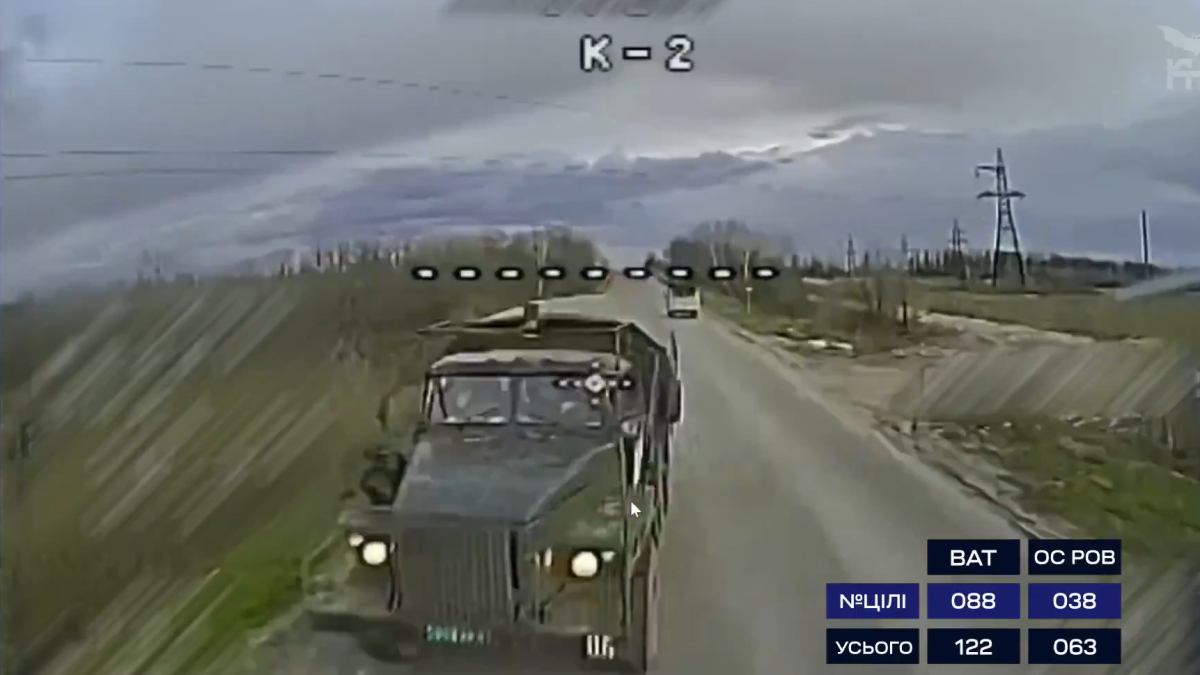
Historically, these attacks were carried out on a small scale by elite units like Prymary and Lazar, primarily targeting Russian anti-aircraft and radar systems in Crimea. We wrote about this back in 2025. Now, the intensity is increasing, targeting even simple trucks and delivery vehicles.
Pressure on Russian Logistics
The scale of production has reached a point where these drones are cheap and mass-producible. These strikes, initially seen around Donetsk, are now spreading through Donbas and Zaporizhzhia. Analysts Rob Lee and Dmytro Putiata report that some Russian divisions have had to limit fuel consumption by 15-20% due to strikes on trains, tankers, and fuel depots.
In response, Russian command has reportedly banned truck convoys within 50 kilometers of the front and is moving supply depots to distances exceeding 100 kilometers. This adds significant complexity to a logistics system that is already at its limit.
Advanced Drone Technologies
Newer winged drones such as the Buława, RAM-2X, FP-2, and Khmarynka offer significantly more range than propeller-driven models. The FP-2 is a unique modification featuring a 150 km range and a 100 kg warhead. The American Hornet, developed by Eric Schmidt’s Swift Beat, uses AI-driven terminal guidance and terrain recognition to resist electronic warfare, earning it the nickname “Marsjanin-2.”
A Successor to HIMARS
As Russian GPS jamming and limited GMLRS supplies have weakened the impact of HIMARS, Ukraine is finding an alternative. By utilizing domestically produced medium-range drones, Kyiv is once again achieving a “HIMARS effect” while remaining independent of foreign supply constraints.