Latest polls ahead of Bulgaria’s parliamentary elections on Sunday show a clear lead for the coalition linked to former President Rumen Radew.
Polls Indicate Strong Showing for Radew Coalition
Newest polls published Friday before Bulgaria’s parliamentary elections on Sunday indicate a clear victory for the Progressive Bulgaria coalition, associated with former President Rumen Radew, expected to receive 32–34% of the vote.
The GERB party, led by former Prime Minister Boyko Borisov, is projected to gain around 19% support in the surveys.
Similar Forecasts from Three Agencies
Research from Alpha Research, Miara, and Trend yielded very similar results, with differences mainly concerning the final placements and predictions of whether five or six parties would enter the new parliament.
It is not ruled out that the 4% electoral threshold could be exceeded by up to seven parties, although this is considered unlikely.
Vote Share Projections
Alpha Research and Miara predict 34.2% of the vote for Radew’s coalition, while Trend forecasts 32.2%. According to polls, Radew, who resigned from the presidency to participate in the election campaign under the slogan of fighting oligarchy and mafia, will not secure an absolute majority of 121 seats.
The center-right GERB party of Borisov ranks second with 19.1–19.2% support. The centrist Continue the Change–Democratic Bulgaria formation may take third place with a result of 11%.
Tight Race for Fourth Place
The battle for fourth place will be between the DPS-New Beginning party of oligarch Delian Peevski, active in regions with a large Turkish minority like Kardzhali, and the nationalist-Russophile group Vazrazhdane (Revival), which polls give 7-9%.
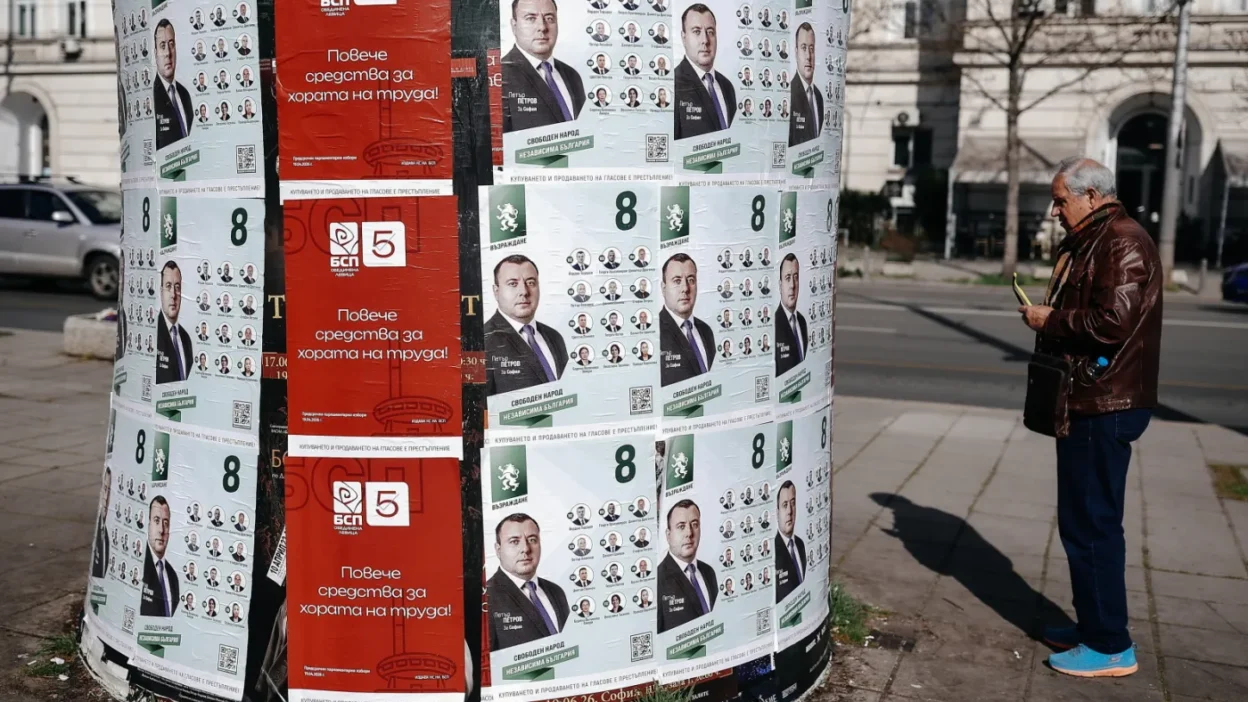
The post-communist Bulgarian Socialist Party is on the verge of crossing the electoral threshold. Failure to enter parliament would be its biggest defeat since the political changes of 1989.
Turnout and Concerns About Vote Buying
A total of 14 parties and 10 coalitions will compete for mandates in the 240-member, unicameral National Assembly in these, the eighth elections in the last five years.
Turnout and Vote Buying Concerns
Sociological agencies do not predict high turnout, expecting it to be around 50-55%, but still higher than in previous elections, when approximately 40% of eligible voters participated. Observers are greatly concerned about vote buying, which, despite intensive efforts by the Ministry of Interior, cannot be stopped.
Vote trading is not a new phenomenon in Bulgaria, but – according to the Ministry of Interior – the scale of the practice is currently five times larger compared to the previous elections in 2024.