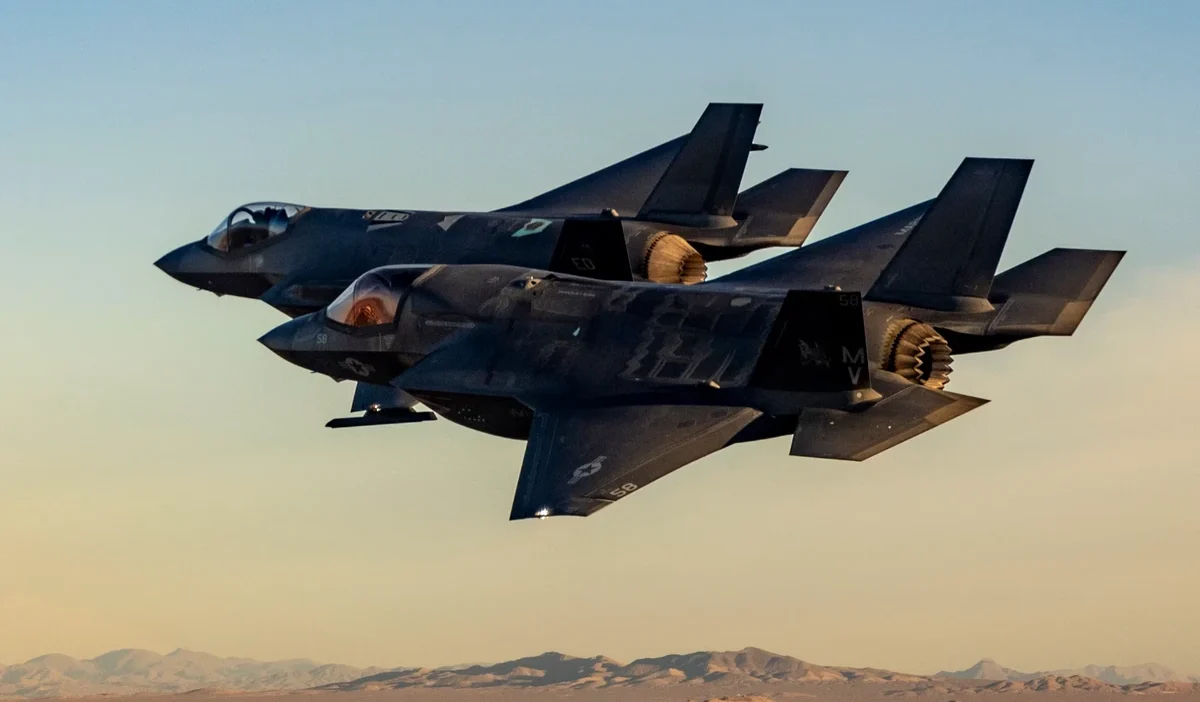
Dutch defense official suggests F-35 jets could be modified to reduce European reliance on US support, though experts warn of significant technical challenges.
F-35 Lightning II and European Dependence on US Software
The F-35 Lightning II has become one of the most important elements of modern combat aviation in Europe. According to available data, there are currently around 300 of these aircraft on the continent, with hundreds more ordered by NATO countries including Great Britain, Italy, Norway, Denmark, the Netherlands, Belgium, Poland, Finland, Germany, and Switzerland. Poland has contracted for 32 F-35A aircraft under the “Harpia” program, with deliveries to be completed by 2030.
The F-35 is deeply integrated with American digital infrastructure. The aircraft uses advanced computer systems managing nearly every element of its function—from technical diagnostics to combat data analysis. The key role is played by the ODIN (Operational Data Integrated Network) logistics support system, which replaced the earlier ALIS system. ODIN is responsible, among other things, for managing software updates, planning technical maintenance, and monitoring the aircraft’s condition.
Dutch Minister: “Hacking F-35 Like a Smartphone”
In an interview with Dutch broadcaster BNR Nieuwsradio, Dutch Deputy Defense Minister Gijs Tuinman addressed a hypothetical situation where the United States would cease supporting the European F-35 fleet. He emphasized that the aircraft’s security system is not absolutely impossible to bypass.
His statement concerned not only the on-board software but also the cloud infrastructure and support systems that provide technical service and access to key operational data. According to Tuinman, in case of loss of US support, Europe could develop its own solutions and continue operating the aircraft.
ODIN System, Mission Data Files, and Real Control Over F-35
One of the most important elements of F-35 operation is the so-called Mission Data Files—the mission database. It contains detailed information about enemy defense systems, radars, missile launchers, and other threats. This data is regularly updated and is crucial to the aircraft’s effectiveness.
Lack of access to current data would significantly reduce the aircraft’s operational capability, as the pilot would not have full situational awareness. The aircraft would retain its flight capability, but its technological advantage would be seriously limited.
Experts also point out that even if European countries could take control of the software, replacing the entire logistics system would be much more difficult. The F-35 requires constant access to spare parts, diagnostics, and specialized service tools, which are supplied as part of the global support system.
Lockheed Martin, Legal Restrictions, and the Israeli F-35I Adir Example
According to analysis by The Warzone portal, most F-35 users do not have the right to independently modify the aircraft’s software. Contracts with the manufacturer clearly define the scope of interference in onboard systems.
The only country that has received formal permission to develop its own software is Israel. On this basis, the F-35I Adir version was created, equipped with modified electronic systems and software adapted to the specific operational requirements of the Israeli Air Force.
If a user country decided to make unauthorized software modifications, the manufacturer could, in accordance with the contract, suspend technical support, spare parts deliveries, and access to logistics systems. In practice, this would mean gradual grounding of the aircraft within a few months.
“Kill Switch” Myth and Real Threat of F-35 Fleet Grounding
For years, speculation has circulated about the existence of a so-called “kill switch”—a mechanism allowing the US to remotely disable F-35 aircraft. All parties involved in the program, including Lockheed Martin and the Pentagon, consistently deny the existence of such a solution.
Experts emphasize, however, that there is no need for such a mechanism to limit the combat capabilities of the fleet. It is sufficient to suspend software updates, spare parts deliveries, and access to logistics systems. Without regular maintenance and technical support, modern fighters gradually lose their operational capability.
The F-35 system relies not only on physical construction but primarily on digital support infrastructure, which is as important as the airframe itself.
European Strategic Autonomy and the Future of the F-35 Program
Tuinman’s statement fits into a broader debate about Europe’s military independence. In recent years, the European Union has increased investments in projects such as the Future Combat Air System (FCAS) and the Global Combat Air Programme (GCAP), which aim to create a next-generation European fighter jet.
At the same time, many countries have decided to purchase the F-35 due to its advanced stealth capabilities, integration with NATO systems, and technological advantage over older designs.
Experts indicate that while theoretically possible to create European alternatives to F-35 support systems, this would be an extremely costly and time-consuming undertaking. The biggest challenge would not be taking control of the software, but creating a complete, independent logistics and service system.